PBKS restrict CSK to modest 167 for 9 in IPL
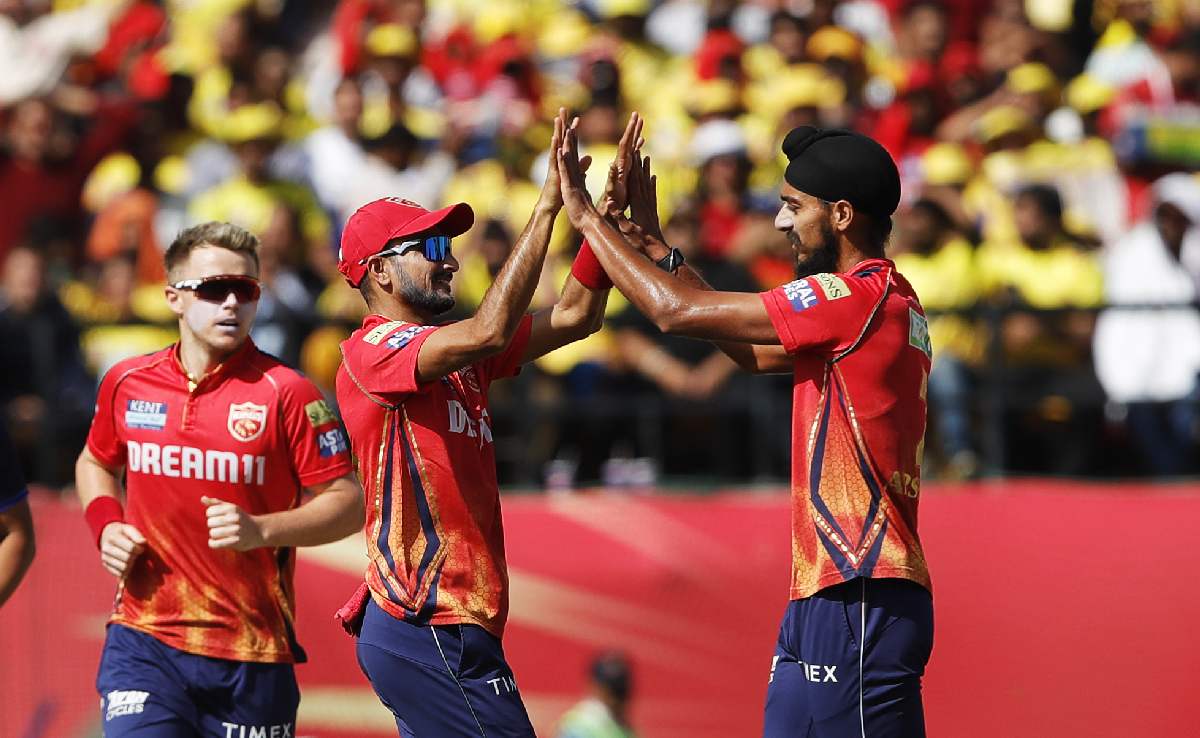
Dharamsala, May 5: Rahul Chahar's spin wizardry was complemented well by pacer Harshal Patel's superb variations at death as Punjab Kings produced a spirited bowling effort to restrict Chennai Super Kings for a par 167 for nine in the IPL here on Sunday.
At 60/1 in Power Play, CSK were going great guns with skipper Ruturaj Gaikwad (32) and Daryl Mitchell in the middle during an entertaining 57-run partnership when the wily leg-spinner (3/23) triggered a collapse taking two wickets in two balls after PBKS opted to bowl.
The partnership was halted as CSK went on to lose three wickets in 11 balls with Harshal taking the prized-scalp of Mitchell (30; 19b, 2x4, 1x6) in a controversial DRS.
Harshal returned at the death to dismiss Shardul Thakur (17) and MS Dhoni for a golden duck as CSK's hopes for a revival went up in smoke.
First, he cleaned up Thakur with a slower off-cutter as the CSK fans in Dharamsala waited for yet another piece of Dhoni magic with eight balls to go.
But the Yellow Army left in disbelief as the talismanic Dhoni departed in the very first ball, unable to counter Harshal's impeccably executed slow yorker.
With no time to bring his bat down, Dhoni's off-stump was knocked over.
Earlier, veteran Ajinkya Rahane continued his wretched form with the bat and got out for nine from seven balls with Arshdeep Singh giving the breakthrough inside the Power Play.
Rahane lost his balance trying to flick a delivery on his leg to midwicket where Kagiso Rabada took a low catch.
But from thereon, Mitchell looked in complete control, returning to the same venue seven months after the New Zealander smashed a 127-ball 130 against India in the ODI World Cup.
He stepped on the gas in Arshdeep's second over, pulling him for a midwicket boundary and then lofted him over mid-off.
From being 10 off 11 balls, Ruturaj took the attack to PBKS' most economical bowler Harpreet Brar, smashing him for one six and two fours in a row as they ended up taking 19 runs off the last over of the Power Play.
Chahar turned it around for PBKS right after the timeout, dismissing Ruturaj and Shivam Dube in successive deliveries.
Having just picked up pace, the CSK skipper swung at a wide delivery but the big edge was caught splendidly by Jitesh Sharma behind the stumps.
Dube's run of golden ducks stretched to two matches after being picked for the upcoming T20 World Cup when the big-hitting allrounder was done in by a Chahar googly.
Dube failed to read the wrong'un and pushed the ball with an angled bat, and the edge nestled in the hands of Jitesh.
But a shocker followed to end Mitchell's stay.
The Kiwi fell victim to a contentious umpire's call even as the ball was going down the leg. But the UltraEdge showed that the ball was hitting the leg-stump, resulting in his leg-before dismissal.
Thereafter, CSK could not get a partnership going as PBKS bowlers kept chipping away.
Brief Scores:
Chennai Super Kings: 167 for 9 in 20 overs (Ravindra Jadeja 43; Rahul Chahar 3/23, Harshal Patel 3/24).
Let the Truth be known. If you read VB and like VB, please be a VB Supporter and Help us deliver the Truth to one and all.
No unannounced load shedding in Kerala, outages due to overload, says Minister
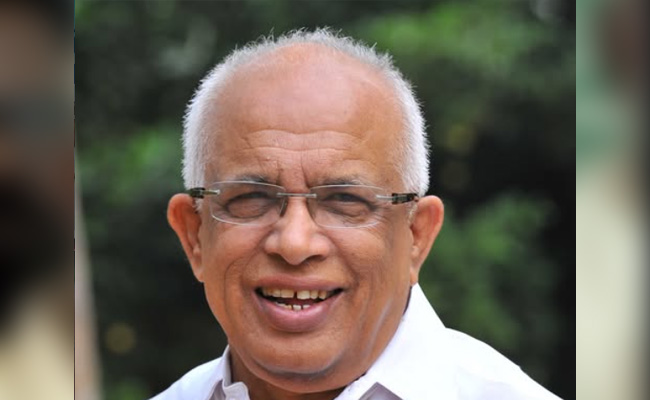
Palakkad (PTI): Kerala Electricity Minister K Krishnankutty on Saturday said there was no unannounced load shedding in the state, attributing recent power interruptions to temporary overload caused by high consumption.
Clarifying concerns raised from various parts of the state, the minister said the disruptions are not deliberate but occur when demand peaks, particularly between 10 pm and 11 pm.
"It is not being done intentionally. Power consumption has risen sharply, and when there is excessive and indiscriminate usage, the system experiences overload, leading to natural supply interruptions," he told reporters here.
His remarks come amid complaints that several areas have been witnessing frequent power cuts, often lasting around 15 minutes and occurring multiple times during the night.
Krishnankutty said the state's power demand has crossed 6,195 MW, putting pressure on the supply system. He added that around 70 per cent of Kerala's electricity is procured from outside, and existing power banking arrangements have been exhausted.
"We have approached the Regulatory Commission seeking permission to purchase more power. However, this will come at a higher cost," he said.
The minister said the government is trying to avoid increasing electricity tariffs and urged consumers to exercise restraint in usage to help manage the situation.
Responding to opposition criticism over the ruling LDF's earlier claims of a decade without power cuts, he said the current situation is not unique to Kerala.
A power crisis is emerging across the country, he said, and sarcastically asked the Opposition to take note of the role of natural factors in this.
Krishnankutty expressed confidence that the situation would improve within two days, while cautioning that long-term energy security would depend on enhancing in-state power generation.
He also warned that future generations could face serious challenges if adequate electricity production capacity is not developed within Kerala.