Pollard fashions sensational win for Mumbai Indians
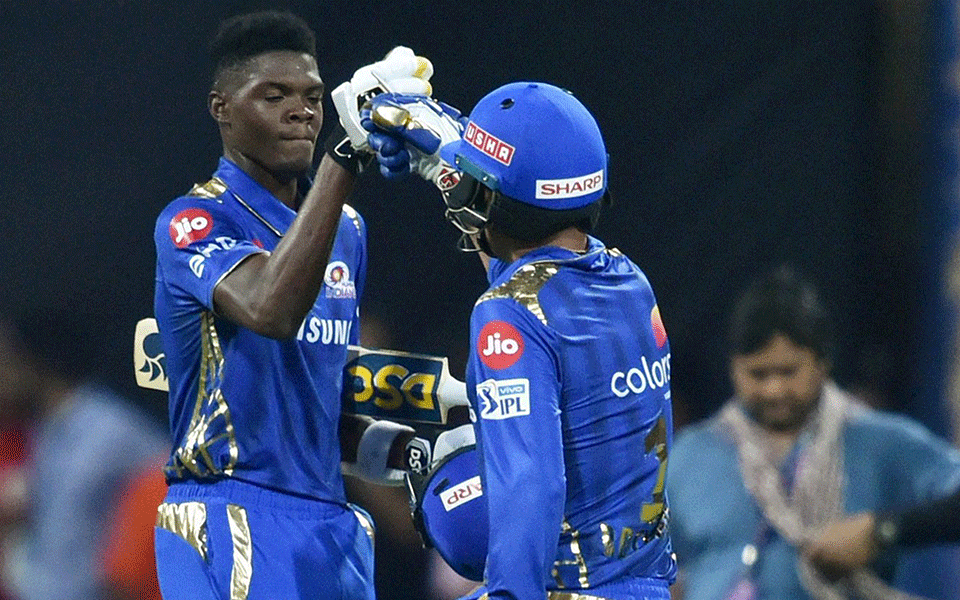
Mumbai, Apr 10: Stand-in captain Kieron Pollard's sensational 83-run knock put KL Rahul's maiden IPL hundred in the shade as Mumbai Indians pulled off a thrilling last-ball three-wicket win over Kings XI Punjab, here Wednesday.
Rahul and Chris Gayle, who struck a 36-ball 63 powered Kings XI Punjab to an imposing 197 for four after being asked to bat.
Pollard single handedly brought his side back in the game with his 31-ball knock punishing the Punjab bowlers with 10 sixes and three fours.
The burly West Indian was dismissed in the second ball of the last over with four needed for victory from final five balls.
Alzarri Joseph (15 not out), who added a crucial 54 runs in 23 balls with Pollard for the seventh wicket, and Rahul Chahar (1) managed to hold their nerves to take side past the finish line.
The victory was the third in a row for MI and took their tally to eight from six games while Kings XI suffered their third defeat in seven games.
Pollard's pyrotechnics stole the thunder from Kings XI openers K L Rahul who had carried his bat through with an unbeaten 100 in 64 balls with the help of six fours and as many sixes and his opening partner Chris Gayle who smashed 63 in 36 balls with seven sixes and three fours.
Pollard, standing in for Rohit Sharma, who missed out on the game due to leg spasm injury, promoted himself in the order.
After 10 overs, MI needed 133 in 60 balls, still fancying their chances with the big-hitting Pollard at the crease and another fine finisher Hardik Pandya to follow.
Shami got rid of the other Hardhik and Krunal Pandya in spac of four balls.
The equation whittled down to 63 from 30 balls and then 15 off the last six balls after Pollard smacked Curran for two sixes and a four in the penultimate over before he was caught off Rajput in the last over.
Earlier, Gayle, who smashed seven towering sixes and also hit three fours, laid the platform for the big total with his opening partner Rahul.
The duo's 116-run stand in 77 balls took MI by storm. Gayle's dismissal in the 13th over slowed down the innings but Rahul punished Hardik Pandya by hitting three sixes and a four in the 19th, which yielded them 25 runs.
Thirteen came off the final over to boost the total.
The flamboyant Gayle, who was circumspect initially, struck Australian pacer Jason Behrendorff for three huge sixes and one four to cream off 23 runs to begin the punishing act.
In the ninth over, Gayle struck two fours and another massive leg-side six as 17 came off Hardik Pandya's over to take Punjab to 86 without loss.
The left-hander also hit leggie Rahul Chahar, and the Pandya brothers Krunal and Hardik for a six each. He reached his 50 in 31 balls and the team's 100 was raised in 10.2 overs.
Gayle's mayhem ended when he was caught at deep mid-wicket off Behrendorff to nip his opening partnership with Rahul.
The left-handed Gayle's departure slowed down the run-rate with Hardik sending back David Miller and Karun Nair cheaply and Bumrah accounting for Sam Curran between the 15th and 18th overs.
Rahul went on the offensive in the last two and in the process completed his century.
MI were without captain Rohit Sharma, who was rested as a precautionary measure due to muscle spasm in his right leg.
Let the Truth be known. If you read VB and like VB, please be a VB Supporter and Help us deliver the Truth to one and all.
Rickelton's ton in vain as SRH beat MI by 6 wickets
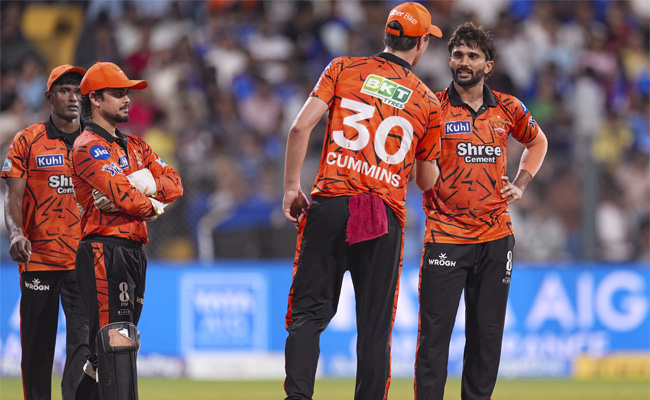
Mumbai (PTI): Ryan Rickelton's whirlwind unbeaten ton was overshadowed by Heinrich Klaasen's unbeaten 65 as Sunrisers Hyderabad defeated Mumbai Indians by six wickets in an IPL match here on Wednesday.
Chasing an imposing 244-run target, Travis Head (76 off 30) and Abhishek Sharma (45 off 24) shared 129 runs for the opening wicket to set the platform for SRH.
Klaasen (65 not out off 30 balls) then displayed his all-round hitting abilities to guide SRH home with the help of Nitish Kumar Reddy (21) and Salil Arora (30 not out off 10) in 18.4 overs.
Earlier, Rickelton's knock powered MI to 243 for five.
MI rode on a 93-run stand between Rickelton (123 not out off 55 balls) and Will Jacks (46 off 22) in 7.1 overs for the opening stand to power the side.
MI skipper Hardik Pandya scored a valuable 31 off 15 balls before being dismissed.
Praful Hinge (2/54), Eshan Malinga (1/29), Sakib Hasan (1/39) and Nitish Kumar Reddy (1/31) were the wicket-takers for SRH.
Brief Scores:
Mumbai Indian: 243 for 5 in 20 overs (Ryan Rickelton 123 not out; Praful Hinge 2/54).
Sunrisers Hyderabad: 249 for 4 in 18.4 overs (Travis Head 76, Heinrich Klaasen 65 not out; AM Ghazanfar 2/51).