Prabhsimran fifty, Jitesh cameo lift Punjab Kings to 214/5 against SRH
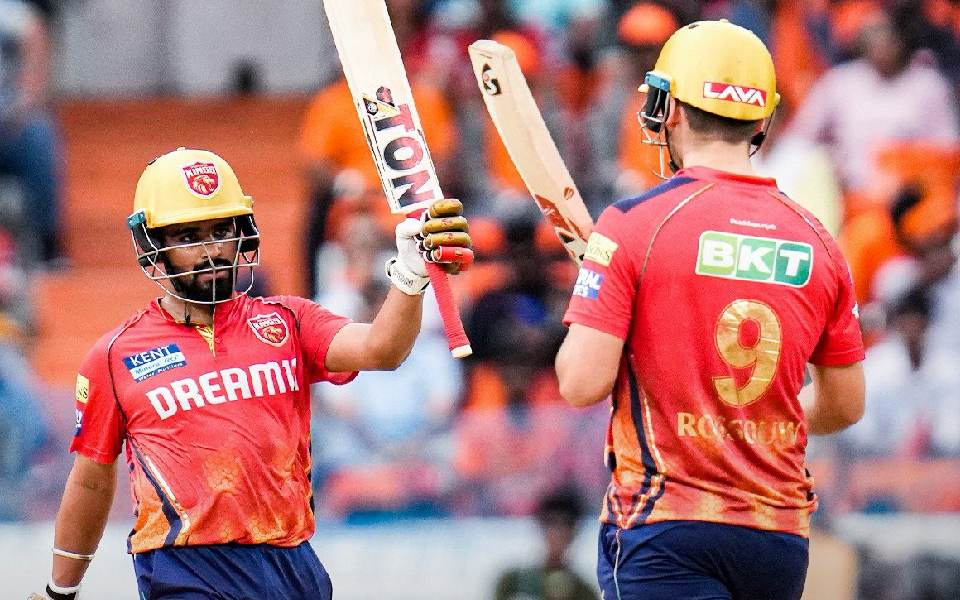
Hyderabad, May 19: Prabhsimran Singh set the tone with a quickfire fifty before skipper Jitesh Sharma finished it off in style to lift Punjab Kings to an imposing 214/5 against Sunrisers Hyderabad in the IPL, here on Sunday.
The new look opening pair of Prabhsimran and Vidarbha's Atharva Taide put on 97 runs from 55 balls as PBKS did well to see through the power play without losing a wicket after opting to bat.
Prabhsimran smashed seven fours and four sixes for his 45-ball 71, while Taide will regret missing out on a fifty after being dismissed for a well-made 46 off just 27 balls.
Taide smashed five fours and two sixes and after his departure, Prabhsimran got the company of Rilee Rossouw as the duo put together 54 off 32 balls to keep the momentum going in the middle overs.
It looked a one-way traffic at 151/1 in 14 overs when leg-spinner Vijayakanth Viyaskanth dismissed the set batter Prabhsimran off a quicker delivery that took a faint edge and Heinrich Klaasen did well to take a one-handed catch behind the stumps.
Cummins (1/36) ended his spell taking the wicket Rossouw one run shy of a half-century in the 18th over that left two new batters at the crease -- Jitesh Sharma and Ashutosh Sharma.
T Natarajan (2/33) then did well to remove the inform Ashutosh Sharma in the penultimate over.
PBKS went on to lose four wickets for 44 runs in five overs before the stand-in skipper Jitesh's last over assault took them to a fighting total.
Jitesh (32 not out from 15 balls; 2x4, 2x6) finished with two sixes against Nitish Kumar Reddy in a 20-run final over.
It was a fearless batting display by the Punjab Kings who had nothing to lose and playing the last match of the season.
There was no Jonny Bairstow or Liam Livingstone -- the English duo who have left home for national duty -- but PBKS batters never felt their absence after they opted to bat.
Following a tidy start by Pat Cummins and Bhuvneshwar Kumar where the duo conceded just 12 runs, Prabhsimran took on the veteran Indian seamer slamming him for consecutive boundaries.
The lefthander Taide then got into the act in Natarajan's opening over, when he dragged one from outside off to through mid-on and followed it up with a mighty pull.
The diminutive Punjab batter Prabhsimran added to their misery, hammering a 145kph delivery from Cummins over deep square leg with sheer timing.
Taide also matched his senior partner Prabhsimran and took on Bhuvneshwar with a six and four, as PBKS cruised to 61 for no loss in the power play and the home side looked desperate in search of a breakthrough.
Natarajan finally broke the opening partnership in the 10th over with a short and widish delivery to dismiss a well set Taide.
But Prabhsimran continued his belligerent batting in the company of Rossouw and raced to a 34-ball fifty, his second this season in the 11th over.
His big assault came in Nitish Reddy's next over when the duo spanked him for 20 runs two sixes and one four as there was no stopping PBKS.
Let the Truth be known. If you read VB and like VB, please be a VB Supporter and Help us deliver the Truth to one and all.
3 killed, 15 injured in fire after blast at firecracker unit in MP's Dewas; CM orders probe
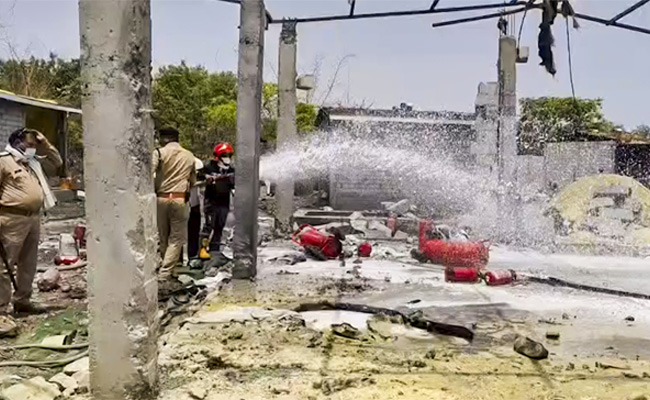
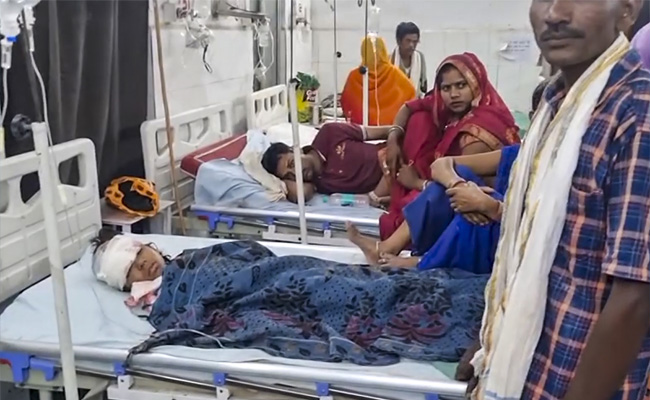
Dewas/Indore (PTI): At least three workers were killed and 15 persons injured after a fire broke out following an explosion at a firecracker factory in Madhya Pradesh's Dewas district on Thursday, an official said.
Chief Minister Mohan Yadav expressed grief over the incident and ordered an investigation. The state government will provide an assistance of Rs 4 lakh to the kin of each of the deceased, and the injured will receive free treatment, he said in a post on X.
Three persons were killed in the fire at the firecracker unit located in Tonk Kalan area, and around 15 injured persons were sent to hospitals in Indore and Dewas, Collector Rituraj Singh told reporters after inspecting the site.
Videos of the aftermath surfaced on social media, showing thick white smoke billowing from the factory along the Agra–Mumbai national highway. The clips also showed people rushing the injured for treatment amid cries for help, with body parts seen scattered at the site.
The collector said the fire has been brought under control. The administration has taken possession of explosives stored at another location within the unit, he said.
The work to manufacture small firecrackers at the factory of a person named Anil Malviya had begun only 15 days ago, and a licence has been issued for the unit, the collector said.
A detailed investigation is underway into the incident, he added.
CM Yadav said, "I have directed Deputy Chief Minister and Dewas district guardian minister Jagdish Devda, the home secretary and senior officials to visit the spot. An inquiry has also been ordered into the incident."
Local residents said there was a massive explosion at the factory, and the victims' body parts were found scattered far away from the site.
They said construction work was underway at the site and different sheds were being built there.