Pro Kabaddi : Bengaluru Bulls beat Tamil Thalaivas in southern derby
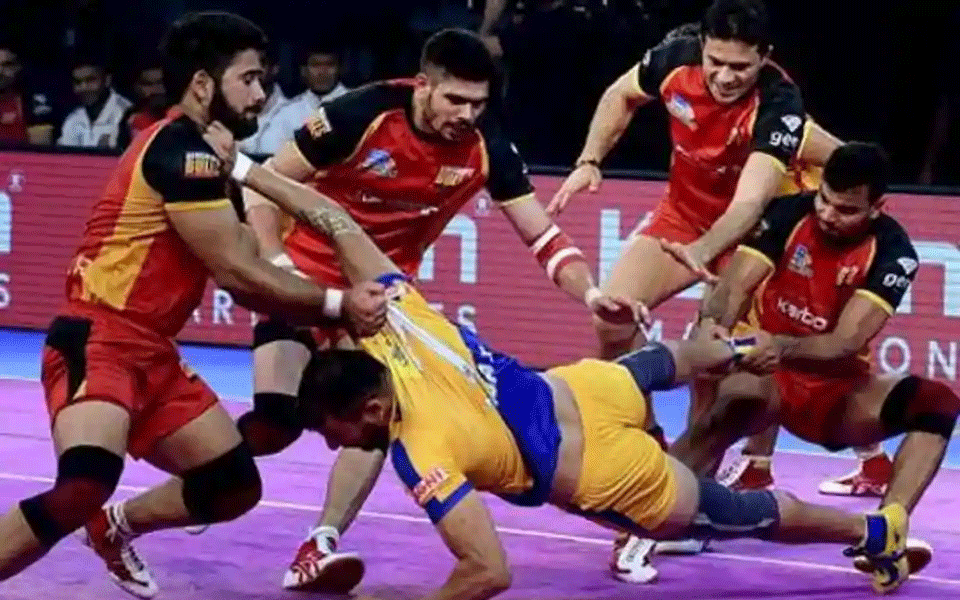
Sonipat, Oct 17: Bengaluru Bulls earned the bragging rights in the southern derby, outplaying Tamil Thalaivas 44-35 in the Vivo Pro Kabaddi Season 6 here on Wednesday.
Pawan Sehrawat with 16 points and Kashiling Adake (12 points) were the star performers for Bengaluru as they registered their second consecutive win of the tournament.
This was Tamil Thalaivas' fifth straight defeat and they haven't won a match since the opening day of the season. Ajay Thakur was once again tried to salvage the match for Thalaivas but couldn't get enough support.
Adake started the match with a bang as he came up with a super raid in the 2nd minute to give Bengaluru Bulls 4-1 lead. Thakur got his first point of the match in the fourth minute as Tamil Thalaivas trailed 2-4. Adake made another successful raid as Bengaluru Bulls inflicted an all out to lead 9-2.
Tamil Thalaivas were clearly struggling a much fitter outfit in Bengaluru Bulls as they didn't have answer to their raiding prowess. In the sixth minute, Sehrawat came up with a four-point raid to give Bengaluru Bulls 14-3 lead.
Tamil Thalaivas defence had a half to forget as they scored just two tackle points. At the end of the first half Bengaluru Bulls led 25-14 with Adake scoring 10 points.
Tamil Thalaivas began the second half strongly as they inflicted an all out in the 24th minute to cut the deficit to 21-29. Thalaivas tried hard to make a comeback but Bengaluru Bulls' defence was on top of their game. With their lead cut to just six points, they made to crucial tackles to lead 33-24 in the 30th minute.
Tamil Thalaivas suffered a big blow in the second half when their skipper Ajay Thakur was stretchered off the mat as he suffered an injury. With less than five minutes left, Bengaluru Bulls had opened an 11-point gap and were on course to a comfortable victory.
Tamil Thalaivas forced a super tackle in the 37th minute, trailing 31-41. Another super tackle was forced by Thalaivas as they trailed 34-43 in the 39th minute. The Thalaivas defence's poor first half showing was one of the main reason why they suffered another defeat.
Let the Truth be known. If you read VB and like VB, please be a VB Supporter and Help us deliver the Truth to one and all.
Confident we are going to win Kerala: Shashi Tharoor
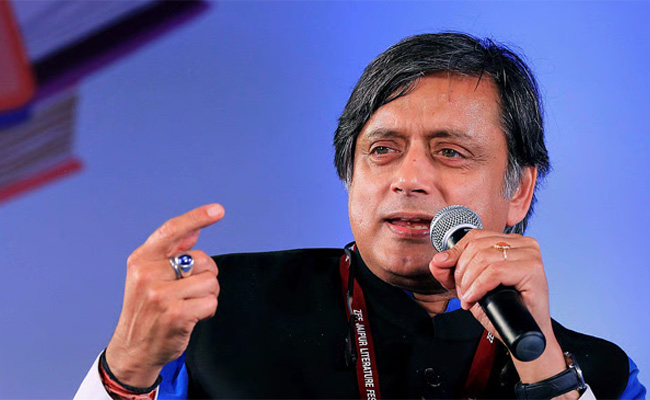
New Delhi (PTI): Congress leader Shashi Tharoor on Thursday expressed confidence in the victory of the United Democratic Front (UDF) in Kerala, saying the Congress-led alliance will win more than 75 seats out of the total 140 in the state.
Tharoor, who hails from Kerala, said he was not surprised to see the results of the exit polls, most of which predicted a victory for the UDF that has been out of power for 10 years in the state.
"We have been on the ground. I have campaigned in 59 constituencies across 12 districts out of 14. I was very confident we are going to win.
"Everything that I have picked up from not just my party colleagues and workers but also from other observers, media and others have always convinced me that we were going to score a comfortable win of above 75 seats. And all the (exit) polls have confirmed the same thing," he told reporters here.
The Thiruvananthapuram MP said he was not surprised to see the results of the exit polls but in general he was not a big fan of exit polls in India.
"Because ours is not purely a homogenous society. We have to take into account gender issue, caste issue, class issue, regional disparities. You never get a convincingly large enough sample to give an accurate poll and now there is the additional complication that we have heard about in West Bengal this year that many people are unwilling to answer the questions of the pollsters," he said.
The Congress leader said normally, it used to be below 10 per cent that people said that they would not answer.
"Even if you are a reputable exit pollster, in Bengal, one polling company has said 60 per cent of people refused to answer. So, what is the worth of a poll where 60 per cent of your respondents have not answered," he said.
Several exit polls on Wednesday predicted a comeback by the Congress-led UDF in Kerala after 10 years, dethroning the CPI(M)-led Left Democratic Front (LDF).
Polling for the 140-member Kerala assembly was held on April 9. Results of assembly elections in West Bengal, Tamil Nadu, Assam, Puducherry, besides Kerala, will be announced on May 4.