Qualifier 2: Shubman Gill's fiery century powers GT to 233/3 against MI
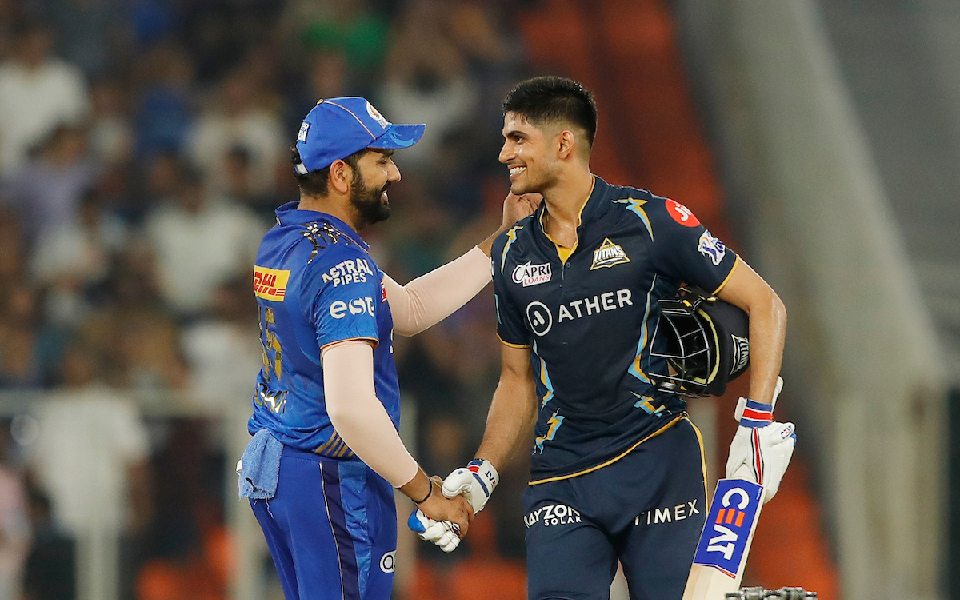
Ahmedabad, May 26: Shubman Gill extended his purple patch and slammed a 60-ball 129 to single-handedly power Gujarat Titans to a massive 233 for three against Mumbai Indians in Qualifier 2 of the Indian Premier League here on Friday.
Gill first stitched 54 runs for the opening wicket with Wriddhiman Saha (18) before sharing 138 runs for the second wicket with Sai Sudarshan (43 retired hurt).
Towards the end, skipper Hardik Pandya made a 13-ball 28 to prop up GT's score.
None of MI bowlers could deliver with Piyush Chawla (1/45) being the pick of the bowlers.
Brief Scores:
Gujarat Titans: 233 for 3 in 20 overs (Shubman Gill 129; Piyush Chawla 1/45).
Let the Truth be known. If you read VB and like VB, please be a VB Supporter and Help us deliver the Truth to one and all.
Chadha, others wouldn't have left AAP had it followed 'right' path: Anna Hazare
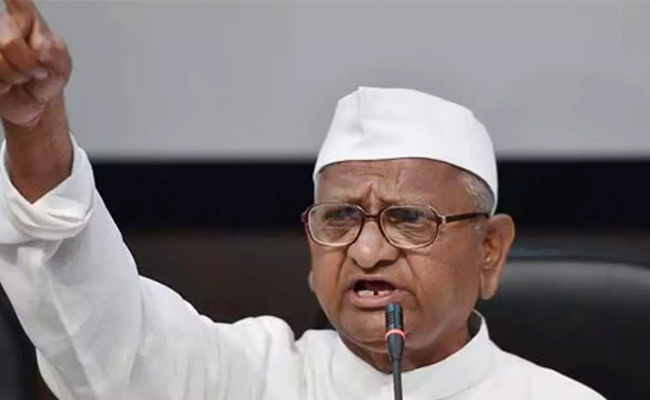
Mumbai (PTI): Social activist Anna Hazare has said Raghav Chadha and six other Aam Aadmi Party (AAP) Rajya Sabha members would not have quit the party had it followed the "right" path.
"Everyone has the right to hold an opinion in a democracy. They (Chadha and others) must have faced some trouble, which is why they left," Hazare told reporters on Friday in Ahilyanagar district of Maharashtra.
AAP Rajya Sabha members Raghav Chadha and Sandeep Pathak addressed a joint press conference in Delhi on Friday, announcing their exit from the Arvind Kejriwal-led party to join the BJP.
Chadha claimed that nearly two-thirds of AAP's Rajya Sabha members had quit the party and would function as a separate faction.
"It is their (AAP leadership’s) fault. Had that party followed the right way, they would not have left," Hazare said.
Hazare reiterated that Chadha and others must have faced difficulties within AAP, and that is why they left. "Had the party gone in the right direction, they would not have quit the party," he added.
"There must be some or the other reason (for their leaving AAP). In a democracy, every person has a view about where to stay and leave," Hazare said.
The Chadha-led exodus marks a significant setback for the Kejriwal-led party since its formation in 2012, which followed the momentum of Anna Hazare’s anti-corruption movement.