Rahul Dravid will have to reapply if he wants to continue as head coach after June: Jay Shah
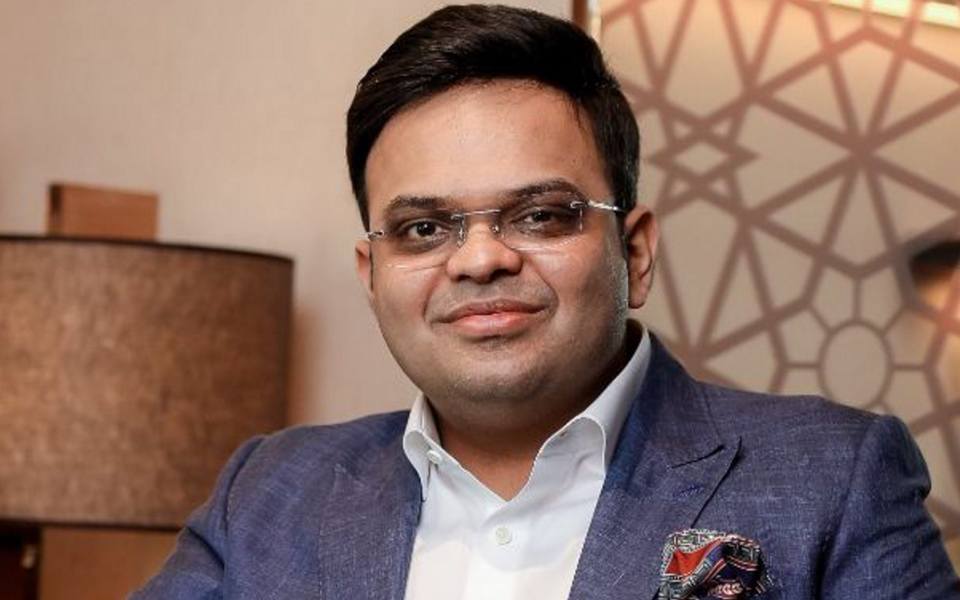
Mumbai, May 10: India head coach Rahul Dravid will have to reapply if he wishes to continue in the job after his tenure ends with next month's T20 World Cup, BCCI Secretary Jay Shah has said while making it clear that the new appointment will be for a three-year term.
Dravid, who had a two-year contract originally, was given an extension along with his support staff after the conclusion of the 50-overs World Cup in November last year.
"We will call for applications in the next few days. Rahul Dravid's tenure is coming to an end. He has to reapply if he has to continue. We are looking for a long-term coach, for three years," Shah told select media during an interaction at the BCCI office here on Thursday.
The BCCI secretary said there has been no precedent of having different coaches for different formats but ultimately the decision rests with the Cricket Advisory Committee. The CAC comprises Jatin Paranjape, Ashok Malhotra and Sulakshana Naik.
"There is no precedent of different coaches for different format in Indian cricket. Besides, we have a number of players who are all-format players. There are many common players across formats such as Rishabh Pant, Virat Kohli and Rohit Sharma," he said.
"Ultimately, this is the Cricket Advisory Committee's call. I have to implement what they decide," he added.
Shah said even a foreign coach can be considered depending on the CAC's recommendations.
"If the CAC selects a foreign coach, I can't interfere," he added.
The BCCI secretary informed that the vacant post of one national selector is expected to be filled up soon.
"A few interviews for the selector's post have already happened. We will announce it soon," he said.
Greg Barclay's role as the chairman of the International Cricket Council ends later this year but Shah remained non-committal on running for the position.
"Let me be here in BCCI. Let there be speculation. But let me be here (in the BCCI). Am I not doing a good job?" he asked.
"India sending experienced team for T20 World Cup"
Shah said India are sending an experienced team to the T20 World Cup owing to the fact that conditions in the USA are unknown.
"The team is leaving in two batches, those who will be free before (the playoffs) will leave on May 24. The rest of them will leave after the final," he said.
"We have an experienced team; a better team couldn't have been selected. We have selected the best 15 players possible. We have a batting line up till Nos. 8 and 9. We have selected experienced players who can play in all conditions," he added.
Shah rejected the talk that India, England and Australia are in talks to revive the franchise-based competition Champions League T20.
Cricket Victoria CEO Nick Cummins had claimed in a media interaction here last month that the three boards are in talks to revive the competition.
"The Cricket Victoria CEO has not spoken to me about this. No such discussions are taking place. I would have told you had I been a part of any talks," Shah said.
He also said the ICC has not approached BCCI on the topic of creating windows for country-based T20 leagues.
"That is ICC's prerogative. It is a fact that the ICC is not touching the IPL. In fact, they have given it a two-and-a-half month window instead of just about two months, we are grateful to the ICC for that," he said.
Shah said the board will speak to the ICC about hosting the World Test Championship final at a different venue from 2027. The first two editions of Test cricket's summit clash have been organised in England, including the one for the current 2023-25 cycle.
"We have spoken about the ICC for 2027. There are only three main Test centres, India, England and Australia. You cannot hold it in Australia during that window or even in India. Even in Bengaluru, it rains during that time," he said.
Let the Truth be known. If you read VB and like VB, please be a VB Supporter and Help us deliver the Truth to one and all.
No unannounced load shedding in Kerala, outages due to overload, says Minister
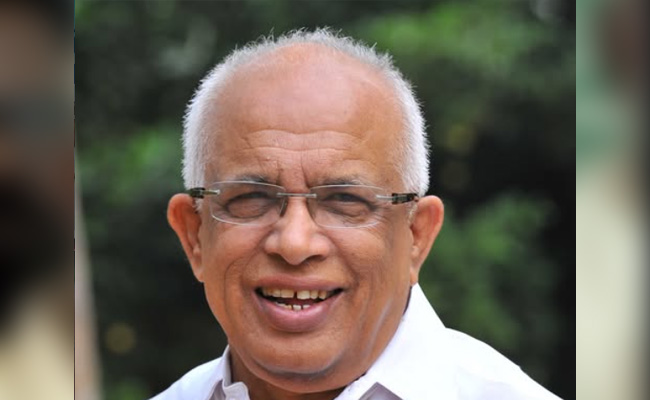
Palakkad (PTI): Kerala Electricity Minister K Krishnankutty on Saturday said there was no unannounced load shedding in the state, attributing recent power interruptions to temporary overload caused by high consumption.
Clarifying concerns raised from various parts of the state, the minister said the disruptions are not deliberate but occur when demand peaks, particularly between 10 pm and 11 pm.
"It is not being done intentionally. Power consumption has risen sharply, and when there is excessive and indiscriminate usage, the system experiences overload, leading to natural supply interruptions," he told reporters here.
His remarks come amid complaints that several areas have been witnessing frequent power cuts, often lasting around 15 minutes and occurring multiple times during the night.
Krishnankutty said the state's power demand has crossed 6,195 MW, putting pressure on the supply system. He added that around 70 per cent of Kerala's electricity is procured from outside, and existing power banking arrangements have been exhausted.
"We have approached the Regulatory Commission seeking permission to purchase more power. However, this will come at a higher cost," he said.
The minister said the government is trying to avoid increasing electricity tariffs and urged consumers to exercise restraint in usage to help manage the situation.
Responding to opposition criticism over the ruling LDF's earlier claims of a decade without power cuts, he said the current situation is not unique to Kerala.
A power crisis is emerging across the country, he said, and sarcastically asked the Opposition to take note of the role of natural factors in this.
Krishnankutty expressed confidence that the situation would improve within two days, while cautioning that long-term energy security would depend on enhancing in-state power generation.
He also warned that future generations could face serious challenges if adequate electricity production capacity is not developed within Kerala.