Ravichandran Ashwin joint fastest to 350 Test wickets
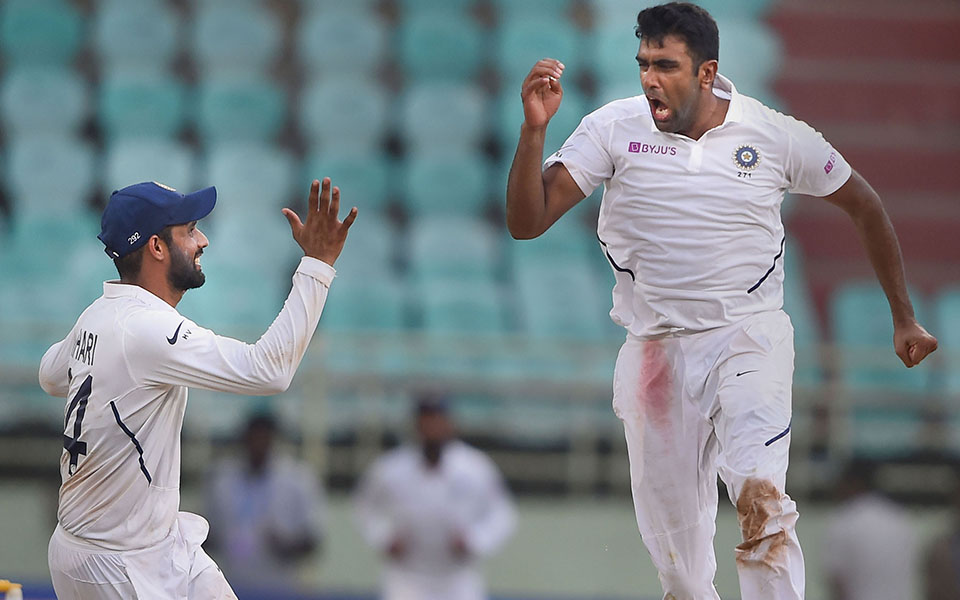
Visakhapatnam: India's spin king Ravichandran Ashwin on Sunday joined Sri Lankan great Muttiah Muralitharan as the fastest bowler to 350 Test wickets in the first match against South Africa in Visakhapatnam.
The off-spinner bowled overnight batsman Theunis de Bruyn for 10 early in the morning session on day five to achieve the milestone in his 66th Test.
Muralitharan also took the same number of matches to claim 350 wickets. The spin legend, now 47, retired in 2010 with 800 wickets.
The 33-year-old Ashwin, who returned to the Indian XI after playing against Australia last year, had claimed 7/145 in the first innings of the match in Vizag. It was his 27th five-wicket haul. Earlier in November 2017, Ashwin became the fastest bowler to reach the milestone of 300 Test wickets. He broke Australian pace ace Dennis Lillee's record by achieving the feat in just 54 matches.
Courtesy: timesofindia
Let the Truth be known. If you read VB and like VB, please be a VB Supporter and Help us deliver the Truth to one and all.
Rickelton's ton in vain as SRH beat MI by 6 wickets
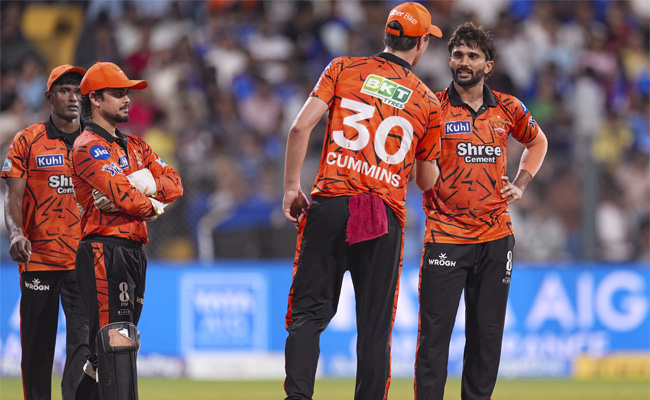
Mumbai (PTI): Ryan Rickelton's whirlwind unbeaten ton was overshadowed by Heinrich Klaasen's unbeaten 65 as Sunrisers Hyderabad defeated Mumbai Indians by six wickets in an IPL match here on Wednesday.
Chasing an imposing 244-run target, Travis Head (76 off 30) and Abhishek Sharma (45 off 24) shared 129 runs for the opening wicket to set the platform for SRH.
Klaasen (65 not out off 30 balls) then displayed his all-round hitting abilities to guide SRH home with the help of Nitish Kumar Reddy (21) and Salil Arora (30 not out off 10) in 18.4 overs.
Earlier, Rickelton's knock powered MI to 243 for five.
MI rode on a 93-run stand between Rickelton (123 not out off 55 balls) and Will Jacks (46 off 22) in 7.1 overs for the opening stand to power the side.
MI skipper Hardik Pandya scored a valuable 31 off 15 balls before being dismissed.
Praful Hinge (2/54), Eshan Malinga (1/29), Sakib Hasan (1/39) and Nitish Kumar Reddy (1/31) were the wicket-takers for SRH.
Brief Scores:
Mumbai Indian: 243 for 5 in 20 overs (Ryan Rickelton 123 not out; Praful Hinge 2/54).
Sunrisers Hyderabad: 249 for 4 in 18.4 overs (Travis Head 76, Heinrich Klaasen 65 not out; AM Ghazanfar 2/51).