RCB beat Delhi Capitals by 8 wickets to lift WPL title
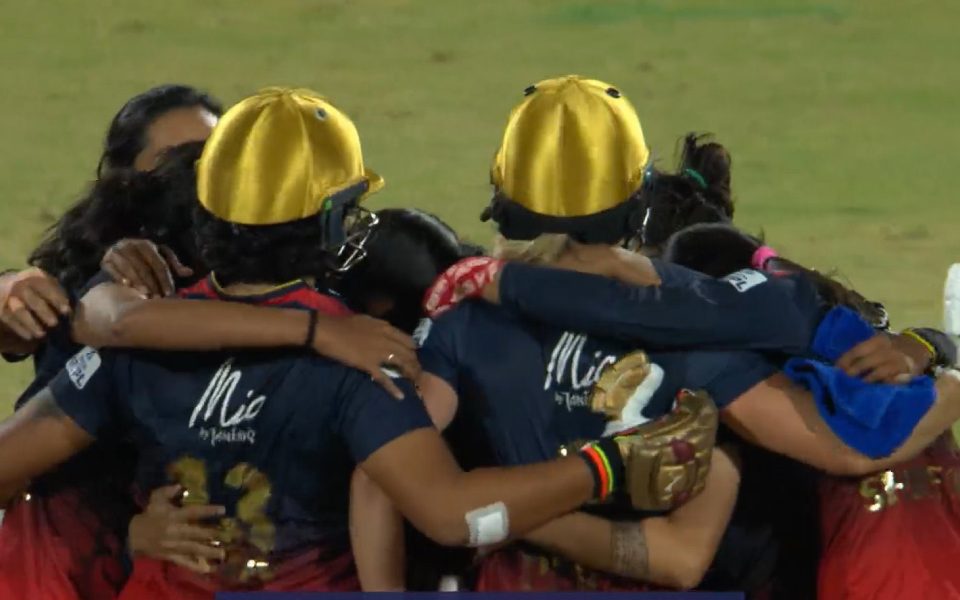
New Delhi, Mar 17: A clinical Royal Challengers Bangalore won the Women's Premier League 2024 title with an eight-wicket victory over Delhi Capitals in the final here on Sunday.
Batting first, DC were bowled out for 113 in 18.3 overs. RCB chased down the target of 114 with three balls to spare, much to the disappointment of the weekend crowd that turned out to support the home team.
With Shafali Verma (44 off 27 balls) going great guns, DC were cruising at 64 for no loss in 43 balls before they committed harakiri, losing 10 wickets for just 49 runs.
Spinners Shreyanka Patil (4/12) and Sophie Molineux (3/20) helped RCB stage a remarkable recovery after Shafali's exploits at the top of the order.
Brief scores:
Delhi Capitals: 113 all out in 18.3 overs (Shafali Verma 44; Shreyanka Patil 4/12, Sophie Molineux 3/20).
Royal Challengers Bangalore: 115 for two in 19.3 overs (Smriti Mandhana 31, Sophie Devine 32, Ellyse Perry 35 not out).
𝙏𝙝𝙖𝙩 𝙎𝙥𝙚𝙘𝙞𝙖𝙡 𝙈𝙤𝙢𝙚𝙣𝙩! 👏 👏
— Women's Premier League (WPL) (@wplt20) March 17, 2024
That's how the Royal Challengers Bangalore sealed a memorable win to emerge the #TATAWPL 2024 Champions! 🏆
Scorecard ▶️https://t.co/g011cfzcFp#DCvRCB | #Final | @RCBTweets pic.twitter.com/ghlo7YVvwW
The Smriti Mandhana-led Royal Challengers Bangalore reign supreme! 🏆
— Women's Premier League (WPL) (@wplt20) March 17, 2024
Presenting before you - Champions of the #TATAWPL 2024 ! 🙌 🙌
Congratulations, #RCB! 👏 👏#DCvRCB | #Final | @RCBTweets | @mandhana_smriti pic.twitter.com/mYbX9qWrUt
The Reactions 👏
— Women's Premier League (WPL) (@wplt20) March 17, 2024
The Emotions ☺️
The Celebrations 🙌
They say what this triumph means for the Royal Challengers Bangalore 🏆
Scorecard ▶️ https://t.co/g011cfzcFp#TATAWPL | #DCvRCB | #Final | @RCBTweets pic.twitter.com/imJPUlpIPD
Let the Truth be known. If you read VB and like VB, please be a VB Supporter and Help us deliver the Truth to one and all.
Chadha, others wouldn't have left AAP had it followed 'right' path: Anna Hazare
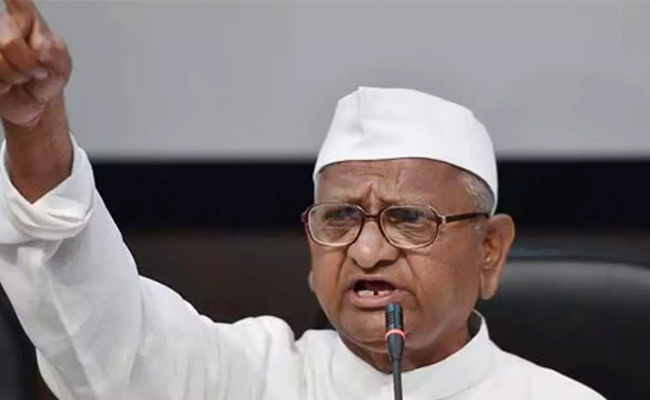
Mumbai (PTI): Social activist Anna Hazare has said Raghav Chadha and six other Aam Aadmi Party (AAP) Rajya Sabha members would not have quit the party had it followed the "right" path.
"Everyone has the right to hold an opinion in a democracy. They (Chadha and others) must have faced some trouble, which is why they left," Hazare told reporters on Friday in Ahilyanagar district of Maharashtra.
AAP Rajya Sabha members Raghav Chadha and Sandeep Pathak addressed a joint press conference in Delhi on Friday, announcing their exit from the Arvind Kejriwal-led party to join the BJP.
Chadha claimed that nearly two-thirds of AAP's Rajya Sabha members had quit the party and would function as a separate faction.
"It is their (AAP leadership’s) fault. Had that party followed the right way, they would not have left," Hazare said.
Hazare reiterated that Chadha and others must have faced difficulties within AAP, and that is why they left. "Had the party gone in the right direction, they would not have quit the party," he added.
"There must be some or the other reason (for their leaving AAP). In a democracy, every person has a view about where to stay and leave," Hazare said.
The Chadha-led exodus marks a significant setback for the Kejriwal-led party since its formation in 2012, which followed the momentum of Anna Hazare’s anti-corruption movement.