Record-breaking K L Rahul says he wasn't 'feeling in control' of his batting ahead of RCB fixture
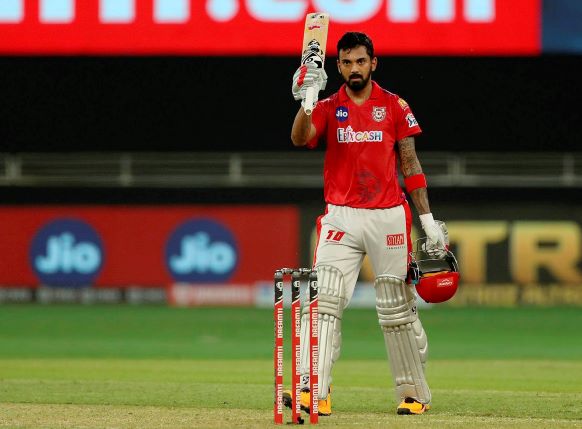
Dubai: Kings XI Punjab captain KL Rahul, who made a scintillating century against Royal Challengers Bangalore, said he was lacking in confidence heading into the team's second IPL fixture.
Rahul starred with an unbeaten 132 off 69 balls as KXIP outplayed RCB by 97 runs here on Thursday.
"I have actually been not so confident (hitting it this well). I had a chat with Maxi (Glenn Maxwell) yesterday, he said how are you feeling, I said that I am not feeling completely in control of my batting, he said you must be joking, you are hitting really well," Rahul said at the post-match presentation.
He had already spoken about his fears leading up to the IPL, considering he was coming back after a five-month long break due to the COVID-19 pandemic.
"Quite honestly I was nervous but I knew if I spend time in the middle, hit a few balls from the middle of bat, it will all settle down.
"I try to do (the same routine as I did when I was a player) but as a captain you have shortened time and you are running around and doing a lot of things," Rahul said.
He is captaining in the IPL for the first time.
"I still try to maintain the same routine. Once I am in the middle and during the toss is the only time I feel like a captain and otherwise I try to balance being a player and the captain," he said.
After Rahul starred with the bat, KXIP bowlers put a disciplined performance to bundle out RCB for 109 in 17 overs.
"It's as complete a team performance as it can get. We had few different plans going into this game.
"We knew RCB have a power packed batting line up and we had to get 2-3 wickets up front and that also meant putting runs on the board, we know what these guys can do if they get set. The analyst, coaches and the management will be happy."
He was all praise for young leg-spinner Ravi Bishnoi.
"Something that has impressed me in him (Bishoni's heart of coming back even after an expensive start). I watched the U-19 World Cup. He has a lot of fight in him.
"Every time I throw the ball he wants to do well, he was a little nervous bowling at guys like Finchy and AB, once he got through that he did well," added Rahul.
Let the Truth be known. If you read VB and like VB, please be a VB Supporter and Help us deliver the Truth to one and all.
Karnataka School Edu Dept prohibits children from being made to dance to obscene songs
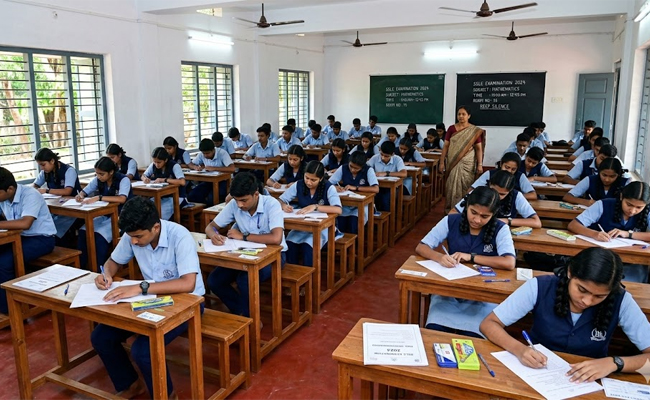
Bengaluru (PTI): The Karnataka School Education Department has issued a circular strictly prohibiting children from being made to dance to obscene songs in educational and cultural programmes.
It stated that such dances would negatively impact students' mental health and moral values. It will create indiscipline and harm the sanctity of education.
"All the Deputy Directors (Administration) of the state's School Education Department have been asked to take strict measures to prevent children or students from dancing to obscene songs in all government, aided and unaided schools in the state," the office of the commissioner of the School Education Department said in a recent circular.
"If it is found that children are being made to dance to obscene songs, appropriate action will be taken against the headmaster or management of such school," it added.
The department also listed certain measures in this regard, which include: strictly prohibiting children from being made to dance to obscene songs during educational and cultural programmes; selecting songs that are inspiring, positive, instilling national pride in children and reflecting the greatness, dignity, values, culture, and morality of the state.
Stating that the school headmaster and management are responsible for selecting songs and dances for cultural programmes, it said, they should also ensure that students wear decent clothes in dance or cultural programmes.