Reduce ODI World Cup to 40-overs-a-side contest: Ravi Shastri
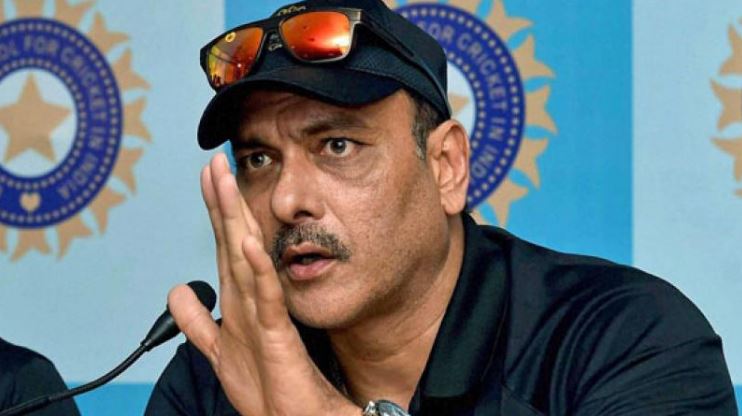
Ahmedabad, Mar 12: With the ODI World Cup in India less than seven months away, former India chief coach Ravi Shastri has raised the pitch for future editions of the ICC tournament to be 40-overs-a-side affair to give it a fresh lease of life.
"For One-day cricket to survive, I think it should be reduced to 40-over game in future," said the former India captain on day four of the fourth India-Australia Test here on Sunday.
Shastri said the game should address the diminishing attention span of spectators and pointed out that when the Kapil Dev-led India won the ODI World Cup in 1983, it was a 60-over-a-side tournament before it was reduced to a 50-over affair.
"The reason I say this is because when we won the World Cup in 1983, it was a 60-over (a side) game. Then the attention span of the people diminished and it became a 50-over game. I think the time has come for it to become now a 40-over game. Evolve with the times. Reduce the format," added Shastri.
While Shastri's logic about attention span is justified but once the World Cup moved to the sub-continent in 1987, it wasn't possible to hold matches over 120-over duration with two breaks -- lunch and tea like it happened during first three editions in England.
The legendary cricketer said that the T20 format will continue to bring big bucks into the game, though he made his displeasure known for bilateral T20I series, saying they "should be reduced".
Shastri is also a big advocate of reduced number of bilateral series.
"T20 format I think is the key. It is the injection the game needs to evolve. It's the cash cow for the sport. But I think there also the bilaterals (series) should be reduced. There are enough domestic leagues around the world that promote the T20 game.
"We should let those leagues happen and then have a World Cup, just in between. Very few bilaterals, if needed before a World Cup or something of that sort. Then you can sustain all three formats," added Shastri.
The former player added that Test cricket will continue to enjoy its pride of place as it was the "real thing".
"Test cricket will remain Test cricket and it should be given paramount importance. It's the real thing. I think there's a place for all formats within India. Especially in the subcontinent. Especially in places like Australia."
India cricketer Dinesh Karthik also said ODI format was losing it charm and that the World Cup in India in October-November this year could be the last edition.
"ODI format has lost its charm. We may see the last World Cup later this year or maybe one more after that. People wants to see Test cricket, which is the truest form of cricket and T20 for entertainment," said Karthik.
He added that with so much of cricket happening around the world to go with the mushrooming domestic T20 leagues, the ODI format had been caught in "no man's land".
"Test cricket is like art movies and T20 is commercial cinema. ODIs are present in no man's land. Take the example of Ben Stokes, the best all-rounder of the current times saying he is done with the ODI cricket.
"There is a fact that with a T20 World Cup scheduled every two years, countries will not be playing bilateral series anymore. There won't be enough ODI matches."
Let the Truth be known. If you read VB and like VB, please be a VB Supporter and Help us deliver the Truth to one and all.
T'gana RTC strike: Talks between govt, employees successful

Hyderabad (PTI): Talks between employees of Telangana State Road Transport Corporation (RTC) who were on strike and the state government concluded successfully on Friday as the government agreed to the key demands of the workmen.
Following a day-long marathon of talks between the leaders of the employees' Joint Action Committee (JAC) and the cabinet sub-committee, the government announced after midnight that it acceded to the demands, including a merger of RTC with the government, 11 per cent pay revision and elections to the employees' unions.
A committee comprising officials and employee leaders would be appointed over the merger of RTC with the government, it said.
The RTC management has also agreed to address the remaining issues as well, an official release said.
The employees would call off their strike and the RTC buses would hit the roads shortly, it said.
The employees had been on an indefinite strike since April 22 over a series of demands, including the merger of RTC with the government.
Earlier in the day, a driver of the RTC, who attempted suicide on April 23 during the strike, died at a hospital here in the early hours of Friday.
Shankar Goud, a 55-year-old driver, set himself ablaze by pouring petrol at Narsampet in Warangal district when the employees were staging a protest on Thursday in support of their demands.
Goud suffered serious burns, was initially admitted to a state-run hospital in Warangal, and later shifted to a super-speciality hospital in Hyderabad for advanced treatment.
"He succumbed (to injuries) at about 1.30 am on Friday," a senior official said.
The driver’s body was taken to his relative’s village, Muttojipet in Warangal district, for funeral rites.
Tension prevailed in Muttojipet as his family members and RTC employees attempted to take the body to the Narsampet bus station, where he worked, to enable his colleagues to pay their last respects. However, police did not permit this, citing law-and-order concerns.
This led to a deadlock before the funeral could proceed.
Union Minister Bandi Sanjay Kumar criticised the Telangana government for not allowing the body to be taken to the Narsampet bus station.
Kumar, Minister of State (Home), visited Muttojipet village in Warangal district, where the funeral was held, and paid homage to Goud.
“They (family members) want to take the body to the bus depot for five minutes. Is the RTC bus depot in Pakistan or Bangladesh? They are emotionally attached to taking the body there. The government is hurting sentiments and creating fear among RTC employees,” Kumar told reporters.
He also expressed anger at the police for not allowing the body to be taken to the bus station and staged a protest, according to a release from his office.
RTC employees and BJP workers attempted to take the mortal remains in an ambulance to Narsampet, but were stopped by the police.
Later, after discussions with the police, the family members and RTC employees agreed to conduct the funeral in the village.
Sanjay Kumar, stating he would abide by the family’s decision, left the village after the funeral was conducted there.
Transport Minister Ponnam Prabhakar said an ex gratia of Rs 10 lakh, a house, and a government job would be provided to the kin of Goud.
Chief Minister A Revanth Reddy expressed shock over the employee’s death and conveyed deep condolences to the grieving family, according to the release.
The RTC employees’ JAC had earlier announced an agitation programme from April 24 to 29, including silent marches and submission of memorandums to MLAs and other leaders.