Rishabh Pant declared fit as keeper-batter for IPL; set to return as DC captain
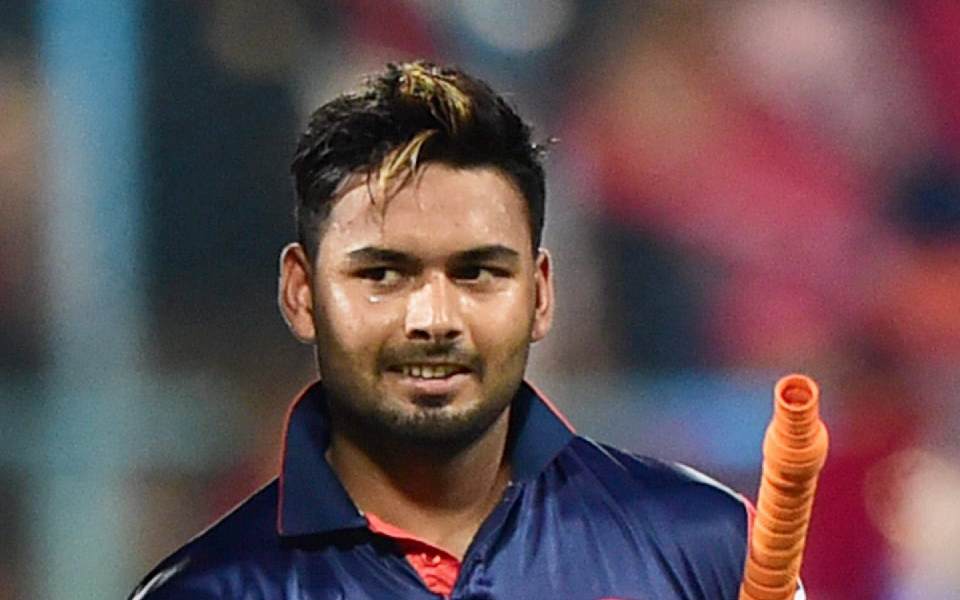
New Delhi, Mar 12: The BCCI on Tuesday declared Rishabh Pant fit to play as a wicketkeeper-batter in the upcoming IPL, brightening his prospects of a national comeback in the T20 World Cup after suffering multiple injuries in a harrowing car crash 14 months ago.
Pant, who will once again be back as Delhi Capitals skipper, has undergone extensive rehabilitation and is ready to shoulder the dual responsibility in the event starting March 22, ending weeks of speculation surrounding his exact role in the league.
"After undergoing an extensive 14-month rehab and recovery process, following a life-threatening road mishap on December 30th, 2022, near Roorkee, Uttarakhand, Rishabh Pant has now been declared fit as a wicket-keeper batter for the upcoming IPL 2024," said the BCCI in a statement.
The T20 World Cup is scheduled to be held in the West Indies and the USA in June.
A few weeks back, Pant, in an interaction with Star Sports, had recalled telling his doctor that he would shave off at least six months from his recovery timeline.
"I asked the doctor how long will it take for me to recover. I told him that everybody is speaking different things, but you will give me the most clarity about it. He (Doctor) said it would take 16 to 18 months. I told the doctor from whatever timeline you give me, I will reduce six months from it," Pant had told the official TV broadcasters of IPL.
The National Cricket Academy had declared him fit a week back after he passed all the fitness tests related to his 'Return To Play' (RTP).
It has been learnt that he batted for long hours and more importantly, kept wickets for extensive periods in match simulations organised by the NCA.
There was speculation that he might play only as an 'Impact Player' or batter but one of India's biggest match-winners in the past six years has managed to get back in shape to go full throttle.
Pant keeping wickets also means that he would have a fair chance of playing the T20 World Cup if he can come up with some impactful innings during the IPL season.
"If he can make the T20 World Cup for us, that will be a big thing for us. He is a big asset for us. If he can keep, he can play the World Cup. Let's see how he does in the IPL," BCCI secretary Jay Shah had recently told PTI in an exclusive interaction.
Pant was present at the Capitals table during the IPL auction last year, and has been working on his fitness at the NCA after recovering from the injuries sustained in the unfortunate incident.
The accident had left Pant with a severe right knee injury that required a ligament reconstruction surgery besides a fractured wrist and ankle. But he has done well to bounce back.
"If there was any nerve damage, there was a possibility of amputation. That is when I felt scared," Pant had said in Star Sports series 'Believe: To Death & Back' which documented his recovery.
"I had taken an SUV, but what I was seeing was a sedan," he quipped as he remembered his mangled vehicle.
"There was someone around so I asked if he could help getting the leg back in the position. He helped the knee get back in place.
"It was the first time I had such a feeling in life. At the time of the accident, I was aware of the wounds, but I was lucky as it could have been even more serious," he recollected.
The big-hitter had said the process of recovery was boring at best and frustrating at worst.
"I was focusing on recovery cut off from the world. It helped me in recovering fast, especially when the injury is so serious. For recovery, you have to do the same thing every day. It's boring, it's irritating, it's frustrating, but you have to do it," he elaborated.
Let the Truth be known. If you read VB and like VB, please be a VB Supporter and Help us deliver the Truth to one and all.
Chadha, others wouldn't have left AAP had it followed 'right' path: Anna Hazare
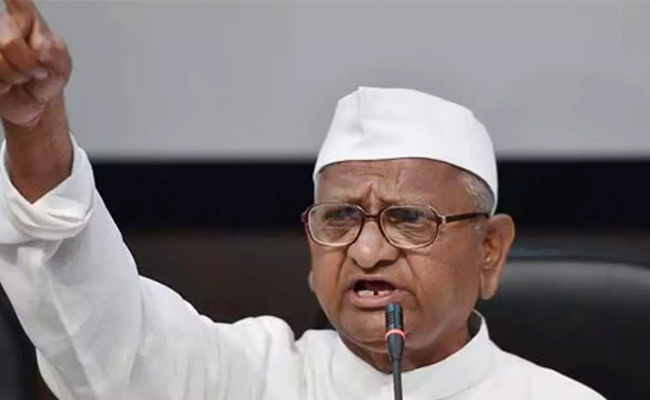
Mumbai (PTI): Social activist Anna Hazare has said Raghav Chadha and six other Aam Aadmi Party (AAP) Rajya Sabha members would not have quit the party had it followed the "right" path.
"Everyone has the right to hold an opinion in a democracy. They (Chadha and others) must have faced some trouble, which is why they left," Hazare told reporters on Friday in Ahilyanagar district of Maharashtra.
AAP Rajya Sabha members Raghav Chadha and Sandeep Pathak addressed a joint press conference in Delhi on Friday, announcing their exit from the Arvind Kejriwal-led party to join the BJP.
Chadha claimed that nearly two-thirds of AAP's Rajya Sabha members had quit the party and would function as a separate faction.
"It is their (AAP leadership’s) fault. Had that party followed the right way, they would not have left," Hazare said.
Hazare reiterated that Chadha and others must have faced difficulties within AAP, and that is why they left. "Had the party gone in the right direction, they would not have quit the party," he added.
"There must be some or the other reason (for their leaving AAP). In a democracy, every person has a view about where to stay and leave," Hazare said.
The Chadha-led exodus marks a significant setback for the Kejriwal-led party since its formation in 2012, which followed the momentum of Anna Hazare’s anti-corruption movement.