Sanju Samson to finally get a chance? Will Shivam Dube be dropped? India's likely XI vs Bangladesh
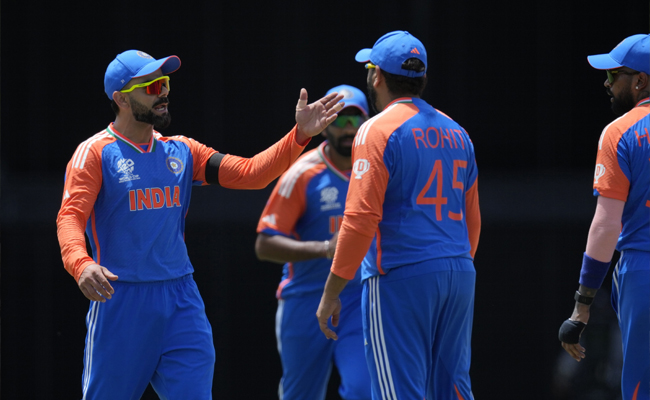
New Delhi: Team India aims to secure their second win in the T20 World Cup Super Eight stage as they face Bangladesh in a crucial match at Kensington Oval. The two teams previously met in a warm-up match, but Saturday's encounter holds greater significance.
India enters the match undefeated, while Bangladesh has struggled with form. Historically, India has dominated this rivalry, yet Bangladesh's resilience makes them a formidable opponent. India showcased a strong performance against Afghanistan in their Super Eights opener and hopes to maintain momentum.
Openers Virat Kohli and Rohit Sharma have shown promising starts but have yet to deliver impactful innings. Meanwhile, Shivam Dube, known for his power-hitting, has struggled to match his IPL form. Although he scored an unbeaten 31 against the USA, it was Suryakumar Yadav who shined in that game. Dube's underperformance might open the door for Sanju Samson in the middle order.
Hardik Pandya's explosive cameo against Afghanistan was a major positive for India. His form is crucial for India's success. On the bowling front, India is expected to retain their current combination, with left-arm spinner Kuldeep Yadav playing a key role. The Caribbean wickets have favored spinners, and India has effectively utilized three spinners in their lineup.
For Bangladesh, this clash is a must-win following their loss to Australia. Their batting woes persist, with a lack of power-hitters and underperformance from openers Litton Das and Tanzid Khan. Captain Najmul Shanto emphasized the importance of top-order contributions for a better performance against India.
India's likely XI
- Openers: Rohit Sharma (c), Virat Kohli
- Middle-order: Rishabh Pant (wk), Suryakumar Yadav, Sanju Samson
- All-rounders: Hardik Pandya, Axar Patel, Ravindra Jadeja
- Bowlers: Kuldeep Yadav, Jasprit Bumrah, Arshdeep Singh
Let the Truth be known. If you read VB and like VB, please be a VB Supporter and Help us deliver the Truth to one and all.
NEET student hangs self in Rajasthan's Sikar

Jaipur (PTI): A student preparing for the NEET examination allegedly committed suicide by hanging himself in a rented room in Rajasthan's Sikar on Friday, police said.
According to the police, the student allegedly hanged himself from a ceiling fan using his sister's scarf while one sister was attending coaching classes and the other was in the bathroom.
He had appeared in the NEET UG exam 2026, which was cancelled due to paper leak, they said.
Udyog Nagar SHO Rajesh Kumar said that the deceased, identified as Pradeep Meghwal, was a resident of Kanika ki Dhani village in Jhunjhunu's Gudha Gaudji area.
He had been living in a rented room in Sikar's Jaldhari Nagar area with his two sisters while preparing for NEET over the last three years.
His elder sister later found him hanging and informed the landlord and police after bringing him down, officials said.
The SHO said the body was kept at SK Hospital mortuary, and a postmortem had not been conducted.
The student's father, Rajesh Kumar Meghwal, told police that Pradeep's NEET examination had gone well and the family was expecting him to score around 650 marks.
Former Rajasthan deputy chief minister Sachin Pilot expressed grief over the incident and linked it to anxiety among students after reports of irregularities and paper leaks in NEET 2026.
Pilot said repeated paper leak incidents and cancellation of examinations were affecting students' mental health and demanded a time-bound investigation and strict action against those responsible.