Satwik, Chirag lose No.1 ranking; slip to third in latest BWF list

New Delhi, Jun 11: Premier Indian doubles pair of Satwiksairaj Rankireddy and Chirag Shetty, who pulled out of their title defence at Indonesia Open last week, slipped two rungs to third in the latest Badminton World Federation rankings on Tuesday.
China's Liang Wei Keng and Wang Chang are the new men's doubles No.1s followed by Denmark's Kim Astrup and Anders Skaarup Rasmussen, who jumped two places.
The Chirag-Satwik pair won the Thailand Open in May to reclaim the No.1 ranking but suffered loss of form and made a first-round exit from the Singapore Open last month.
The Indians have also pulled out of the ongoing Australian Open.
In men's singles, HS Prannoy and Lakshya Sen remained inside top-15, maintaining their 10th and 14th positions respectively.
Kidambi Srikanth dropped four places to be No 32, while Priyanshu Rajawat (No 34) and Kiran George (No 35, up by one place) were the next best Indians.
Two-time Olympic medallist PV Sindhu remained static at No 10 in the women's singles rankings.
In women's doubles, Paris Olympics-bound pair Tanisha Crasto and Ashwini Ponnappa improved one place to 19th.
Treesa Jolly and Gayatri Gopichand also climbed one notch to 24th.
The Commonwealth Games bronze-medallist pair had made a last-16 exit from the Indonesia Open.
Let the Truth be known. If you read VB and like VB, please be a VB Supporter and Help us deliver the Truth to one and all.
Lebanon appoints new representative for talks with Israel, rejects linkage to Iran
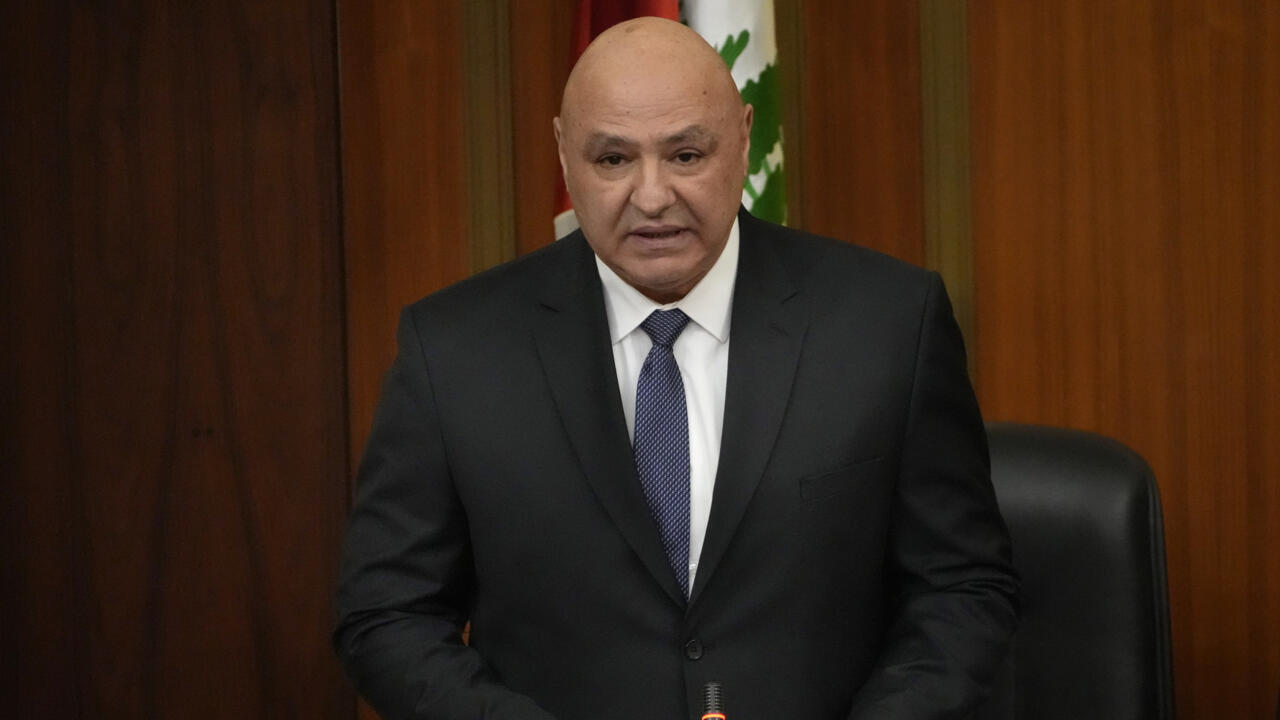
Beirut: Lebanon’s has moved to underline its independent position in ongoing regional developments, amid attempts to link the country to the broader conflict involving Iran, the United States and Israel.
President Joseph Aoun, while announcing the appointment of former US ambassador Simon Karam as Lebanon’s representative in talks with Israel, made it clear that Karam would be the sole representative for Lebanon and that there would be no substitute.
The move comes in response to what the Lebanese officials see as efforts by Iran to tie Lebanon’s situation to the wider regional conflict. Iran had indicated that there would be no ceasefire involving the US, Israel and Iran unless it also included a ceasefire in Lebanon.
Some groups, including Hezbollah and its supporters, had expressed support for linking the situations, citing concerns that the Lebanese government has limited leverage in negotiations with Israel. Lebanon is not formally a party to the conflict, and its army is considered weak.
However, others, including Prime Minister Nawaf Salam, have opposed this approach. They view Iran’s stance as an attempt to influence Lebanon’s internal affairs and see it as undermining the country’s sovereignty.
Officials backing the government’s position say the move is aimed at reaffirming Lebanon’s sovereignty and ensuring that decisions about peace and ceasefire within the country are not dictated externally.
They also see it as a safeguard, so that any breakdown in talks between the US, Israel and Iran does not automatically lead to renewed conflict in Lebanon.