Shooter Aishwary Tomar smashes world record on way to gold in ISSF Junior World C'ship
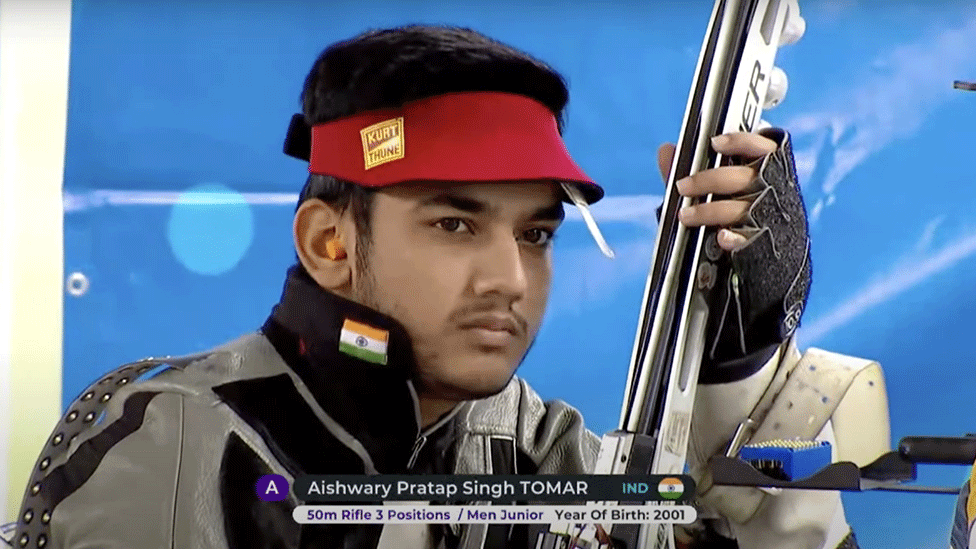
Lima (PTI): Young Indian shooter Aishwary Pratap Singh Tomar smashed the world record in the final to win gold in the men's 50m rifle 3 positions event at the ISSF junior world championships here.
Tomar equalled the junior world record score of 1185 in qualification to top the field on Monday.
The youngster then bettered the junior world record in the final with a score of 463.4, finishing nearly seven points ahead of second-placed Frenchman Lucas Kryzs, who won the silver with a score of 456.5.
Gavin Barnick of USA won bronze with a score of 446.6.
Among other Indians in the field, Sanskar Havelia was 11th with a score of 1160, Pankaj Mukheja 15th with 1157, Sartaj Tiwana 16th with 1157 and Gurman Singh finished 22nd with a score of 1153.
Earlier in the day, India's 14-year-old shooter Naamya Kapoor fired her way to the gold medal ahead of celebrated compatriot Manu Bhaker in the women's 25m pistol event.
Kapoor shot 36 in the final to claim the top prize ahead of France's Camille Jedrzejewski (33) and 19-year-old Olympian Bhakar (31), who has already won three gold so far in the tournament.
Bhaker settled for the bronze after the French markswoman prevailed in a shoot-off on Monday. Another Indian shooter in the women's final, Rhythm Sangwan, finished fourth as the country dominated the event.
Kapoor was sixth in the qualification with a total of 580 as Bhaker (587) and Sangwan (586) grabbed the top two spots.
Delhi's Kapoor had shot the second-best score of 583 in qualification to finish fifth in the national shooting selection trials at the Dr Karni Singh Range in August.
India lead the standings with eight gold, six silver and three bronze medals for a total of 17 medals.
This is the first multi-discipline shooting event since the Tokyo Olympics, with as many as 32 nations and nearly 370 athletes participating in the championship.
Let the Truth be known. If you read VB and like VB, please be a VB Supporter and Help us deliver the Truth to one and all.
4 held for sexually assaulting woman, girl on moving bus after social media alert in UP's Agra

Agra (UP) (PTI): Four people were arrested, after a prompt response by police following a social media alert, for allegedly sexually assaulting a woman and a girl inside a moving bus here, officials said on Tuesday.
According to an official police statement, at 12:27 am on April 27, information was received on the social media platform X about an incident of sexual assault on a bus travelling from Kanpur to Ahmedabad, which was approaching Namner crossing in Agra.
Acting under the direction of Police Commissioner Deepak Kumar, the Agra Police social media team immediately alerted the Rakabganj police station within minutes and coordinated with the victims to confirm the incident and obtain the exact location, it stated.
Police teams launched intensive checking at Namner crossing and intercepted the bus as it reached the spot. The four accused involved in the incident were apprehended on the spot, and legal action was initiated against them, the statement said.
The police said the swift response and coordination between the social media team and field units ensured timely action, bringing relief to the victims and other passengers, who expressed gratitude towards the police, it added.