South Africa's Hashim Amla retires from all formats of Cricket
Hashim Amla, only South African to score triple Test ton, retires from international cricket
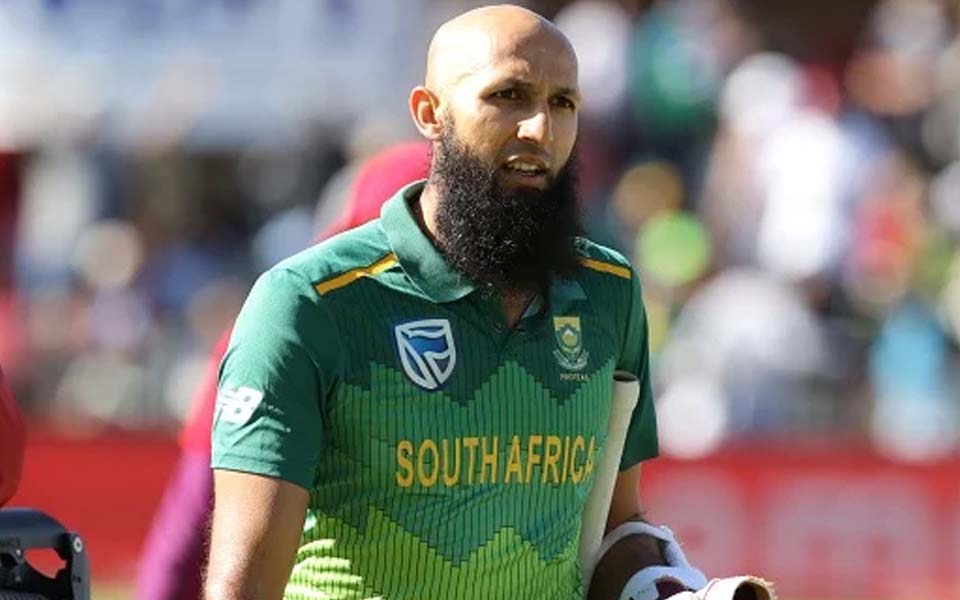
Johannesburg, Aug 8: Hashim Amla, the only South African to score a triple Test match century, on Thursday announced his retirement from international cricket, just days after fast bowler Dale Steyn said he was quitting Tests.
Amla, 36, said he was retiring from all international cricket after a 15-year career during which he hit 55 centuries in 349 matches across all formats.
He followed record-breaking fast bowler Steyn who on Monday said he was retiring from Test cricket, although he remains available for international white-ball cricket.
An elegant right-handed top-order batsman, Amla overcame a shaky start in international cricket, during which his technique was criticised, to become one of South Africa's all-time leading batsmen.
He hit 55 centuries in a 15-year international career, including South Africa's highest Test score of 311 not out against England at The Oval in 2012.
Amla scored 9,282 runs at an average of 46.64 in 124 Test matches and 8,113 at 49.46 in 181 one-day internationals.
He also made 1,277 runs in 44 Twenty20 internationals at an average of 33.60. He hit 28 centuries in Tests and 27 in one-day internationals. His Test tally included four double centuries.
Amla said he thanked "the fans for energising me when times were tough, and for celebrating with me when we succeeded together".
Amla made his Test debut against India in Calcutta in 2004/05, scoring 24 and 2.
In the same season he played in two matches of South Africa's home series against England but was dropped after scoring only 36 runs in four innings.
Some critics believed that his backlift, which took his bat out at an angle of close to 45 degrees, was a flaw which would prevent him from having a successful international career.
He modified his technique, although still retaining a distinctive loop in his backlift, and returned to Test cricket 15 months later with his first century, 149 against New Zealand.
He became an ever-present in the South African team.
His early struggles were recalled in a tweet by former team-mate AB de Villiers.
"So many doubted u early on, but your fighting spirit, humility & incredible one of a kind talent took u to the top of the mountain," said De Villiers.
Initially regarded as a Test specialist, Amla only made his one-day international debut in 2008 but soon proved that classic stroke play, mainly as an opening batsman, was as effective as power hitting in the limited overs game.
When he was at the peak of his career, between 2010 and 2016, he had an average of above 50 in both Tests and one-day internationals, while maintaining a scoring strike rate of better than 90 runs per 100 balls in one-day games.
In recent years, though, Amla's form dropped off and he struggled at the recent World Cup in England and Wales.
His last Test century was in October 2017 and he made only two one-day international hundreds after that date.
Amla captained South Africa in 14 Test matches between 2014 and 2015/16 but seldom appeared entirely comfortable in the role.
His captaincy career started promisingly with three series wins, including one in Sri Lanka, but after a difficult tour of India in which South Africa lost three of four Tests, he resigned as captain midway through a home series against England when South Africa were 1-0 down after two matches.
Amla said he would remain available for domestic cricket as well as the second edition of the Mzansi Super League Twenty20 competition, which is due to start in November.
Let the Truth be known. If you read VB and like VB, please be a VB Supporter and Help us deliver the Truth to one and all.
Chhattisgarh: FIR against Vedanta group chairman Anil Agarwal, others after blast kills 20 workers
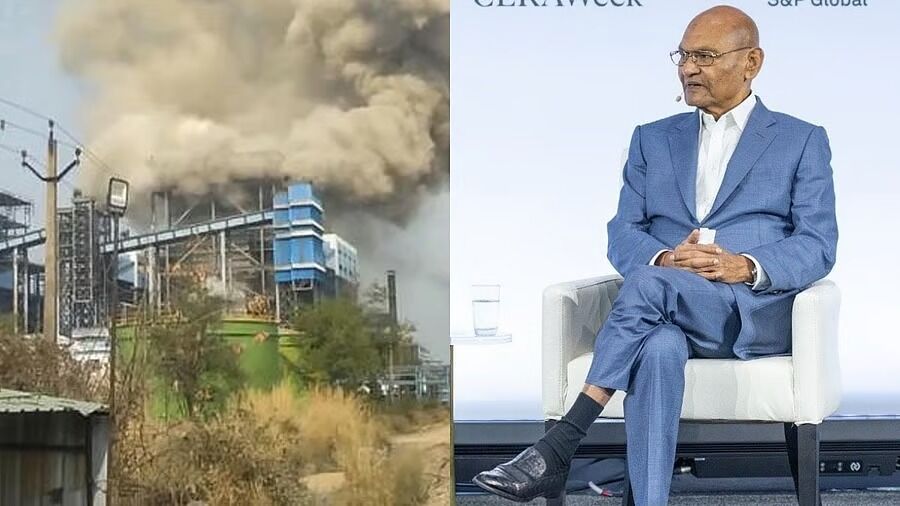
Sakti (Chhattisgarh) (PTI): The Chhattisgarh police on Thursday registered an FIR against Vedanta Group chairman Anil Agarwal and others in connection with the blast at the firm's power plant in Sakti district that claimed 20 lives, an official said.
The explosion occurred on April 14 at the Vedanta plant in Singhitarai village when a steel tube carrying high-pressure steam from the boiler to the turbine burst, leaving several workers with severe burn injuries. The incident claimed 20 lives and left 16 persons injured.
A case has been registered at Dabhra police station under sections 106 (causing death by negligence), 289 (negligent conduct with respect to machinery) and 3(5) (common intention) of the Bharatiya Nyaya Sanhita, Sakti Superintendent of Police Prafull Thakur said.
"Eight to ten individuals, including Vedanta Group chairman Anil Agarwal, have been named in the FIR. If more persons are found responsible during the investigation, their names will be added," Thakur told PTI.
Investigation into the incident is underway and several reports are awaited, including post-mortem reports of the deceased and findings from the forensic science laboratory and the industrial health and safety department, he said.
"A technical team has also been constituted to probe the cause of the blast. Further sections will be added if required after all reports are received," the SP said.
Following the incident, the opposition Congress had demanded registration of an FIR against the plant management and a judicial inquiry into it.