Sri Lanka sets 265 runs’ target for India
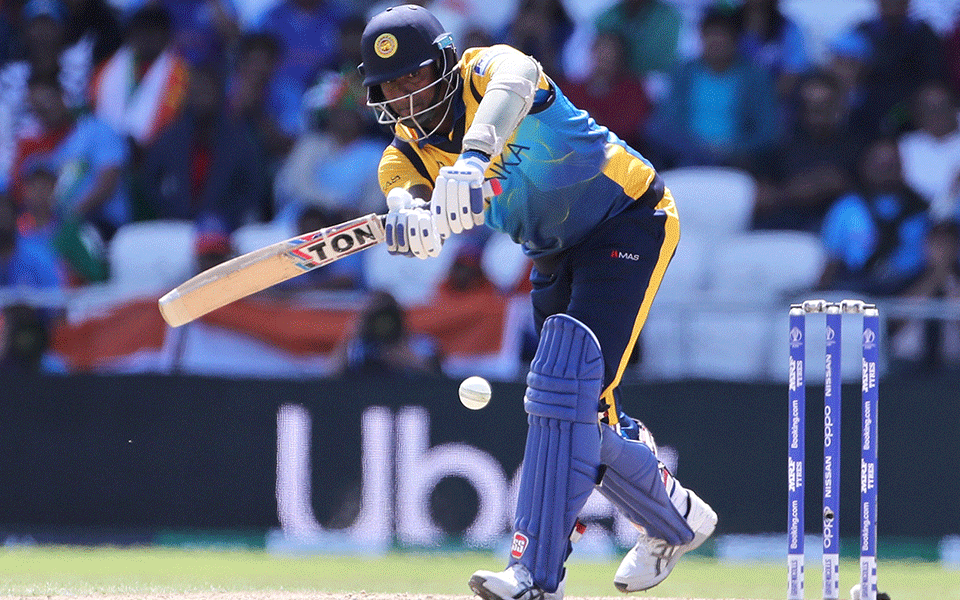
Leeds, Jul 6: Angelo Mathews once again turned out to be a thorn in India's flesh with a gutsy hundred after a top-order collapse, guiding Sri Lanka to a respectable 264 for 7 in their final World Cup group league encounter here Saturday.
The former Sri Lanka captain (113 off 128 balls) played a near perfect knock with his back to the wall, to give his team a chance to fight which looked bleak after first hour.
Jasprit Bumrah (3/37 in 10 overs) was fast, accurate and mostly unplayable but Bhuvneshwar Kumar (1/73 in 10 overs) had a forgettable day.
Mathews, who has now scored all his three ODI hundreds against India (Mohali and Ranchi earlier), hit 10 fours and two sixes in his final knock of this competition.
Mathews came in at 53 for 3 and it soon became 55 for 4 when Lahiru Thirimanne (53 off 68 balls) joined him.
The duo added 124 runs for the fifth wicket to bail the team out of the woods. He then had a 74-run stand for the sixth wicket with Dhananjaya de Silva (29 off 36 balls) that helped Sri Lanka get past the 250-run mark.
The 32-year-old Mathews' knock was a treat to watch as it was a perfect example of how to build an innings after a top-order collapse.
Ravindra Jadeja (1/40 in 10 overs) was given respect and only twice he chanced his arms for two maximums.
Kuldeep Yadav (1/58 off 10 overs), after being dropped against Bangladesh, did not show much improvement as he was bowling too full which both Thirimanne and Mathews found easy to negotiate.
Kuldeep, at the fag end of his spell, did get Thirimanne, who tried to hit the left-arm wrist spinner against the spin.
With Mohammed Shami rested, India played with two seamers. While Bhuvneshwar was picked for special treatment by Mathews and Thirimanne, it was Bumrah, who had given his team initial momentum with two dismissals.
Bumrah dismissed Dimuth Karunaratne (10) with an angular delivery that was fuller than what the Sri Lankan skipper thought. He tried to play a cut shot but could only manage to edge it to Dhoni behind stumps.
The dangerous Kusal Perera (18) hit three boundaries before Dhoni pouched another one off Bumrah to send him back.
Jadeja, playing his first game of the tournament, then earned dividends from Dhoni's flash reflexes as Kusal Mendis came down the track and missed the flight to find the bails whipped.
Pandya, who has had a decent tournament as a bowler, then removed the in-form Avishka Fernando (20), who looked promising during his brief stay.
Let the Truth be known. If you read VB and like VB, please be a VB Supporter and Help us deliver the Truth to one and all.
Bhojshala complex registered as 'mosque' in old revenue records: Muslim side to MP HC
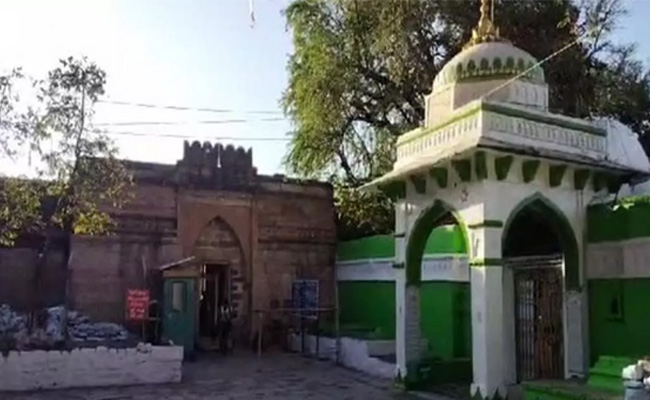
Indore (PTI): The disputed Bhojshala Temple-Kamal Maula Mosque complex has historically been registered as a 'mosque' in revenue records and available sources don't clearly mention any Saraswati temple established by then-king Raja Bhoj, the Muslim side has told the Madhya Pradesh High Court.
The Hindu community considers Bhojshala a temple dedicated to Goddess Saraswati, while the Muslim side calls the 11th-century monument Kamal Maula Mosque. The disputed complex located in Dhar district is protected by the Archaeological Survey of India (ASI).
During the hearing before the HC's Indore bench of Justices Vijay Kumar Shukla and Justice Alok Awasthi on Wednesday, Qazi Moinuddin questioned two PILs filed as intervenors in the Bhojshala case by an organisation named Hindu Front for Justice, one Kuldeep Tiwari and another individual.
Moinuddin claims to be a descendant of Sufi saint Maulana Kamaluddin Chishti and the 'Sajjadanashin' (spiritual head, guru, or successor of a Sufi shrine, khanqah, or religious site).
The PILs state that Bhojshala is actually a Saraswati temple and only Hindus should be granted the right to worship at the disputed complex.
Moinuddin's lawyer, Noor Ahmed Sheikh, claimed in the court that his client's ancestors, who are descendants of Maulana Kamaluddin Chishti, have historically held titles to the complex, and the site was also recorded as a "mosque" in government revenue records.
He contended that those associated with the management of the Kamal Maula Mosque, located within the complex, have been in "continuous and peaceful occupation" of the site for a long time.
Citing Muslim law, Sheikh argued that in the case of religious property, particularly a mosque or its related properties, officials such as the Sajjadanashin and Mutawalli (person entrusted with management, maintenance, and administration of a Waqf), and their descendants, not only have the right to intervene, but also have the right to manage and use such a structure.
Citing provisions of the Ancient Monuments Preservation Act 1904, the Muslim side's lawyer said the term "in-charge of the property" is used in this law, which makes it clear that the person or party who has been in charge of a property for a long time has rights over it.
During the hearing, Touseef Warsi, the lawyer representing the Maulana Kamaluddin Welfare Society of Dhar, claimed that Hindu parties in both PILs had made "misleading representations" regarding historical facts before the high court.
He further claimed that available historical sources do not clearly mention the existence of a Saraswati temple established by Raja Bhoj, the legendary king of the Parmar dynasty who ruled Dhar from 1010 to 1055.
The ASI, a central government agency, has adopted three different positions in the lawsuits filed regarding the Bhojshala dispute, changing its answers from time to time, and this situation raises serious questions about judicial scrutiny of the complex, Warsi submitted.
He raised objections regarding the ASI's process of scientific survey of the Bhojshala complex, carried out on the HC order in 2024, and the method of videography and requested the court to examine these objections.
The hearing in the Bhojshala case will continue on Thursday.
The HC has been regularly hearing four petitions and one writ appeal since April 6, contesting the religious nature of the monument.