St. Germains Academy siblings Yahya, Isa Khan secure Gold at CISCE Nationals in Boxing again
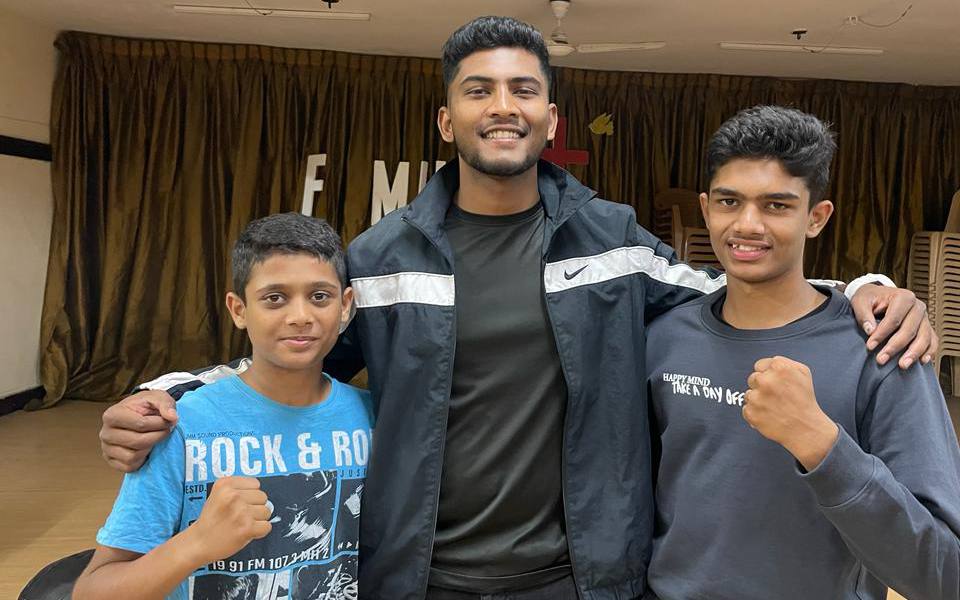
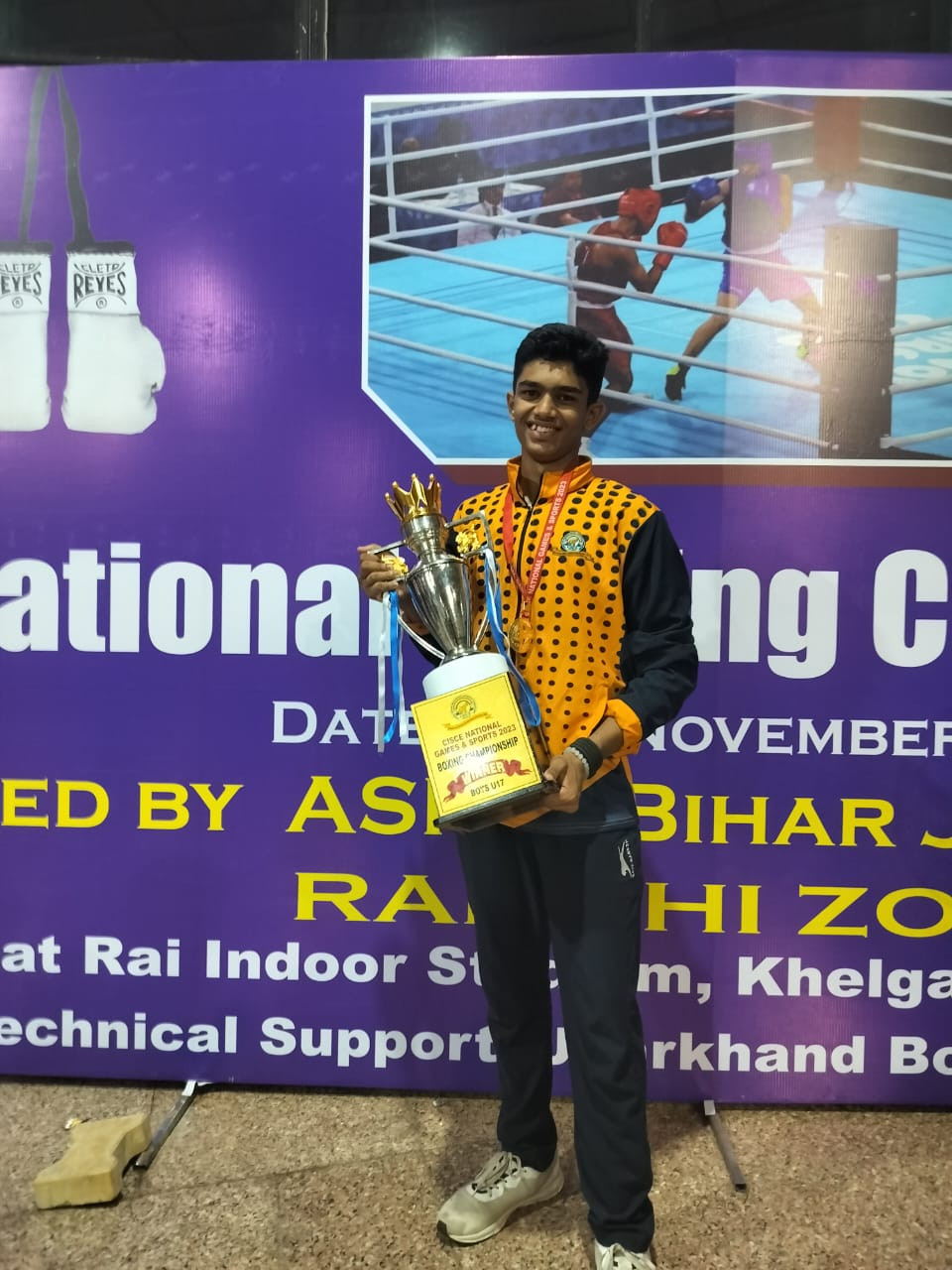
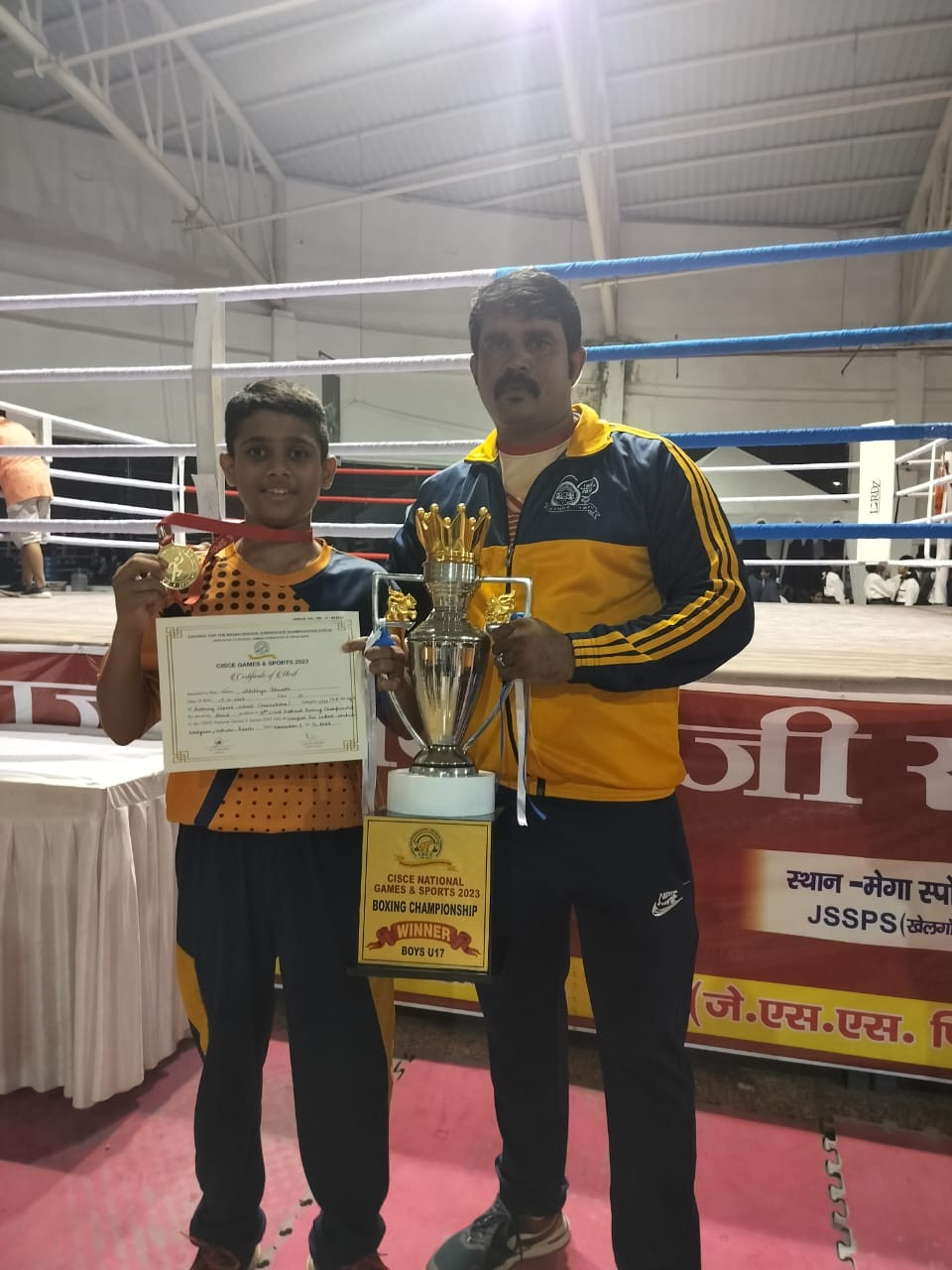
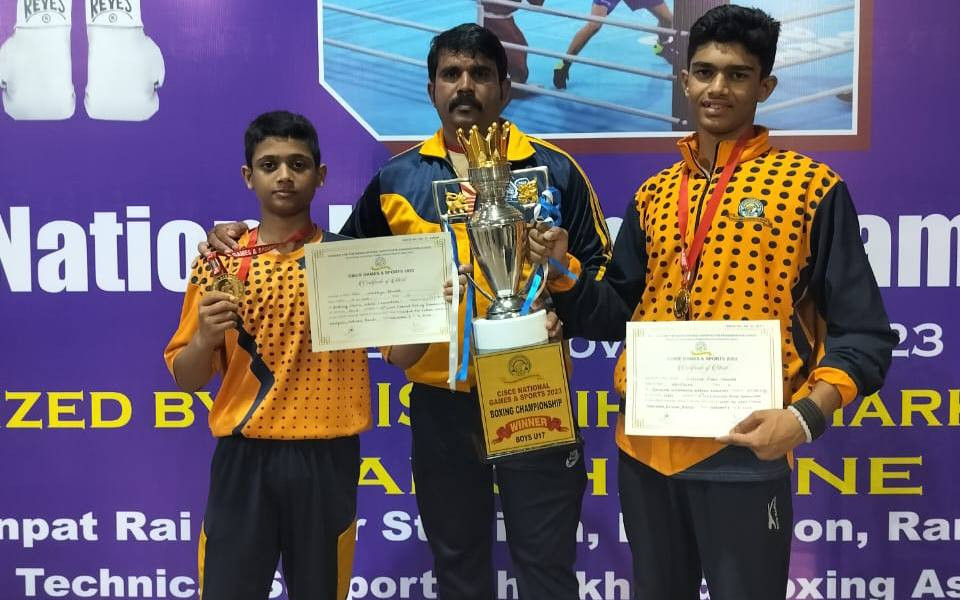
Bengaluru: In a stellar display of pugilistic prowess, Isa Khan (15) and Yahya Khan (13), students of St. Germains Academy, emerged triumphant yet again by securing gold at the 3rd CISCE Nationals Boxing Championship, held in Ranchi from November 1 to 5, 2023.
This victory follows their earlier success at the State championship and underscores their rising prominence in the boxing arena.
Isa, competing in the under-17 category, and Yahya, in the under-14 category, showcased a level of skill and tenacity that belies their age. Trained under the tutelage of Abhisheak Samson, a distinguished South Zone Boxing Champion and State Champion, the Khan brothers have etched their mark on the boxing landscape.
Their journey to victory has not been without its share of challenges. Battling injuries and setbacks over the past month, Isa and Yahya demonstrated perseverance and commitment to their craft. Coach Abhisheak Samson, hailing from Steve’s Boxing Club in Bengaluru, played a pivotal role in honing their skills and guiding them through the rigorous training regimen, their mother Huda told Vartha Bharati.
Isa Khan, a 10th-grade student at St. Germains Academy, exemplifies dedication by successfully balancing academic responsibilities with his intensive training schedule. His routine involves early morning tuitions, followed by a transition to school, and concludes with evening boxing practice.
St. Germains Academy has played a significant role in supporting the brothers' academic and athletics both. The school's Director, Dean, and Principal have extended their assistance beyond the classroom, ensuring that Isa and Yahya receive the necessary encouragement and backing to excel in their sporting endeavors.
Huda, the proud mother of Isa and Yahya, expressed her gratitude towards St. Germains Academy and its administration. "The Director, Dean, and the Principal of St.Germain Academy are very helpful in every aspect. They even care about Isa and Yahya's food and sleep," she remarked.
With black belts in Taekwondo adding to their sporting repertoire, the Khan brothers are not merely satisfied with local success. The family envisions Isa and Yahya as future stalwarts, fondly referring to them as the "Kings of Rings." This recent victory at the national level further fuels their aspirations.
Looking ahead, Isa and Yahya are pre-qualified for the School Games Federation of India Boxing Championship slated for December 2023 in Maharashtra.
Earlier last year, Isa Khan and Yahya Khan, representing the CISCE Karnataka Boxing Team had bagged a gold and a silver medal at the CISCE National Boxing Championship 2022. The competition was held at the JRD Tata Sports Complex in Jamshedpur between September 1 and September 3, 2022.
Let the Truth be known. If you read VB and like VB, please be a VB Supporter and Help us deliver the Truth to one and all.
T'gana RTC strike: Talks between govt, employees successful

Hyderabad (PTI): Talks between employees of Telangana State Road Transport Corporation (RTC) who were on strike and the state government concluded successfully on Friday as the government agreed to the key demands of the workmen.
Following a day-long marathon of talks between the leaders of the employees' Joint Action Committee (JAC) and the cabinet sub-committee, the government announced after midnight that it acceded to the demands, including a merger of RTC with the government, 11 per cent pay revision and elections to the employees' unions.
A committee comprising officials and employee leaders would be appointed over the merger of RTC with the government, it said.
The RTC management has also agreed to address the remaining issues as well, an official release said.
The employees would call off their strike and the RTC buses would hit the roads shortly, it said.
The employees had been on an indefinite strike since April 22 over a series of demands, including the merger of RTC with the government.
Earlier in the day, a driver of the RTC, who attempted suicide on April 23 during the strike, died at a hospital here in the early hours of Friday.
Shankar Goud, a 55-year-old driver, set himself ablaze by pouring petrol at Narsampet in Warangal district when the employees were staging a protest on Thursday in support of their demands.
Goud suffered serious burns, was initially admitted to a state-run hospital in Warangal, and later shifted to a super-speciality hospital in Hyderabad for advanced treatment.
"He succumbed (to injuries) at about 1.30 am on Friday," a senior official said.
The driver’s body was taken to his relative’s village, Muttojipet in Warangal district, for funeral rites.
Tension prevailed in Muttojipet as his family members and RTC employees attempted to take the body to the Narsampet bus station, where he worked, to enable his colleagues to pay their last respects. However, police did not permit this, citing law-and-order concerns.
This led to a deadlock before the funeral could proceed.
Union Minister Bandi Sanjay Kumar criticised the Telangana government for not allowing the body to be taken to the Narsampet bus station.
Kumar, Minister of State (Home), visited Muttojipet village in Warangal district, where the funeral was held, and paid homage to Goud.
“They (family members) want to take the body to the bus depot for five minutes. Is the RTC bus depot in Pakistan or Bangladesh? They are emotionally attached to taking the body there. The government is hurting sentiments and creating fear among RTC employees,” Kumar told reporters.
He also expressed anger at the police for not allowing the body to be taken to the bus station and staged a protest, according to a release from his office.
RTC employees and BJP workers attempted to take the mortal remains in an ambulance to Narsampet, but were stopped by the police.
Later, after discussions with the police, the family members and RTC employees agreed to conduct the funeral in the village.
Sanjay Kumar, stating he would abide by the family’s decision, left the village after the funeral was conducted there.
Transport Minister Ponnam Prabhakar said an ex gratia of Rs 10 lakh, a house, and a government job would be provided to the kin of Goud.
Chief Minister A Revanth Reddy expressed shock over the employee’s death and conveyed deep condolences to the grieving family, according to the release.
The RTC employees’ JAC had earlier announced an agitation programme from April 24 to 29, including silent marches and submission of memorandums to MLAs and other leaders.