Struggling KXIP look to turn around fortunes against Bhuvneshwar-less Sunrisers
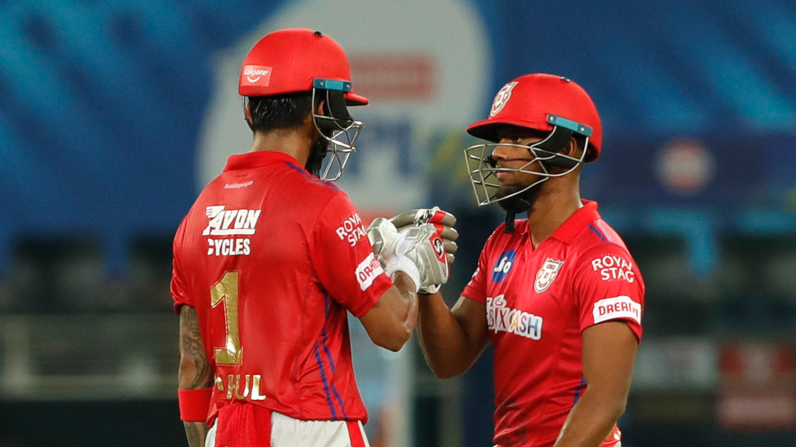
Dubai: Their bowling attacks struggling to find form, Kings XI Punjab and Sunrisers Hyderabad will look towards their power-hitters to do the job when the two erratic teams go head to head in an IPL match here on Thursday.
KXIP are currently languishing at the bottom of the table after losing four of their five games, while SRH is only slightly better at sixth following two wins and three losses so far.
KXIP's strength has been in a formidable opening duo. Skipper KL Rahul has been in scintillating form this year, scoring two fifties and a century, while Mayank Agarwal also has a half-century and a ton to his credit. The two have done the heavy-lifting for the team.
Nicholas Pooran has also looked sharp but Glenn Maxwell is yet to fire.
But despite the solid batting performances, KXIP has been unable to win because of their disappointing bowling attack. Apart from Mohammed Shami, all the other bowlers have failed to take wickets, conceding far too many runs in death overs.
They were unable to defend 223 against Rajasthan. In their 10-wicket loss in the previous outing, KXIP bowlers were at their wit's end as Chennai Super Kings overhauled a 178-run target with 14 balls and 10 wickets to spare.
And come Thursday, Sunrisers, who are blessed with a strong top-order comprising Jonny Bairstow, David Warner, Manish Pandey, and Kane Williamson, will look to exploit a low-on-confidence KXIP's bowling unit.
Warner and his men were handed a 34-run defeat by the Mumbai Indians on Sunday.
Having lost their opening two games due to the middle order, Sunrisers addressed the issue by bringing in Williamson to the playing XI at the expense of an all-round option.
Skipper Warner backed youngsters Abhishek Sharma and Abdul Samad to fill in for the fifth bowler and the risk paid off as the former champions won two games on the trot.
However, the Orange Army was dealt a massive blow when senior paacer Bhuvneshwar Kumar was ruled out of the tournament with a thigh muscle injury.
In Bhuvneshwar's absence, Sunrisers struggled with their bowling. Apart from T Natarajan, pacers Sandeep Sharma and Siddarth Kaul leaked runs.
Samad was also expensive, which led Warner to turn to Williamson to bowl two overs of off-spin against Mumbai.
Going ahead, there will be added pressure on yorker specialist Natarajan and star spinner Rashid Khan.
Sunrisers face the conundrum of either providing stability in the middle order or strengthening their bowling attack.
They have the option of playing experienced Afghan all-rounder Mohammad Nabi or West Indies' Fabian Allen but that would mean Willamson will have to sit out.
Teams (from):
Sunrisers Hyderabad: David Warner (c), Jonny Bairstow, Kane Williamson, Manish Pandey, Shreevats Goswami, Virat Singh, Priyam Garg, Wriddhiman Saha, Abdul Samad, Vijay Shankar, Mohammad Nabi, Rashid Khan, Jason Holder, Abhishek Sharma, B Sandeep, Sanjay Yadav, Fabian Allen, Prithvi Raj Yarra, Khaleel Ahmed, Sandeep Sharma, Shahbaz Nadeem, Siddharth Kaul, Billy Stanlake, T Natarajan, Basil Thampi.
Kings XI Punjab: KL Rahul (c), Mayank Agarwal, Sheldon Cottrell, Chris Gayle, Glenn Maxwell, Mohammed Shami, Mujeeb Ur Rahman, Karun Nair, James Neesham, Nicholas Pooran (wk), Ishan Porel, Arshdeep Singh, Murugan Ashwin, Krishnappa Gowtham, Harpreet Brar, Deepak Hooda, Chris Jordan, Sarfaraz Khan, Mandeep Singh, Darshan Nalkande, Ravi Bishnoi, Simran Singh (wk), Jagadeesha Suchith, Tajinder Singh, Hardus Viljoen.
The match starts at 7.30 PM IST.
Let the Truth be known. If you read VB and like VB, please be a VB Supporter and Help us deliver the Truth to one and all.
Karnataka School Edu Dept prohibits children from being made to dance to obscene songs
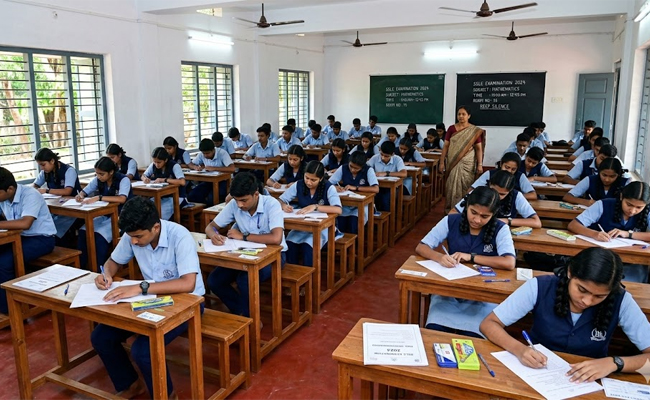
Bengaluru (PTI): The Karnataka School Education Department has issued a circular strictly prohibiting children from being made to dance to obscene songs in educational and cultural programmes.
It stated that such dances would negatively impact students' mental health and moral values. It will create indiscipline and harm the sanctity of education.
"All the Deputy Directors (Administration) of the state's School Education Department have been asked to take strict measures to prevent children or students from dancing to obscene songs in all government, aided and unaided schools in the state," the office of the commissioner of the School Education Department said in a recent circular.
"If it is found that children are being made to dance to obscene songs, appropriate action will be taken against the headmaster or management of such school," it added.
The department also listed certain measures in this regard, which include: strictly prohibiting children from being made to dance to obscene songs during educational and cultural programmes; selecting songs that are inspiring, positive, instilling national pride in children and reflecting the greatness, dignity, values, culture, and morality of the state.
Stating that the school headmaster and management are responsible for selecting songs and dances for cultural programmes, it said, they should also ensure that students wear decent clothes in dance or cultural programmes.