Suryakumar Yadav to lead India in T20Is; Rohit, Kohli decide to play ODIs
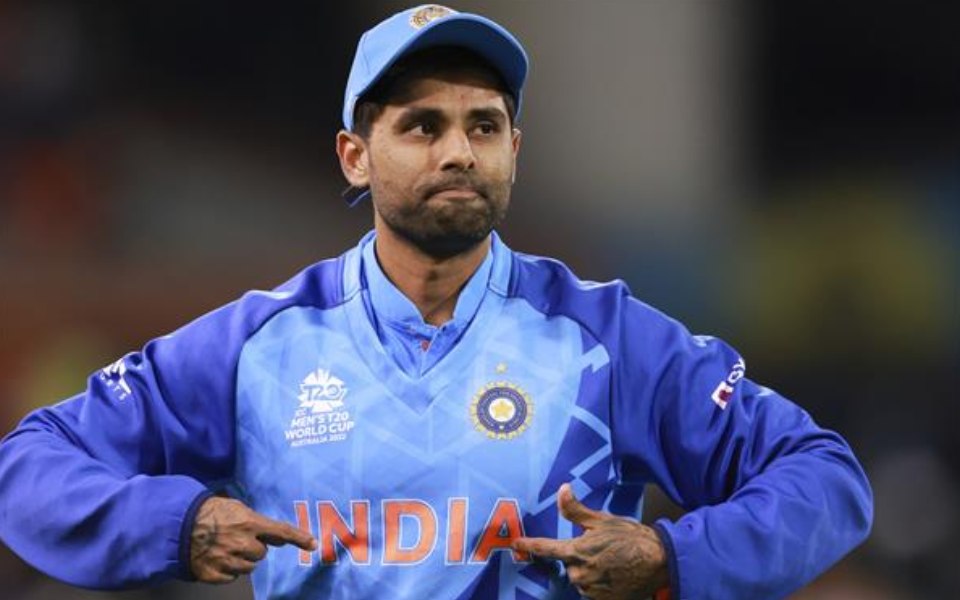
New Delhi, Jul 18: Big-hitting batter Suryakumar Yadav was on Thursday named captain of the Indian T20 team for the three-match series against Sri Lanka starting July 27, while ODI skipper Rohit Sharma and Virat Kohli were included for the 50-over series against the same team next month.
Shubman Gill has been named vice-captain for both the formats.
Riyan Parag, who scored seven half-centuries in the Vijay Hazare Trophy, and Delhi speedster Harshit Rana are the two new faces in the ODI squad.
T20I Squad:
Suryakumar Yadav (C), Shubman Gill (VC), Yashasvi Jaiswal, Rinku Singh, Riyan Parag, Rishabh Pant (WK), Sanju Samson (WK), Hardik Pandya, Shivam Dube, Axar Patel, Washington Sundar, Ravi Bishnoi, Arshdeep Singh, Khaleel Ahmed, Mohd. Siraj.
ODI Squad:
Rohit Sharma (C), Shubman Gill (VC), Virat Kohli, KL Rahul (WK), Rishabh Pant (WK), Shreyas Iyer, Shivam Dube, Kuldeep Yadav, Mohd. Siraj, Washington Sundar, Arshdeep Singh, Riyan Parag, Axar Patel, Khaleel Ahmed, Harshit Rana.
🚨 News 🚨#TeamIndia's squad for 3 T20Is & 3 ODIs announced
— BCCI (@BCCI) July 18, 2024
Read More 🔽
Let the Truth be known. If you read VB and like VB, please be a VB Supporter and Help us deliver the Truth to one and all.
Allen, Raghuvanshi, Green power KKR to 29-run win over GT
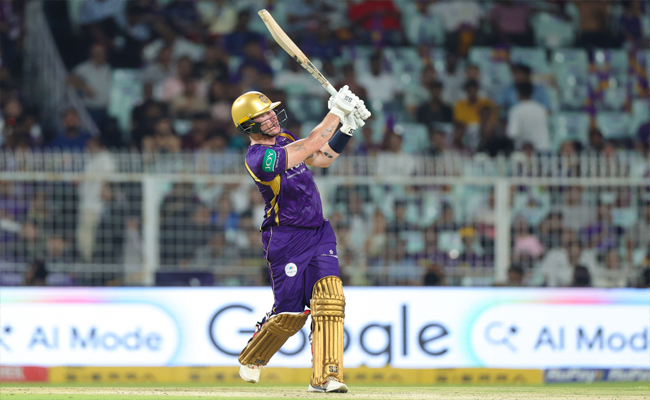
Kolkata (PTI): Finn Allen blasted a 35-ball 93, while Angkrish Raghuvanshi hit an unbeaten 44-ball 82 as Kolkata Knight Riders kept their playoff hopes alive with a 29-run win over Gujarat Titans in the IPL match here on Saturday.
Sent in to bat, Allen went on a six-hitting spree, smashing 10 maximums and four boundaries to add 95 off 41 balls with Raghuvanshi (82).
Raghuvanshi then shared another 108 off 53 balls with Cameron Green (52 not out) to power KKR to a challenging 247 for 2.
In reply, GT could manage 218-4, riding on skipper Shubman Gill's 49-ball 85 and a 35-ball 57 from Jos Buttler. Opener Sai Sudarsan was retired hurt but returned to make a 28-ball 53 not out.
Sunil Narine (2/29) claimed two wickets and Saurabh Dubey snapped one for KKR.
For GT, Mohammed Siraj (1/50), Sai Kishore (1/38) were the wicket-takers.
Brief Score:
KKR: 247 for 2 in 20 overs (Finn Allen 93, Angkrish Raghuvanshi 82 not out, Camero Green 52 not out; Mohammed Siraj 1/50).
GT: 218 for 4 in 20 overs (Shubman Gill 85, Sunil Narine 2/29).