Suryakumar's sparkling hundred carries India to 201 for 7 in 3rd T20I against SA
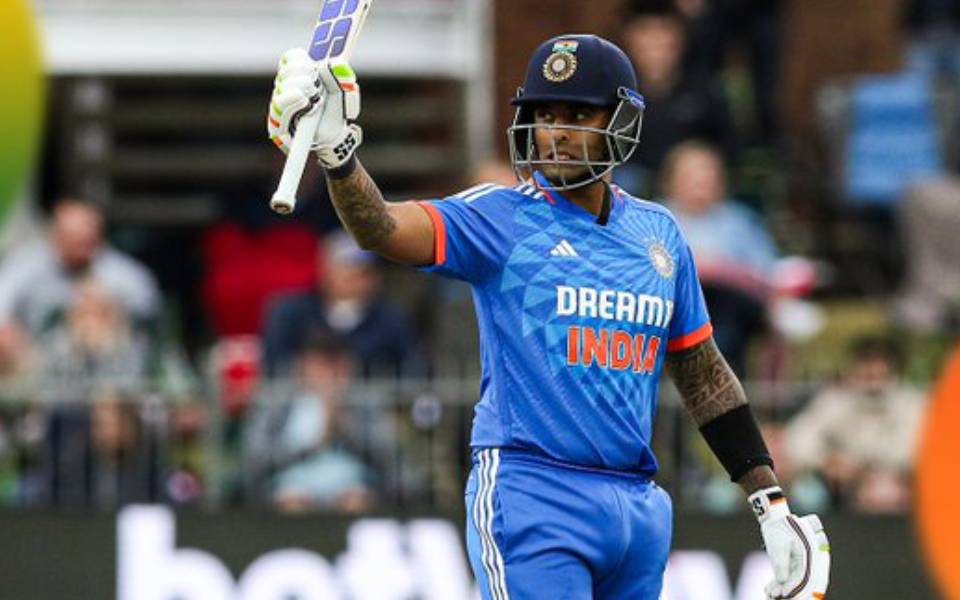
Johannesburg, Dec 14: Captain Suryakumar Yadav exploited a bone-dry surface to make a twinkling hundred as India made a competitive 201 for seven against South Africa in the third and final T20I here on Thursday.
Trailing 0-1 in the series, India perforce needed a win here, and they showed all that necessary intensity after South Africa asked them to bat first.
Suryakumar (100 off 56 balls), who made his fourth T20I century, and young opener Yashasvi Jaiswal (60 off 41 balls) trusted the bounce on the Wanderers pitch to produce some sparkling shots around the ground, while adding 112 runs for an entertaining third-wicket alliance.
India were quick off the block with Shubman Gill (8) and Jaiswal adding 29 runs in just 2.2 overs. But South Africa hit back through left-arm spinner Keshav Maharaj.
Maharaj took two wickets in as many balls to get rid of Gill and Tilak Varma as India's momentum was curtailed momentarily.
Jaiswal and Suryakumar took India to 62 for 2 in the Power Play passage, and it followed another period of lull as they added just 25 runs in the next four overs as the visitors reached 87 for two at the half-way mark.
But they broke the barn door soon and runs began to flow in a rush.
Suryakumar, who gave all the space to his junior partner in the early part of the partnership, soon took over the role of chief aggressor once the tenth over mark passed.
He pulled those 360' shots out of the shelf to punish the SA bowlers who did not have much variety to tame Suryakumar on a benign pitch.
Pacer Andile Phehlukwayo bore the brunt of Suryakumar's awesome skill sets in this format.
The Indian skipper hammered Phehlukwayo for 22 runs in the 13th over through a sequence of 6, 4, 6, 6, an over in which he also brought up his fifty along with that last maximum.
Jaiswal too had his own little moments like a magical pull off pacer Lizaad Williams that gave him six runs over mid-wicket.
But the left-hander's effort to clear long-off off left-arm wrist spinner Tabraiz Shamsi ended in the hands of Reeza Hendricks.
However, there was no stopping of Suryakumar, who continued to cart the Proteas bowlers around, using nimble footwork and that highly-manipulative wrists.
The 33-year-old soon fetched a well-deserved hundred in a surprisingly sedate manner -- with a double off Williams -- off 55 balls.
He could not last till the end, giving a catch to Matthew Breetzke at the edge of the ropes off Williams.
But by then, he had done enough to carry India to a total that could give them a realistic shot at a series-levelling win despite a slew of wickets at the end, including the hit-wicket dismissal of Jitesh Sharma.
Let the Truth be known. If you read VB and like VB, please be a VB Supporter and Help us deliver the Truth to one and all.
Noida International Airport appoints Nitu Samra as interim CEO
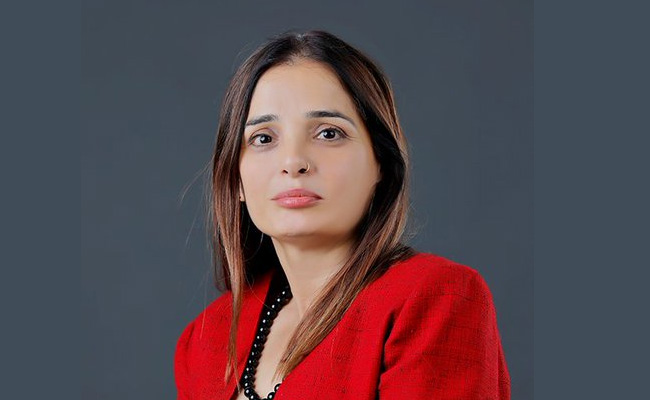
New Delhi (PTI): Noida International Airport on Friday announced the appointment of its Chief Financial Officer Nitu Samra as the interim Chief Executive Officer after authorities denied permission for foreign national Christoph Schnellmann to be at the helm.
"This change follows directions issued by the Bureau of Civil Aviation Security (BCAS) that the Chief Executive Officer of an airport in India is required to be an Indian national," NIA said in a statement.
Samra will replace Schnellmann, a Swiss national who has led Noida International Airport (NIA) as the CEO since August 2020.
The regulatory issue related to the requirement of having an Indian national as CEO has been delaying the start of commercial operations of the airport, which was inaugurated by Prime Minister Narendra Modi on March 28.
Schnellmann will join the airport's Board of Directors as Executive Vice Chairman. In this role, he will continue to support the project and its transition to operations, the statement said.
With immediate effect, NIA said Samra has been appointed as the CEO on an interim basis until the Board of Directors can conclude a formal selection process.
Samra has been serving as the CFO since October 2021 and was closely involved in the airport’s development journey, overseeing financial stewardship, governance, and strategic planning during a key phase of the project, the statement added.
NIA will be operated by Yamuna International Airport Pvt Ltd (YIAPL), a subsidiary of Zurich Airport International AG, under a public-private partnership.
Originally scheduled to commence passenger services in September 2024, NIA is being developed in four phases, along with a dedicated cargo terminal. It received an aerodrome license from the aviation regulator Directorate General of Civil Aviation (DGCA) in March.
YIAPL Chairman Daniel Bircher said that since the inauguration of the airport by the Prime Minister, the goal was to enable the start of operations as early as possible.
"This management change brings the airport into compliance with Bureau of Civil Aviation Security requirements while maintaining continuity in the airport’s leadership team. The newly structured team will support a smooth transition into operations, guided by clear and transparent governance and a strong corporate culture," he said.
On March 28, Civil Aviation Minister K Rammohan Naidu said commercial flight operations from the airport would start in the next 45 to 60 days.
Among the largest greenfield airport projects in the country, NIA will initially have a capacity to handle 12 million passengers per annum.
Once fully developed, the airport will have a total passenger handling capacity of 70 million.
The first phase of NIA has been developed at an investment of around Rs 11,200 crore. 'DXN' is the code for the airport.
The airport features a 3,900-metre runway capable of handling wide-body aircraft, along with modern navigation systems, including Instrument Landing System (ILS) and advanced airfield lighting.
The peak handling capacity in the first phase will be 30 flights per hour.
In the first phase, there will be 28 aircraft stands, and the projected cargo capacity is around 2.5 lakh tonnes.
Terminal 1 of the airport is spread across 1,37,985 square metres with 48 check-in counters. Over 40 acres of land have been earmarked for developing MRO (Maintenance, Repair and Overhaul) facilities at the airport.