T20 WC: Miller, Stubbs power SA to four-wicket win over Netherlands

New York, Jun 8: David Miller struck a high-quality 59 not out to help South Africa recover from a terrible start and post a four-wicket win over the Netherlands in their T20 World Cup match here on Saturday.
Miller hit a 51-ball 59 to guide SA to their second win in as many matches, while putting on a crucial stand for the fifth wicket with Tristan Stubbs. The Proteas finished at 106 for six n 18.5 overs chasing 104.
South Africa were reduced to 12/4 inside the powerplay but they recovered strongly, riding on a 65-run stand between Miller and Stubbs (33, 37 balls, 1x4, 1x6).
Earlier, pacer Ottneil Baartman returned a four-wicket haul as SA restricted the Netherlands to 103 for 9.
Baartman produced a measly spell to record 4-0-11-4 while Anrich Nortje (2/19) and Marco Jansen (2/20) provided strong support as the Proteas bowlers dominated the Dutch batters.
Brief scores:
Netherlands: 103/9 in 20 overs (Sybrand Engelbrecht 40; Marco Jansen 2/20, Ottneil Baartman 4/11, Anrich Nortje 2/19).
South Africa: 106/6 in 18.5 overs (Tristan Stubbs 33, David Miller 59 not out; Vivian Kingma 2/12, Logan van Beek 2/21) by 4 wickets.
Let the Truth be known. If you read VB and like VB, please be a VB Supporter and Help us deliver the Truth to one and all.
Karnataka: Four of family killed in roof collapse in Vijayapura amid heavy rain
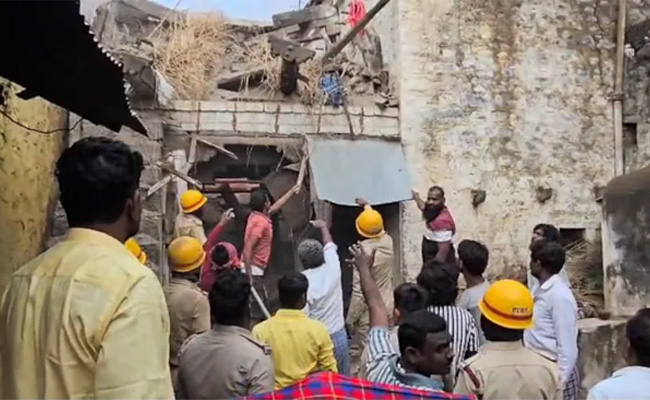
Vijayapura (Karnataka) (PTI): Four members of a family were killed after the roof of an old rented house collapsed during heavy rain accompanied by strong winds in this district, police said on Friday.
The deceased were identified as Gurunath Badigera (35), his wife Jyoti Badigera (28), and their two children, Kalamma Badigera (13) and Kirti Badigera (9), they said.
The incident occurred at Moratagi village of Alamela taluk in Vijayapura district, police said.
According to police, the family had been staying in the old rented house while repair work was underway at their own residence. The incident occurred on Thursday night when the roof of the house collapsed due to the heavy rain and wind.
All four members of the family were asleep when the roof of the house suddenly collapsed on them, following which they got trapped under the debris and died on the spot, a senior police officer said.
Personnel from the Fire and Emergency Services Department and the police rushed to the spot and undertook rescue operations to retrieve the bodies.
Police said the incident took place under the jurisdiction of the Sindagi Police Station. Senior police officials visited the spot and inspected the area. Further investigation is underway.