T20 World Cup 2024: Afghanistan secure historic semi-finals berth, eliminating Australia
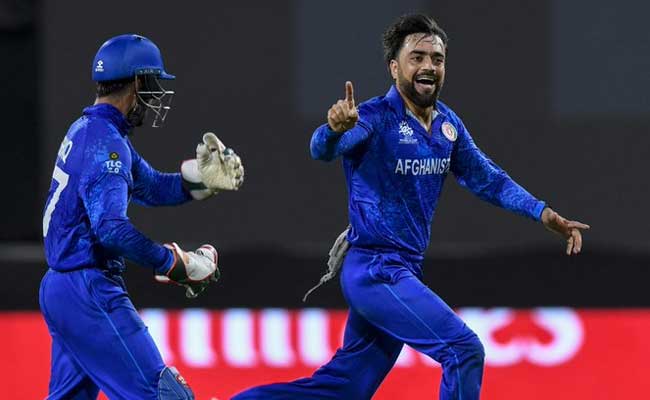
Kingstown: In a thrilling Super 8 encounter at the T20 World Cup 2024, Afghanistan secured a historic semi-finals berth by defeating Bangladesh by 8 runs via the DLS method. This victory marks Afghanistan's first appearance in the semi-finals of a major ICC event and eliminates Australia from the tournament, who needed a Bangladesh win to advance.
The match which was hit by rain saw Afghanistan defending a low total with Rashid Khan delivering a stellar performance. Rashid took four crucial wickets and contributed a vital 10-ball 19-run cameo with the bat, pushing Afghanistan's total beyond 100 runs. Despite a resilient half-century by Bangladesh's Litton Das, who carried his bat to the end, Rashid Khan's efforts ensured Afghanistan's victory.
Batting first, Afghanistan had scored 115 for 5 in their 20 overs and then bowled out Bangladesh for 105 in 17.5 overs. The match was reduced to 19 overs per side, and Bangladesh was given a revised target of 114. Rahmanullah Gurbaz top-scored for Afghanistan with a 55-ball 43, while Rishab Hossain took 3 wickets for 26 runs for Bangladesh. In reply, Litton Das scored an unbeaten 49-ball 54 for Bangladesh. Afghanistan will face South Africa in the semi-finals on June 27.
Let the Truth be known. If you read VB and like VB, please be a VB Supporter and Help us deliver the Truth to one and all.
Lebanon appoints new representative for talks with Israel, rejects linkage to Iran
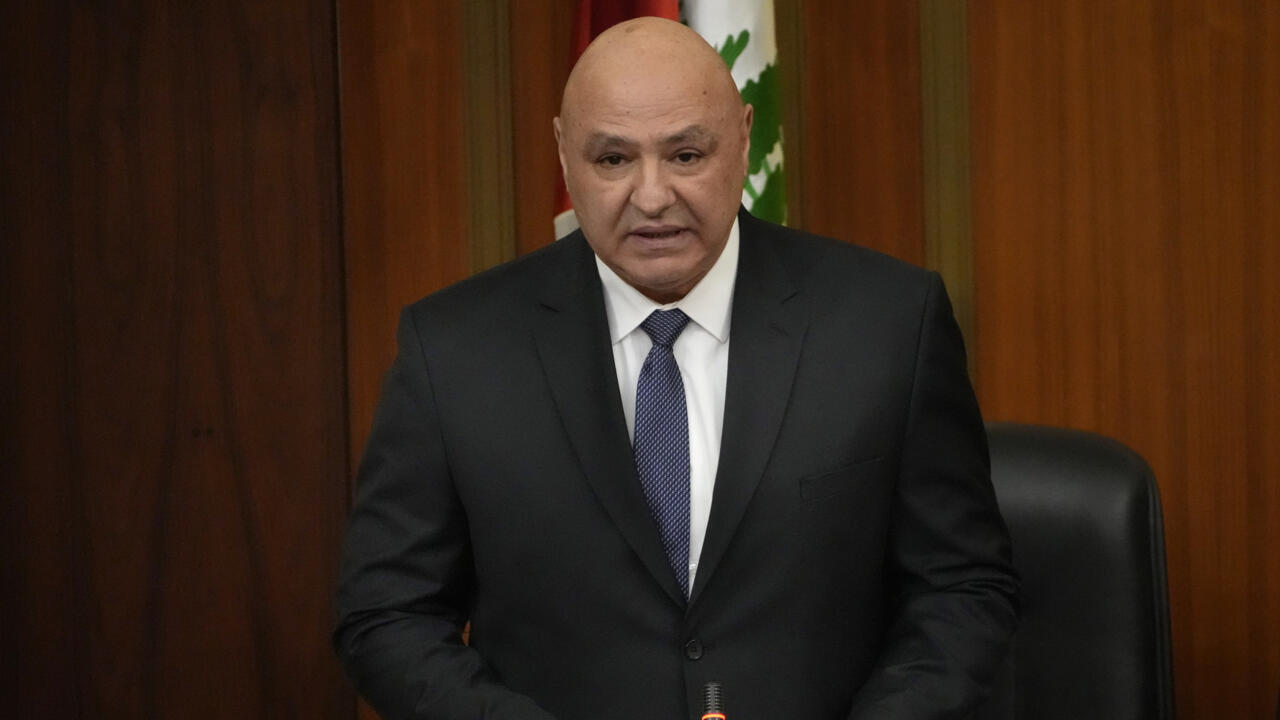
Beirut: Lebanon’s has moved to underline its independent position in ongoing regional developments, amid attempts to link the country to the broader conflict involving Iran, the United States and Israel.
President Joseph Aoun, while announcing the appointment of former US ambassador Simon Karam as Lebanon’s representative in talks with Israel, made it clear that Karam would be the sole representative for Lebanon and that there would be no substitute.
The move comes in response to what the Lebanese officials see as efforts by Iran to tie Lebanon’s situation to the wider regional conflict. Iran had indicated that there would be no ceasefire involving the US, Israel and Iran unless it also included a ceasefire in Lebanon.
Some groups, including Hezbollah and its supporters, had expressed support for linking the situations, citing concerns that the Lebanese government has limited leverage in negotiations with Israel. Lebanon is not formally a party to the conflict, and its army is considered weak.
However, others, including Prime Minister Nawaf Salam, have opposed this approach. They view Iran’s stance as an attempt to influence Lebanon’s internal affairs and see it as undermining the country’s sovereignty.
Officials backing the government’s position say the move is aimed at reaffirming Lebanon’s sovereignty and ensuring that decisions about peace and ceasefire within the country are not dictated externally.
They also see it as a safeguard, so that any breakdown in talks between the US, Israel and Iran does not automatically lead to renewed conflict in Lebanon.