Take Umran Malik to England for one-off Test, limited-overs series: Sunil Gavaskar

Mumbai(PTI): The legendary Sunil Gavaskar has pitched for young pace sensation Umran Malik's inclusion in the Indian team for the upcoming England tour following his stunning five-wicket haul against Gujarat Titans in the IPL here.
The 22-year-old Sunrisers Hyderabad pacer from Jammu produced one of the most fiery spells of fast bowling in the IPL history, snapping five wickets for 25 runs on Wednesday night.
But his breathtaking effort went in vain as Rashid Khan (31 not out off 11 balls) and Rahul Tewatia (40 not out in 21 balls) scored 56 from the last four overs, including 22 from the final six deliveries, to take the Titans home in a last-ball thriller.
"The next for him, I think is the Indian team," former India skipper Gavaskar said during his commentary after the game.
"He might not play in the XI because India have got Mohammed Shami, Jasprit Bumrah, Mohammed Siraj and Umesh Yadav. So, he might not play.
"But just travelling with the group, travelling with the likes of Rohit Sharma, Virat Kohli, sharing the dressing room with them... just look what is going to happen to him!"
The young pace sensation has been clocking in excess of 150 kph consistently throughout the season and has picked up 15 wickets in eight matches at 15.93 average.
Introduced into the attack as late as the eighth over, Malik bowled devastatingly quick deliveries to scythe through the Gujarat Titans top-order, becoming the first IPL bowler to pick up all the first five wickets of an innings.
He rattled Shubman Gill's off stump for his first wicket, before removing Hardik Pandya with a combination of pace and bounce.
Next, he produced a perfect 153 kmph thunderbolt yorker to smash the wickets of Wriddhiman Saha, before cleaning up both David Miller and Abhinav Manohar to sign off with a five-for.
India's tour of England starts in June with the visitors playing the final Test of the five-match series, which was abandoned last year due to COVID-19, from July 1 to 5, before embarking on a three-match T20 series and playing as many ODIs.
India will begin the UK tour with two T20Is against Ireland in Dublin, starting June 26.
Let the Truth be known. If you read VB and like VB, please be a VB Supporter and Help us deliver the Truth to one and all.
I don''t know what happened, says baffled Axar
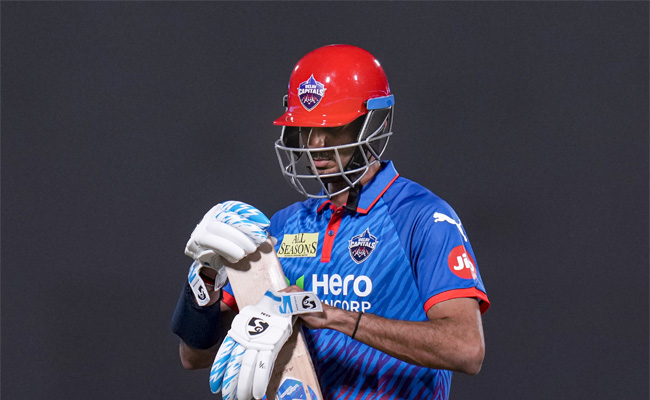
New Delhi (PTI): Axar Patel didn't have much to answer when Delhi Capitals failed to defend 264 against Punjab Kings on Saturday and looked even more perplexed after his team crumbled to 75 versus Royal Challengers Bengaluru in their second straight IPL surrender within a space of 48 hours.
Delhi Capitals were reduced to 9 for 6 inside Powerplay overs with Bhuveneshwar Kumar getting appreciable swing and Josh Hazlewood executing short ball tactic to perfection.
The result was season's lowest score and RCB cantered to a nine-wicket win.
"Even I don't know what happened. That's why they say you have to be on your toes in cricket. We have to move on from this match," Axar said at post match presentation ceremony.
The single that David Miller refused in a one-run defeat against Gujarat Titans did affect the tournament momentum for DC and Karun Nair dropping dollies against Punjab Kings only made matters worse.
"From today's point of view, you can say it did effect, but you can look back, if the catches were taken (Nair) or had we taken the single against GT, then momentum would have been with us. The game is such that there is no room for ifs and buts. You have to be positive, you had a bad day and take the positives from the last 5-6 games," Axar added.
However the DC skipper refused the notion that there was exaggerated swing on offer which one felt after Bhuveneshwar Kumar's banana inswing cleaned up a clueless former India U-19 Sahil Parakh.
"I wasn't surprised, they are world class bowlers, they swing it every ground, but if our openers or top order had played them out then the result might have been different."
Hazlewood, who dismissed KL Rahul and Nitish Rana with short balls said that he wasn't sure what kind of track would be on offer after close to 530 runs were scored in the previous game.
"Probably turning up here after 500-plus runs in the last game, was not sure what was going to happen," Hazlewood said, adding that he followed pace bowling colleague Bhuvneshwar Kumar's advice.
"Was just following his (Bhuvneshwar) lead. There was a bit there in the first six overs - enough there to work with, and it was skidding on quickly from a short of a length. Once the ball got soft, it got more even," Hazlewood said.
He also spoke about how he set up Rana, who looked in a tangle and out of depth while facing a short ball.
"In general, you wanted the batter to hit it down the wicket and in the V. The short ball was nice as well, just about the accuracy. When that ball was nice and hard, it was tough to bat. Would have been nice to bowl four and get off the field," said Hazlewood.
His skipper Rajat Patidar was also surprised at how things panned out.
"Even I am surprised the way wicket played," RCB skipper said.
"All credit goes to the bowlers, Bhuvi and Hazlewood. They hit the right areas. The swing was normal but the good thing was we got early wickets and that kept us in the driving seat. The way Suyash bowled, stump to stump, it was really good to see," he concluded.