Team India players likely to get 2-3 day break after New Zealand game in Dharamsala
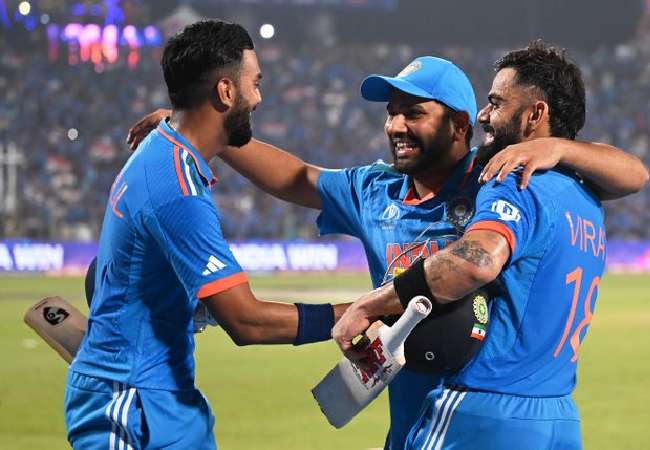
New Delhi, PTI: The members of the Indian cricket team in all likelihood will get a short break after World Cup clash against New Zealand on Sunday to spend some time with their families.
The World Cup is a long and arduous assignment and the seven-day gap between the contests against New Zealand (October 22) and England (October 29) will allow players a break.
Most of the players have been on the road since Asia Cup that was co-hosted by Sri Lanka and Pakistan between August 30 and September 17.
"The players are likely to have an option of dispersing to their respecting homes for a two or three-day break after the New Zealand game," a BCCI source told PTI on conditions of anonymity.
With a seven-day gap between the two matches, it is only fair that players get some time with their families."
It is understood that the players will assemble in Lucknow by October 26 for their next match.
The Indian team management has planned the practice sessions pretty well, keeping in mind the hectic travel schedule and the workload management of players, especially the fast bowlers.
India is the only team in the tournament that is scheduled to play all its nine league matches at nine different venues.
As per the pattern, the full Indian full team comes for nets 48 hours before the match while a day prior to the game, only the reserve players are seen in action.
Till now, the fast bowling unit hasn't been rotated but Hardik Pandya's left ankle twist does certainly opens up a few options which the team management might want to explore going into the business end of the tournament.
Let the Truth be known. If you read VB and like VB, please be a VB Supporter and Help us deliver the Truth to one and all.
Allahabad HC orders probe into 'reinstatement' of teacher in UP's Barabanki
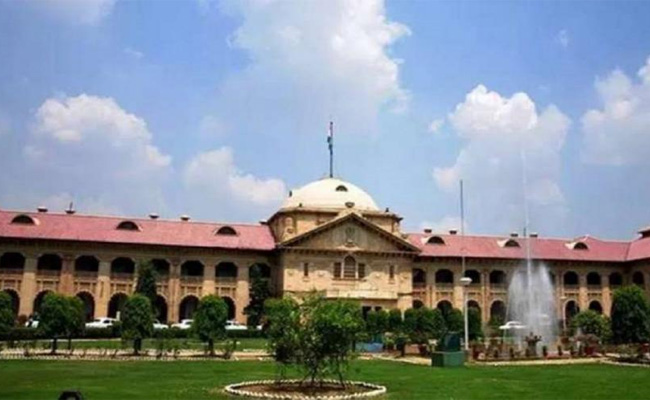
Lucknow (PTI): The Lucknow Bench of the Allahabad High Court on Friday ordered a probe by the special task force (STF) into alleged irregularities in the rejoining of a teacher at City Intermediate College in Barabanki, observing that the reinstatement appeared to be prima facie illegal.
The court also directed the recovery of the salary paid to the teacher during the disputed period.
A bench of Justice Rajeev Singh passed the order on a petition filed by the college management committee. The court expressed doubts over the roles of the District Inspector of Schools (DIOS), Barabanki, the college principal and the teacher concerned and hence, directed a detailed inquiry into the matter.
Taking note of alleged manipulation of records and misleading submissions, the court ordered the immediate transfer of the Barabanki DIOS to ensure a fair probe. It also directed the initiation of disciplinary proceedings against the then joint director of education of the Ayodhya division.
In its order, the court found that the teacher, Abhay Kumar, was initially appointed as an assistant teacher in 2018 but joined an Eklavya Model Residential School in Chhattisgarh as a lecturer in June 2024 without obtaining permission from the management. His subsequent request to retain the lien was rejected.
Despite this, he was allowed to rejoin the Barabanki College in September 2025 on the directions of the joint director of education and the DIOS, and was even paid the salary for October 2025. The court termed the rejoining "wholly illegal" and lacking any legal basis.
The bench also expressed concern over lapses in communication within the education department and directed the Uttar Pradesh chief secretary to ensure that official orders are communicated through email and WhatsApp as well, to prevent disputes.
The matter is next listed for hearing on May 28 when a compliance report is sought.