Tewatia, Parag snap Royals' four-match losing streak
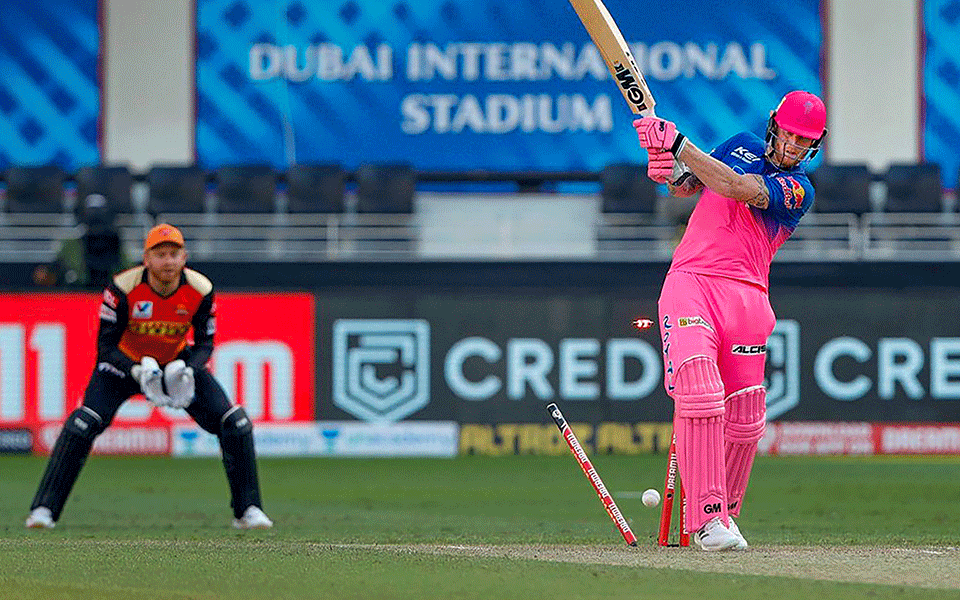
Dubai: Rahul Tewatia's uncanny ability to win tricky games rescued Rajasthan Royals yet again as they eked out a five-wicket victory against Sunrisers Hyderabad to snap their four-match losing streak in the IPL, here on Sunday.
Tewatia, who became a household name with five sixes in an over against Kings XI Punjab, smashed an unbeaten 45 off 28 balls as Royals overhauled the 159-run target with a ball to spare.
Along with Riyan Parag (42 not out off 26 balls), Tewatia won the game in 'Royals' style keeping Steve Smith's men in the mix after they were reduced to 78 for 5 in 12 overs.
With two needed off two balls, Parag hit Khaleel Ahmed for a six over extra cover and broke into an impromptu 'Bihu jig'. They added 85 runs for the sixth wicket in eight overs when their illustrious international stars flattered to deceive.
Tewatia brought back memories of the Sharjah night but this time it was Rashid Khan who was at receiving end in the 18th over as the left-hander struck three consecutive boundaries.
With 22 needed off two overs, Tewatia launched into T Natarajan, who lost his length trying to bowl yorkers, for a four and a six over short fine leg that swung the match in favour of Royals.
The bizarre decision to send comeback man Ben Stokes (5) up the order didn't work too well as the slowness of the track did him in. Left-arm pacer Khaleel got one to rear up outside the off-stump but the ball came late as Stokes, shaping for a pull, played it onto his stumps.
Steve Smith (5) chanced Vijay Shankar's arm in the deep but failed in the process while Jos Buttler (16) got a delivery from Khaleel that came in after the fingers were rolled over. The inside edge was taken by a diving Jonny Bairstow as Royals were reduced to 26 for 3 inside Powerplay.
Earlier, Manish Pandey struck an impressive half-century but Rajasthan Royals restricted Sunrisers Hyderabad to 158 for 4 in stipulated overs.
With the pitches getting slower by the day and stroke-making becoming increasingly difficult, Pandey struggled initially but finished with two fours and three sixes in his 54 off 44 balls.
He had a partnership of 73 off 10 overs for the second wicket with skipper David Warner (48 off 38 balls), who also looked scratchy and struggled for timing.
Kane Williamson (22 not out off 12 balls) showed his class briefly at the end, including a one-handed straight six off Royals' best bowler Jofra Archer (1/25 in 4 overs) and ended with another off the last delivery of the penultimate over.
The young Priyam Garg (15 off 8 balls) also made a valuable little contribution in the final few overs of the innings.
It was one of the better days for Jaydev Unadkat (1/31 in 4 overs) as his variation of slower deliveries caused some trouble for the batsmen with only 26 runs coming off the Powerplay.
In all, Rajasthan bowlers managed 42 dot balls, which is seven overs without a run being scored. Bairstow (16 off 19 balls) and Warner failed to get the ball off square and the harder they hit, the lesser distance it traversed.
Finally, Bairstow broke the shackles with a six off Kartik Tyagi but off the very next delivery, he was taken brilliantly in the deep by Sanju Samson.
Pandey and Warner then steadied the ship hitting the occasional sixes. Pandey's straight six off Shreyas Gopal's tossed up delivery was a magnificent shot.
In fact, the Sunrisers batsmen found it easier to hit sixes -- nine of them in all than the fours (only six) during their innings.
Let the Truth be known. If you read VB and like VB, please be a VB Supporter and Help us deliver the Truth to one and all.
Karnataka School Edu Dept prohibits children from being made to dance to obscene songs
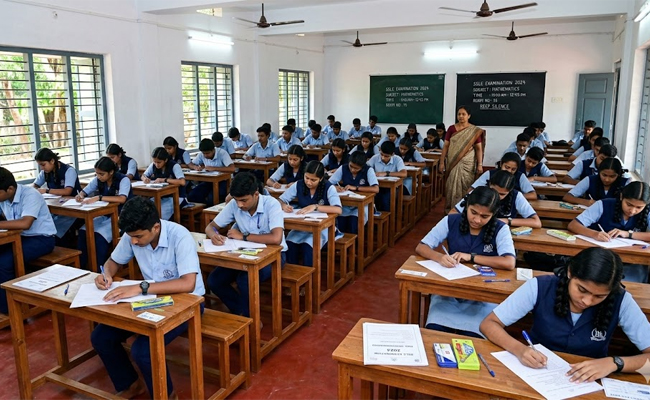
Bengaluru (PTI): The Karnataka School Education Department has issued a circular strictly prohibiting children from being made to dance to obscene songs in educational and cultural programmes.
It stated that such dances would negatively impact students' mental health and moral values. It will create indiscipline and harm the sanctity of education.
"All the Deputy Directors (Administration) of the state's School Education Department have been asked to take strict measures to prevent children or students from dancing to obscene songs in all government, aided and unaided schools in the state," the office of the commissioner of the School Education Department said in a recent circular.
"If it is found that children are being made to dance to obscene songs, appropriate action will be taken against the headmaster or management of such school," it added.
The department also listed certain measures in this regard, which include: strictly prohibiting children from being made to dance to obscene songs during educational and cultural programmes; selecting songs that are inspiring, positive, instilling national pride in children and reflecting the greatness, dignity, values, culture, and morality of the state.
Stating that the school headmaster and management are responsible for selecting songs and dances for cultural programmes, it said, they should also ensure that students wear decent clothes in dance or cultural programmes.