Ton-up Gill, Jaiswal lead India to 359/3 on Day 1
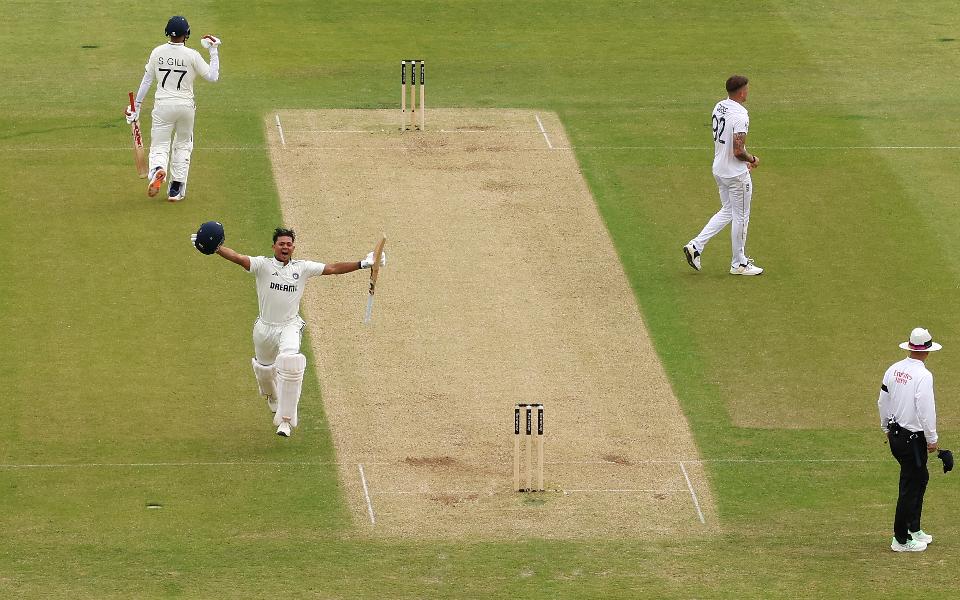
Leeds, Jun 20 (PTI): Yashasvi Jaiswal and captain Shubman Gill announced their readiness to carry India's batting into the post Virat Kohli-Rohit Sharma era, striking marvellous hundreds to guide the visitors to a dominant 359 for three against a faltering England on the first day of the opening Test here on Friday.
Gill (127 batting) and Jaiswal (101, 159b) shared a 129-run partnership for a determined third wicket alliance that carried India to 221 from a slightly wobbly 92 for two after KL Rahul (42) and debutant B Sai Sudharsan (0) were dismissed in quick succession.
Rishabh Pant (65 batting) was keeping vigil with Gill at close.
But there was an underlying significance to the centuries of Jaiswal and Gill other than giving India a head-start on the first day of the newly-minted five-match Anderson-Tendulkar Trophy.
This Indian batting line-up is a tad thin on experience after the recent retirements of former skippers Kohli and Rohit, who played at the pivotal No. 4 and opening slots in their illustrious careers.
Both Jaiswal and Gill are not newcomers to the unforgiving Test arena, but there has been this widespread anxiety over how the 'New Gen' India stars would step into the big shoes of their predecessors.
But the portends are quite bright, if the day's innings by Jaiswal and Gill are anything to go by.
Jaiswal was the first to reach the three-figure mark, the fifth in his flourishing career, off 144 balls and Gill reached his own landmark off 140 balls in the final passage of the day, heralding the start of a new era in Indian cricket.
But the way they reached that point was entirely different. Jaiswal eschewed his natural flair as the first session offered its own share of assistance to the English bowlers in the shape of movement and carry.
However, it was an altogether different matter that the home bowlers were not prudent enough to exploit that offering, and later the pitch eased up considerably.
But a flaccid track and a fangless England attack without James Anderson or Stuart Broad could not take the sheen out of the knocks of Jaiswal and Gill.
It was not a typical Jaiswal innings where he simply flayed the bowlers around, but he showed admirable self-restraint, particularly outside the off-stump.
The left-hander was dismissed in that channel a couple of times while playing for India A against the England Lions in the recent tour matches, but here the 23-year-old did not repeat his mistakes.
Jaiswal began the morning session with a gorgeous drive through mid-off off pacer Chris Woakes, and he only grew in confidence from there.
Perhaps, the only time he showed his aggressive mindset was when the left-hander carted pacer Josh Tongue for a six and then later hammered him for two consecutive fours to reach 99.
It was Jaiswal's first innings in England, and he made it memorable, making a hundred soon after scampering for a single despite suffering some cramps on his hands.
He celebrated with gusto too — a roar and leap into the Headingley sky. England could not be blamed for imagining the Indian batter repeating his 712-run effort he managed last year during a home series.
If Jaiswal’s innings was more about adaptation, Gill’s knock was all about following his natural batting doctrine, which has its fundamentals in timing and elegance.
The right-hander played shots with minimum follow-through through on-side and with a flourish on the off-side.
The 25-year-old's languid grace wowed the crowd when he essayed an off-drive off Chris Woakes and followed it up with a dreamy clip off the pads for a four as currently England's second most experienced Test bowler went for nearly five runs an over across the first two sessions.
Once he went past the fifty off just 56 balls, Gill slowed down a touch, and nerves grew once he went past 90.
There was a cheeky uppish shot through the gully of Tongue and a full-stretched dive saved him from a potentially close run out.
But Gill did not want to let go of the opportunity to score a hundred in his first innings as India's Test captain.
He brought up that mark with a sumptuous boundary off Tongue, getting a standing ovation from everyone.
Gill also joined a very exclusive club of Vijay Hazare, Sunil Gavaskar, Dilip Vengsarkar and Virat Kohli as the Indian batters with hundreds on their captaincy debut.
However, the blooming alliance ended when the giant-hearted England skipper Ben Stokes produced a peach to rattle the stumps of Jaiswal immediately after tea.
Gill carried on nevertheless in the company of his adventurous deputy Pant, who in the process of making his 16th Test fifty completed 3000 runs in the format.
Gill and Pant added 138 runs for the unfinished fourth wicket stand, and it has the potential to produce more sparkling moments on Day 2.
Let the Truth be known. If you read VB and like VB, please be a VB Supporter and Help us deliver the Truth to one and all.
Centre spent Rs 76.13 lakh on print media ads for RSS centenary, reveals RTI
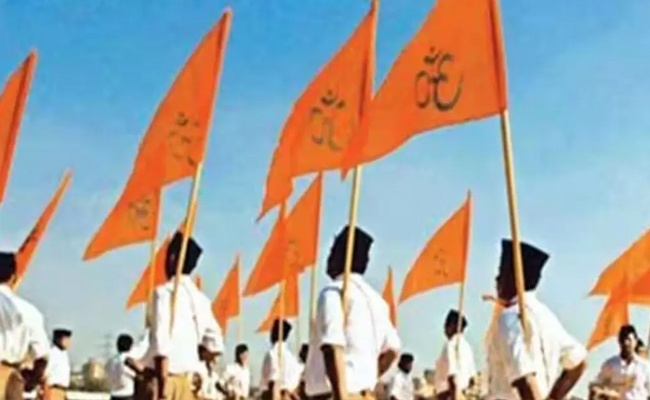
New Delhi: The Union Ministry of Culture allegedly spent Rs 76.13 lakh on print advertisements marking the 100-year celebrations of the Rashtriya Swayamsevak Sangh (RSS), according to a Right to Information (RTI) reply.
The information was sought by RTI activist Ajay Basudev Bose, who filed an application seeking details on expenditure incurred by the ministry for advertisements commemorating the RSS centenary.
Bose shared a picture of the reply from the ministry on his official ‘X’ handle.
“It is informed that an amount of Rs 76,13,129 has been spent on advertisement given in various print media by the Ministry of Culture on the occasion of the completion of 100 years of RSS,” the government’s reply stated.
RTI reply shows Min of Culture Govt of India spent a Whopping Rs 76L,13K,129 on Advertisement in Print Media on occasion of 100 yrs of #RSS
— AJAY Basudev Bose (@AjayBos93388306) April 16, 2026
When Everyone knows RSS is Not Registered & Does not Pay any Tax is it justified to spend Tax Payers Money on such Private event??@RSSorg… pic.twitter.com/dW4IUtdNCg
Bose questioned the expenditure in the post X, “when Everyone knows RSS is Not Registered & Does not Pay any Tax is it justified to spend Tax Payers Money on such Private event??”
Reacting to the development, Karnataka’s IT-BT and Panchayat Raj Minister Priyank Kharge also criticised the spending.
In a post on X, he asked why public money was being used for what he described as a “private ideological project.”
"Modi Sarkar spent Rs 76,13,129 of public money on newspaper advertisements to celebrate 100 years of the RSS. Why is Government spending taxpayers money on an unregistered, non-tax-paying organisation to celebrate their centenary?," he added.
Why is public money being used to serve a private ideological project?
— Priyank Kharge / ಪ್ರಿಯಾಂಕ್ ಖರ್ಗೆ (@PriyankKharge) April 16, 2026
Modi Sarkar spent ₹76,13,129 of public money on newspaper advertisements to celebrate 100 years of the RSS.
Why is Government spending taxpayers money on an unregistered, non-tax-paying organisation to… pic.twitter.com/EoZ6Pim3IM
According to reports, the RSS describes itself as a volunteer-based organisation and has stated that it functions as a body of individuals rather than a registered entity.
Founded by Keshav Baliram Hedgewar in 1925, the organisation is marking its centenary year beginning from Vijaydashami in 2025, with the milestone observed on October 2.