U-19 World Cup: Pacer Ravi wreaks havoc as India oust Bangladesh to enter semifinals
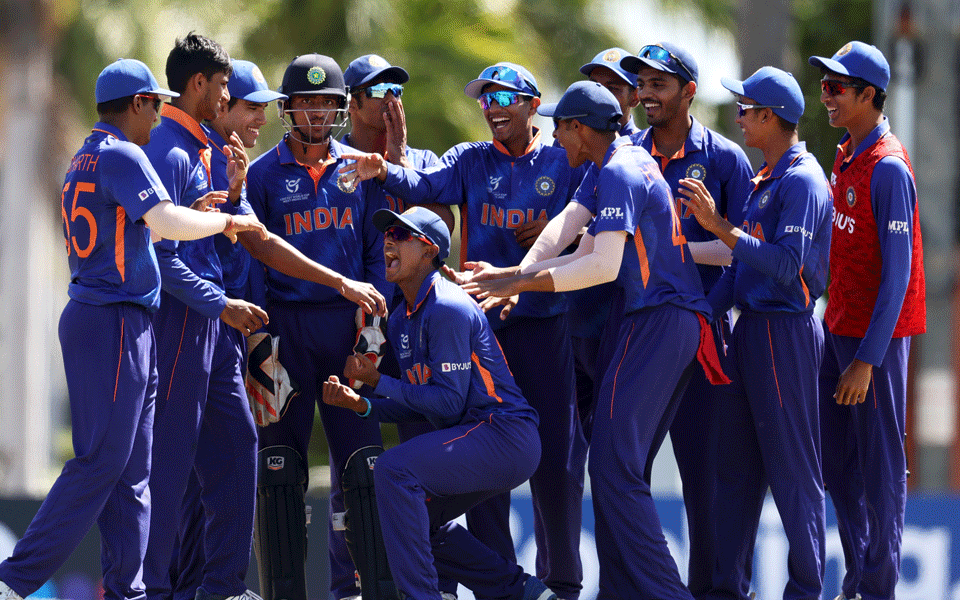
Coolidge (Antigua) (PTI): Left-arm pacer Ravi Kumar bowled a sensational opening spell as India's 'class of 2022' exacted a sweet revenge on Bangladesh, knocking out the defending champions by five wickets to enter the semifinals of the U-19 World Cup here.
In the last edition of the tournament, India lost to Bangladesh in the title clash.
Four-time champions India will meet Australia in their semifinal on February 2, having won an unprecedented seven out of their nine U-19 World Cup quarterfinals.
Son of a CRPF personnel, the Uttar Pradesh-born Ravi, who has followed in the footsteps of his illustrious state senior Mohammed Shami to ply his trade for Bengal, ended with excellent figures of 7-1-14-3 on a tacky track as Bangladesh were all out for 111 in 37.1 overs on Saturday.
Bangladesh were 56 for seven at one stage before SM Mehrob (30) and Ashiqur Zaman (16) added 50 runs for the eighth wicket to take the team past 100-run mark.
In reply, India chased down the target in 30.5 overs with opener Angkrish Raghuvanshi's 44 being the top score.
Skipper Yash Dhull made 20 not out and his deputy Shaik Rasheed contributed 26. The victory was even more satisfying considering the youngsters came back without any training post recovery from COVID-19.
It was a fitting reply from the 'Boys in Blue' to the 'Tiger Cubs' after their predecessors lost an ill-tempered final of the 2020 edition, which was followed by boorish behaviour from both sides, especially the Bangladeshis, whose reactions have always been over the top when it came to beating India.
For the current batch, the win was also necessary after they were beaten twice by this same side last year during a four-nation meet in Kolkata.
India won a good toss and Ravi made full use of the moisture underneath, with initial movement in the air helping the team's cause.
Ravi, who has the natural ability to bring the ball back into right-handers, had Mahfijul Islam (2) beaten all ends up with an inswinger in the second over.
His opening partner Iftakher Hossain (1) was done in by the slowness of the track as he tried to square cut and was held at point by vice-captain Shaikh Rasheed.
One drop batter Prantik Nawrose (7) was not at all comfortable during his stay and was late into the drive to a delivery that swung away, offering a catch to Kaushal Tamble in the slips.
Reeling at 14 for three in the eighth over, there was no coming back for Bangladesh and they kept losing wickets at regular intervals.
Left-arm spinner Vicky Ostwal (9-1-25-2) was as consistent as ever, with his flight and dip causing problems for the opposition batters.
However, if anyone deserves the credit for restricting Bangladesh to a paltry total, it is Ravi, who till few months back, was another outstation cricketer plying his trade in Kolkata club cricket.
The 18-year-old had his share of twists and turns before he became the pace spearhead for India colts in the tournament.
From the officials in Cricket Association of Bengal (CAB), it was learnt that the left-arm pacer, who played for Ballygunge United, had come for U-16 Bengal trials in 2019 but was rejected after he failed to clear the TW3 (Bone test for age verification) test.
However, a good CAB T20 league tournament for Kanchenjungha Warriors got him into the Bengal U-19 reckoning. Then, former India opener and national selector Devang Gandhi and assistant coach (bowling) Jayanta Ghosh Dastidar worked with him.
In fact, when the Vinoo Mankad (U-19) national one-day tournament was being held, the feeler from the local state association was to watch out for Ravi's pace bowling partner Debopratim Halder, who was considered a better prospect.
But the national selectors' attention was caught by Ravi, who was then inducted into the India U19 Challengers Squad.
"He is a very hardworking boy and if you ask me, Devang worked a lot on his mental aspect. Also his biggest asset is the ability to get the ball to swing in to the right handers.
"That is his stock delivery and he works that ball a lot in the nets," Ghosh Dastidar, who was a student of Dennis Lillee at the MRF Pace Foundation's first batch, alongside Javagal Srinath and Ashish Winston Zaidi, told PTI.
Let the Truth be known. If you read VB and like VB, please be a VB Supporter and Help us deliver the Truth to one and all.
Schools in Mizoram's nine districts closed due to rain
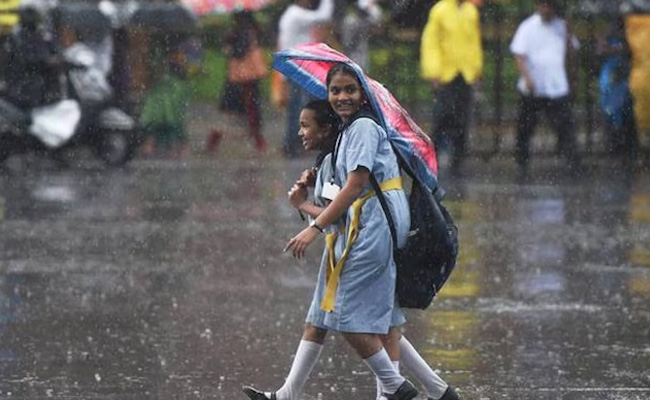
Aizawl (PTI): All schools in nine districts of Mizoram remained closed on Tuesday due to heavy rain that has been lashing the northeastern state since the day before, an official said.
School Education Director Angela Zothanpuii said administrations of nine districts, including Aizawl, Kolasib, Lunglei and Mamit, announced school closure on Tuesday as a precautionary measure for students' safety.
However, schools in the southern districts of Hnahthial and Lawngtlai remained open following a slight improvement in weather conditions there, she said.
According to the India Meteorological Department, Serchhip recorded the highest rainfall at 70.5 mm in a 24-hour period, followed by Hnahthial 55 mm, Siaha 37.5 mm, and Aizawl 36 mm.
Khawzawl district reported 30 mm of rainfall, Mamit 25.9 mm, Kolasib 25 mm, Lawngtlai 17.5 mm, and Lunglei 2.2 mm during the same period, it said.
The weather department has forecast light to moderate rainfall with thunderstorm and lightning in Mizoram on Tuesday.