UWW suspends Bajrang; SAI approves his training stint abroad but wrestler cancels trip
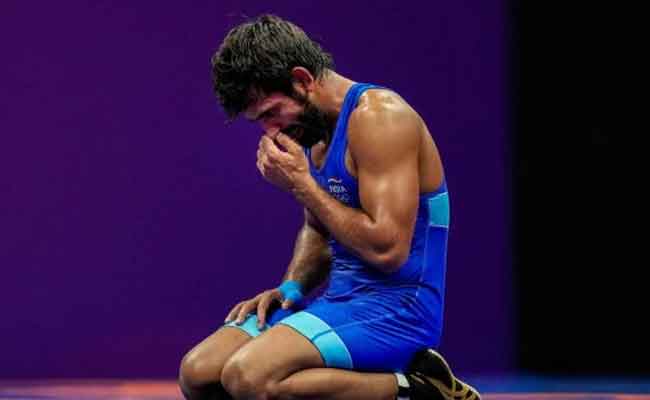
New Delhi (PTI): Wrestling's world governing body United World Wrestling (UWW) has suspended Bajrang Punia till the end of this year following NADA's decision to hand him a provisional suspension for refusing to undergo a dope test.
However, in a rather surprising decision, the Sports Authority of India (SAI) sanctioned close to Rs nine lakh for his training abroad despite being well aware of NADA's order.
Bajrang, one of the country's most successful wrestlers, was suspended by NADA on April 23 after being served a whereabouts failure notice on April 18.
In his defence, the Tokyo Olympics bronze-medallist said he never refused to give his sample for testing but merely asked the Dope Control Officer to explain the presence of expired kits which were brought to take his sample.
Bajrang told PTI that he has not received any communication from the UWW about his suspension but the world governing body while updating its internal system clearly mentions that he stands suspended.
"Suspended for the following reason until Dec 31, 2024," reads the update on Bajrang's profile.
"Provisionally suspended by NADO IND for alleged ADRV (Anti-Doping Rule Violation)," was the reason mentioned.
Interestingly, the Mission Olympic Cell (MOC), in its April 25 meeting, was informed that Bajrang has been sanctioned Rs 8,82,000 plus air fare (actual) for his proposal to train at Dagestan, Russia from May 28.
Bajrang's initial proposal was for a 35-day training trip from April 24 but, as per the minutes of MOC meeting, due to "conflicting travel dates due to his whereabouts failure, he chose to defer the travel plans from 24th April, 2024 to 28th May, 2024."
The proposal also included travel plans of his strength and conditioning coach Kaazi Kiron Mustafa Hasan and his sparring partner Jitender.
Neither Sandip Pradhan, the SAI Director General, nor Col. Rakesh Yadav, joint CEO TOPS, responded to calls or messages, when PTI reached out for an explanation for the decision to sanction his training.
Bajrang confirmed that he had given a proposal for approval to SAI.
"I am also surprised that SAI cleared it. I have actually cancelled my plan, I am not going anywhere for training now," Bajrang said, adding that his lawyer has filed the reply to NADA.
In the same MOC meeting Sarita Mor, who competes in the women's 57kg category, was sanctioned Rs 5,96,000 for her training stint in the USA along with her husband and coach Rahul Mann from May 5.
Anshu Malik had locked the women's 57kg category Paris Olympics quota during the Asian Qualifiers in Bishkek.
Anshu's training stint in Japan, along with her father and coach Dharamveer Malik, was also approved at a cost of Rs 14,67,000.
If WFI decides to hold one final selection event, Sarita will have to emerge winner in the trials to challenge quota-winner Anshu.
Let the Truth be known. If you read VB and like VB, please be a VB Supporter and Help us deliver the Truth to one and all.
No unannounced load shedding in Kerala, outages due to overload, says Minister
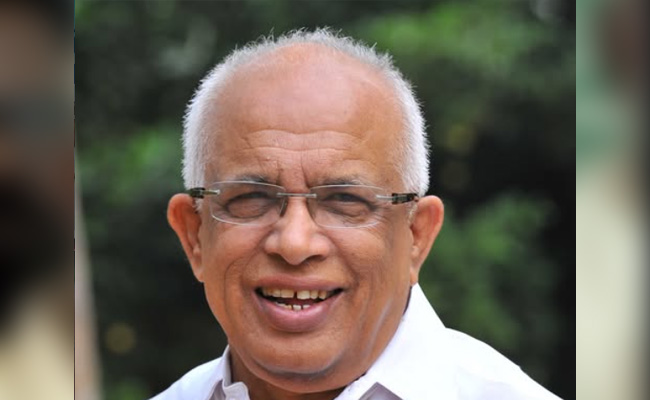
Palakkad (PTI): Kerala Electricity Minister K Krishnankutty on Saturday said there was no unannounced load shedding in the state, attributing recent power interruptions to temporary overload caused by high consumption.
Clarifying concerns raised from various parts of the state, the minister said the disruptions are not deliberate but occur when demand peaks, particularly between 10 pm and 11 pm.
"It is not being done intentionally. Power consumption has risen sharply, and when there is excessive and indiscriminate usage, the system experiences overload, leading to natural supply interruptions," he told reporters here.
His remarks come amid complaints that several areas have been witnessing frequent power cuts, often lasting around 15 minutes and occurring multiple times during the night.
Krishnankutty said the state's power demand has crossed 6,195 MW, putting pressure on the supply system. He added that around 70 per cent of Kerala's electricity is procured from outside, and existing power banking arrangements have been exhausted.
"We have approached the Regulatory Commission seeking permission to purchase more power. However, this will come at a higher cost," he said.
The minister said the government is trying to avoid increasing electricity tariffs and urged consumers to exercise restraint in usage to help manage the situation.
Responding to opposition criticism over the ruling LDF's earlier claims of a decade without power cuts, he said the current situation is not unique to Kerala.
A power crisis is emerging across the country, he said, and sarcastically asked the Opposition to take note of the role of natural factors in this.
Krishnankutty expressed confidence that the situation would improve within two days, while cautioning that long-term energy security would depend on enhancing in-state power generation.
He also warned that future generations could face serious challenges if adequate electricity production capacity is not developed within Kerala.