Virat Kohli sustains groin strain, likely to miss 1st ODI vs England
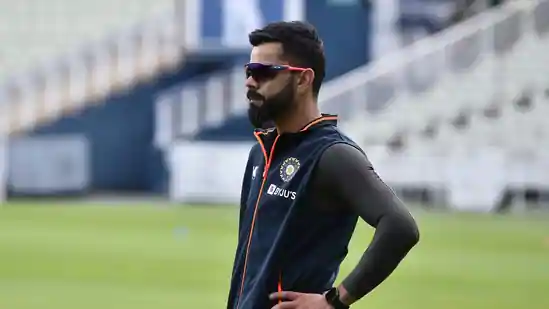
New Delhi, Jul 11: Out-of-form batter Virat Kohli is likely to miss the first ODI against England at the Oval on Tuesday after sustaining a groin strain during the third T20 International.
The extent of Kohli's niggle is still not known, but the Indian team management wouldn't mind giving the 33-year-old veteran a break so that he is available for the next two games at Lord's (July 14) and Manchester (July 17).
"Virat has a groin strain during last game. It can't be confirmed whether it happened during fielding or while batting. He will probably miss first ODI tomorrow at Oval as the groin needs rest," a BCCI source told PTI on condition of anonymity.
It has been learnt that Kohli didn't travel from Nottingham to London in the team bus and the reason could be a stopover to get a medical check-up done to assess his condition.
On Monday, only the players selected for the ODIs -- Shikhar Dhawan, Shardul Thakur and Prasidh Krishna -- had an optional net session at the Oval ground in London.
This could also be the reason for the postponement of the Indian team selection for the five-match T20I series in the West Indies and the USA. The team will be announced on Tuesday.
Kohli's place in the T20 side is being questioned repeatedly by the experts including former greats like Kapil Dev and Virender Sehwag although skipper Rohit Sharma has firmly backed his long-time colleague.
According to people privy to the developments in the India camp, Kohli has asked for rest from the entire West Indies series. In the event he is not part of the squad, whether that will be termed "rest" or "dropped" will be a matter of conjecture.
The BCCI has decided to fly the Indian squad to the West Indies by a special charter flight from Manchester to Port of Spain due to the COVID-19 threat.
"The Indian team will be taking a charter flight to the Caribbean," the source informed.
Let the Truth be known. If you read VB and like VB, please be a VB Supporter and Help us deliver the Truth to one and all.
Bengaluru: Two booked for disabling 240 CCTV cameras at Chinnaswamy Stadium
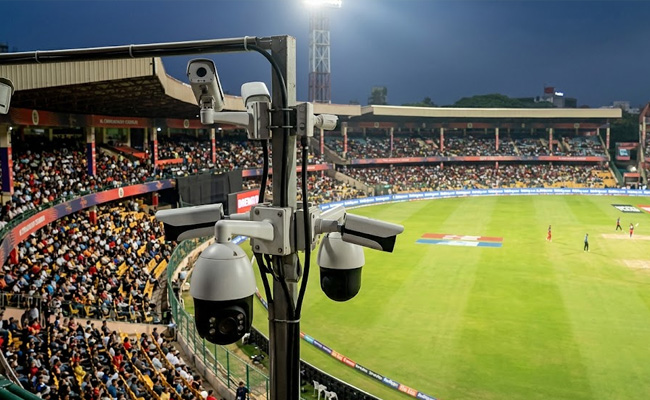
Bengaluru (PTI): An FIR has been registered against two persons for allegedly tampering with the CCTV surveillance system at the M Chinnaswamy Stadium here on the day of the RCB versus GT IPL match on April 24, police said on Monday.
The accused, identified as Manjunath (37) and Abdul Kalam (19), allegedly entered the stadium without valid authorisation, reportedly by misusing a deactivated access card, and tampered with critical surveillance infrastructure, they said.
The complaint was lodged by Aditya Bhat of Staqu Technologies Pvt Ltd, which provides AI-driven surveillance support during match days, police said.
According to the FIR, more than 240 cameras went offline on the morning of the match.
The two, said to be associated with subcontractor IVS Digital Solutions, allegedly damaged Network Video Recorder (NVR) systems and optical fibre connections, disrupting surveillance coverage in key security zones, including entry gates and perimeter areas.
The accused allegedly entered the CCTV room without proper access and later moved to a junction box near the parking area, where fibre connections were damaged, the FIR stated.
The alleged sabotage affected the availability of surveillance feeds required by police personnel deployed for match security, it added.
A senior police officer said that on the morning of April 24, at around 11.30 am, the two employees, working under a sub-vendor providing digital services during match days, carried out the act.
According to him, the accused duo damaged CCTV fibre connections and a video recorder. The issue was detected and rectified within an hour.
Preliminary investigation suggests that the two employees may have had a personal grudge against the company, possibly related to pending payments, which may have led them to commit the act, he said.
“Both accused have been identified, and further action will be taken soon. All CCTVs were restored within an hour, and the disruption did not impact match proceedings,” he added.