Vishnu Sarvanan wins bronze; sailors end campaign with one silver, two bronze medals
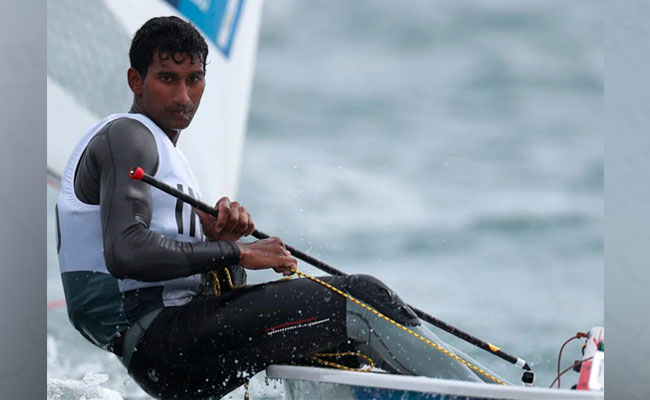
Ningbo (PTI): Indian sailor Vishnu Sarvanan won a bronze, the country's first-ever medal in the men's dinghy ILCA-7 event at the Asian Games here on Wednesday.
Sarvanan finished with a net score of 34 points to miss the silver medal by just one point in the gruelling 11-race competition.
South Korea's Jeemin HA took the second spot with 33 points. Singapore's Jun Han Ryan Lo claimed the gold with a net score of 26.
Lack of wind, however, denied India a medal in women's single dinghy ILCA-6 event where Nethra Kumanan had to settle for a disappointing fourth place finish after race No 12, which was to be the final one in the category, was cancelled.
After the penultimate race, Nethra (41 net points) was three points behind Singapore's Jing Hua Victoria Chan (38).
But she eventually failed to secure a podium finish as race 12 could not be held and the event was cancelled.
Nevertheless, the Indian sailors matched their 2018 Asian Games feat of one silver and two bronze medals here.
Earlier on Tuesday, 17-year-old Neha Thakur grabbed a silver, while Eabad Ali claimed a bronze, India's first-ever medal in the men's windsurfer RS:X event.
In sailing, the competitor's worst score (which is equivalent to their respective positions) from all the races is subtracted from the total points to determine the net score.
The one with the lowest net score is adjudged the winner.
Sarvanan had a total score of 48 and his worst race was No. 8, where he finished last in the 13-competitor field after retiring because of a technical foul.
So, he ended up with 14 points with the addition of one penalty-point in race No 8.
Sarvanan, thus, finished with 34 net points by subtracting 14 points from his overall score of 48, just one-point behind Jeemin, who took the silver.
A reigning National champion since 2017, Sarvanan finished second as the second-best Asian at the Tokyo Olympics by virtue of his 20/25 overall finish.
Sarvanan, who learnt sailing under his father's guidance at the age of nine at Army Yachting Node in Mumbai, won a silver in the 2019 Under-21 World Championships in Croatia.
He also won a silver in 2021 Olympic Qualifiers Asian Championships.
Let the Truth be known. If you read VB and like VB, please be a VB Supporter and Help us deliver the Truth to one and all.
Allahabad HC orders probe into 'reinstatement' of teacher in UP's Barabanki
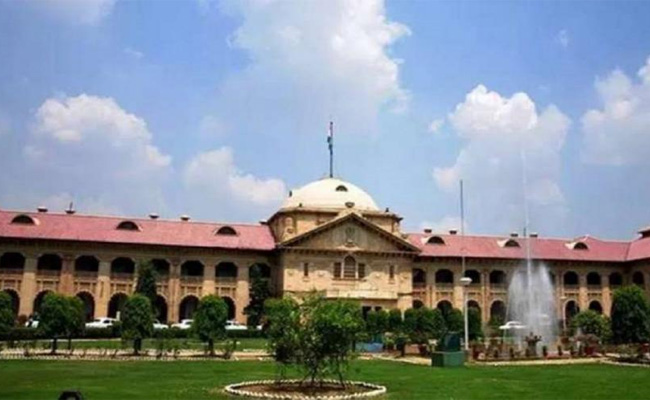
Lucknow (PTI): The Lucknow Bench of the Allahabad High Court on Friday ordered a probe by the special task force (STF) into alleged irregularities in the rejoining of a teacher at City Intermediate College in Barabanki, observing that the reinstatement appeared to be prima facie illegal.
The court also directed the recovery of the salary paid to the teacher during the disputed period.
A bench of Justice Rajeev Singh passed the order on a petition filed by the college management committee. The court expressed doubts over the roles of the District Inspector of Schools (DIOS), Barabanki, the college principal and the teacher concerned and hence, directed a detailed inquiry into the matter.
Taking note of alleged manipulation of records and misleading submissions, the court ordered the immediate transfer of the Barabanki DIOS to ensure a fair probe. It also directed the initiation of disciplinary proceedings against the then joint director of education of the Ayodhya division.
In its order, the court found that the teacher, Abhay Kumar, was initially appointed as an assistant teacher in 2018 but joined an Eklavya Model Residential School in Chhattisgarh as a lecturer in June 2024 without obtaining permission from the management. His subsequent request to retain the lien was rejected.
Despite this, he was allowed to rejoin the Barabanki College in September 2025 on the directions of the joint director of education and the DIOS, and was even paid the salary for October 2025. The court termed the rejoining "wholly illegal" and lacking any legal basis.
The bench also expressed concern over lapses in communication within the education department and directed the Uttar Pradesh chief secretary to ensure that official orders are communicated through email and WhatsApp as well, to prevent disputes.
The matter is next listed for hearing on May 28 when a compliance report is sought.