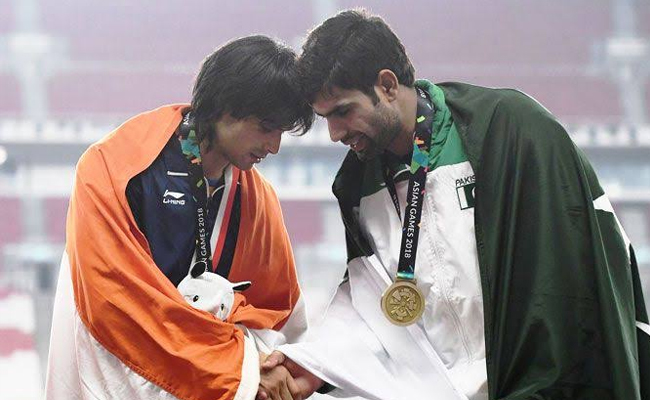
We are always natural friends: Arshad Nadeem says while sharing picture with Neeraj Chopra
Paris: Arshad Nadeem, Pakistan's star javelin thrower, created history on Thursday night by clinching the Olympic gold medal with a record-breaking throw of 92.97 meters. This victory marks the first time Nadeem has bested his Indian counterpart, Neeraj Chopra, in their 11 encounters, adding a new chapter to their growing rivalry.
Nadeem's gold-winning performance not only set a new Olympic record but also made him the first Pakistani to win an individual Olympic gold medal. His achievement comes 36 years after boxer Hussain Shah won a bronze medal at the 1988 Seoul Olympics, making Nadeem the first Pakistani to secure an Olympic medal since then.
In a post on X (formerly known as Twitter), Nadeem expressed his happiness over the rivalry between him and Chopra, likening it to the famous cricket battles between India and Pakistan. He shared a picture with Chopra, captioning it with the words, "We are always natural friends," along with the flags of both nations.
"The rivalry is there when it comes to cricket matches and other sports, definitely. But at the same time, it is a good thing for youngsters in both countries who are pursuing a sport to follow us and follow their sports icons and bring laurels to their countries," Nadeem told reporters after his historic win.
Nadeem and Chopra have developed a strong friendship off the field, despite being fierce competitors on it. Their camaraderie was evident earlier this year when Nadeem made a social media appeal for funds to purchase a high-quality javelin. Chopra was among those who offered support, showcasing the bond they share.
Chopra, who entered the final as the top qualifier, secured the silver medal with a season's best throw of 89.45 meters. Nadeem, however, was the surprise of the night, with two throws exceeding 90 meters, one of which broke the previous Olympic record of 90.57 meters set by Norway's Andreas Thorkildsen at the 2008 Beijing Games.
We are always natural friends 🇵🇰💕🇮🇳#ArshadNadeem #NeerajChopra #PakistanZindabad #GOLD #OlympicGamesParis pic.twitter.com/5YyuWORRk7
— Arshad Nadeem 🇵🇰 (@ArshadNadeemPak) August 8, 2024
Let the Truth be known. If you read VB and like VB, please be a VB Supporter and Help us deliver the Truth to one and all.
Ordinance issued to increase number of Supreme Court judges from 34 to 38
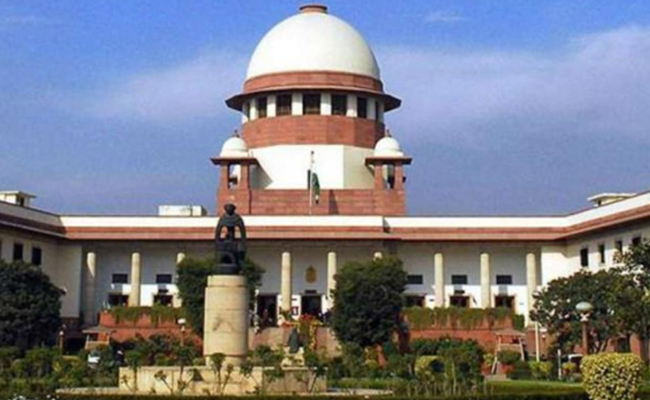
New Delhi (PTI): The government has promulgated an ordinance to increase the strength of the Supreme Court from the present 34 judges to 38, including the Chief Justice of India.
The law ministry notified the ordinance on Saturday, which amended the Supreme Court (Number of Judges) Act, 1956, to increase the sanctioned strength of the top court.
So far, the sanctioned strength of the top court was 34, including the Chief Justice of India (CJI). Now, the number of judges has been increased by four, taking the sanctioned strength to 38.
The top court will now have 37 judges, other than the CJI.
With the apex court having two vacancies at present, and the ordinance coming into force immediately, the Supreme Court Collegium will now have to recommend six names for appointment as judges in the top court.
A bill will be brought in the Monsoon Session of Parliament to convert the ordinance – an executive order – into a law passed by Parliament.
The Union Cabinet had cleared a draft bill on May 5 to increase the number of apex court judges.
The strength of the Supreme Court was last increased from 30 to 33 (excluding the CJI) in 2019.
The Supreme Court (Number of Judges) Act, as originally enacted in 1956, put the maximum number of judges (excluding the CJI) at 10.
This number was increased to 13 by the Supreme Court (Number of Judges), Amendment Act, 1960, and to 17 by another amendment to the law.
The Supreme Court (Number of Judges) Amendment Act, 1986, augmented the strength of judges from 17 to 25, excluding the CJI.
A fresh amendment in 2009 further increased the strength from 25 to 30.
Article 124(3) of the Constitution lists the qualifications required to become a Supreme Court judge.
An Indian citizen who has either served as a high court judge for at least five years, or as an advocate for 10 years, or is a distinguished jurist, can be appointed to the top court.
The strength of the Supreme Court is increased based on the recommendations of the CJI, who writes to the Union law minister. After consulting the finance ministry, the Department of Justice under the law ministry moves the Cabinet with a draft bill.