We are going ahead with women's IPL on time: BCCI President Ganguly
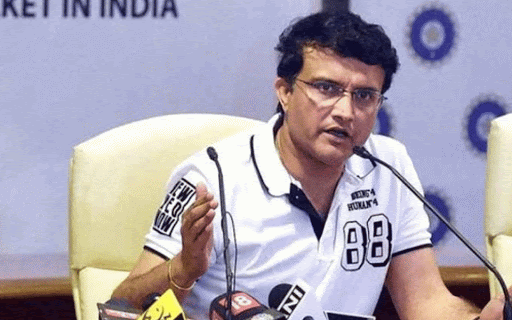
New Delhi: BCCI president Sourav Ganguly on Sunday said the Women's IPL or the Challenger series, as it is better known, is "very much on", ending speculation about the parent body not having a plan for Harmanpreet Kaur and her team.
The men's IPL will be held between September 19 and November 8 or 10 (final date yet to be locked in) in the UAE due to the surge in COVID-19 cases in India. The women's IPL will also be fit in to the schedule, according to the BCCI chief.
"I can confirm to you that the women's IPL is very much on and we do have a plan in place for the national team also," Ganguly told PTI ahead of the IPL Governing Council meeting later on Sunday.
The BCCI president, who is awaiting a Supreme Court verdict on waiver of the cooling off period to continue in the position, did not divulge details but another senior official privy to the development said that women's Challenger will be held during the last phase of IPL like last year.
"The women's Challenger series is likely to be held between November 1-10 and there could be a camp before that," the source said.
The former India captain also said that the centrally contracted women players will have a camp which has been delayed due to the prevailing situation in the country.
"We couldn't have exposed any of our cricketers -- be it male or female to health risk. It would have been dangerous," Ganguly said.
"The NCA also remained shut because of COVID-19. But we have a plan in place and we will have a camp for women, I can tell you that," he added.
The BCCI's cricket operations team is chalking up a schedule where Indian women are likely to have two full fledged white-ball series against South Africa and the West Indies before playing the ODI World Cup in New Zealand.
Let the Truth be known. If you read VB and like VB, please be a VB Supporter and Help us deliver the Truth to one and all.
People are voting fearlessly in West Bengal this time: PM Modi
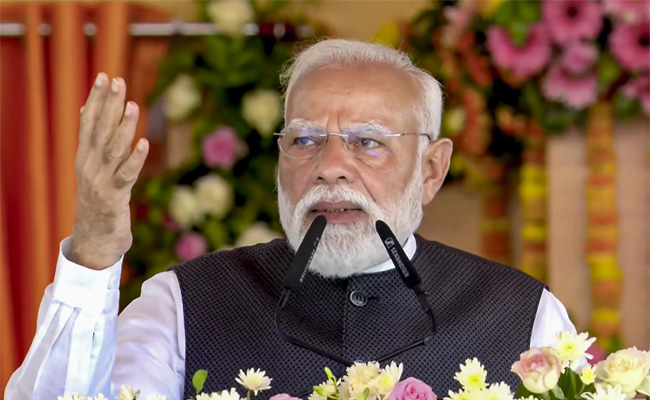
Hardoi (UP) (PTI): Prime Minister Narendra Modi on Wednesday said voters
are casting their vote in West Bengal this time in a "fearless atmosphere", which was unimaginable in the past six or seven decades.
He also asserted that the assembly poll results on May 4 will further strengthen the resolve of a developed India.
Voting is underway in 142 constituencies of West Bengal in the second and final phase of polling.
Addressing a gathering after the inauguration of the Ganga Expressway here, Modi said today marks an important day in the festival of democracy.
"Voting for the second phase is underway in Bengal, and reports indicate a massive turnout, with people stepping out in large numbers just like in the first phase. Images of long queues at polling stations are flooding social media, reflecting the enthusiasm of the people to exercise their democratic right," he said.
"What we are witnessing in Bengal today is unprecedented which was difficult to imagine in the past six to seven decades, a fearless environment where people are voting without fear," he said.
The prime minister said this is a powerful symbol of the country's Constitution and the strengthening of democracy.
"I express my gratitude to the great people of Bengal for being so aware of their rights and participating in large numbers," he said.
With several hours of voting still left, the prime minister urged the people of Bengal to continue participating in this democratic festival with the same enthusiasm.
Modi said in the recent Bihar Assembly elections, the BJP and NDA achieved a historic and decisive victory.
"Just yesterday, results of local body elections in Gujarat showed that the BJP secured victories in nearly 80 to 85 percent of municipalities and panchayats.
"The results on May 4 will further strengthen the resolve of a developed India and will infuse new energy into the pace of development of the country."
The first phase of polling for 152 seats -- out of the 294-member West Bengal assembly -- was held on April 23.
The counting of votes for assembly polls in Kerala, West Bengal, Puducherry, Assam and Tamil Nadu will take place on May 4.