We even cut her hair:India's CMO at Olympics Dr Paridiwala on drastic measures to save Vinesh Phogat
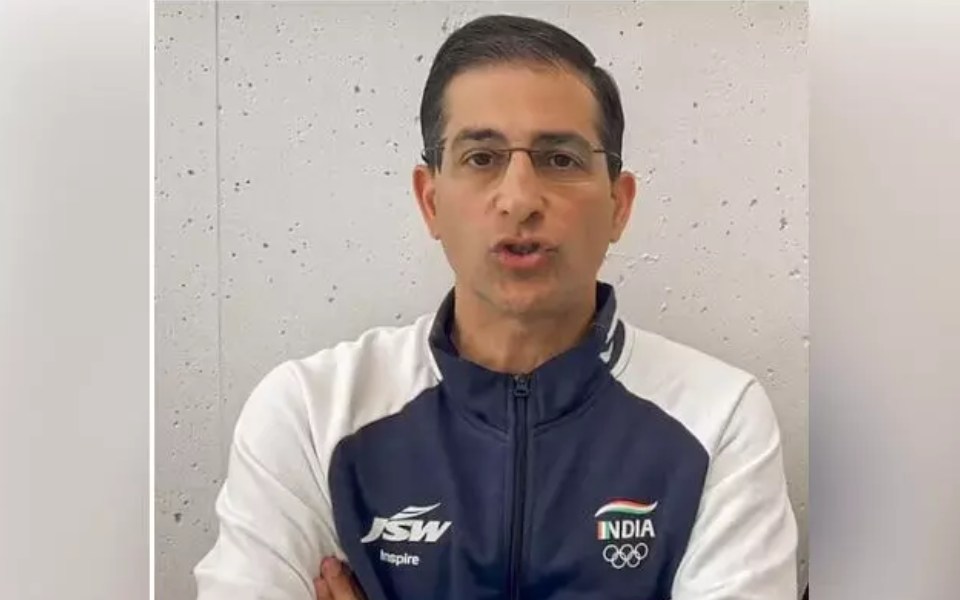
Paris, Aug 7: India's Chief Medical Officer at the Paris Olympics, Dr Dinshaw Pardiwala, on Wednesday revealed that cutting off Vinesh Phogat's hair was among the "drastic measures" taken to help the wrestler stay within the prescribed weight limit for her gold medal bout in the 50kg category.
However, none of it was enough to prevent her disqualification as she was found 100gm overweight at the time of morning weigh-in. She was set to take on USA's Sarah Hildebrandt after three exhausting bouts on Tuesday.
"...small amounts of water had to be given to prevent dehydration. Her post participation weight was found to be increased. The coach initiated the normal process of weight cut that he has always employed with Vinesh and felt confident that it would be achieved," Paridiwala said in a statement issued by the Indian Olympic Association (IOA).
"However, Vinesh was found to be 100 grams over her 50kg weight category, and hence, she was disqualified. All possible drastic measures, including cutting off her hair, were used. However, she was not below her allowed weight of 50kg."
Dr Pardiwala said there are several factors involved in losing weight before any competition and the process has its after-effects as well.
"Wrestlers usually participate in a weight category less than their natural weight. It gives them an advantage since they are fighting with less stronger opponents.
"The process of weight cut involves a calculated restriction of food and water along with sweating from exercises and sauna till the morning weigh-in," he explained.
"This weight cut causes weakness and energy depletion, which is counter-productive to participation, and hence, for energy restoration, limited water and high energy foods are given after weigh-in," he said.
Dr Pardiwala said that Vinesh's nutritionist had calculated this intake to add about 1.5kg.
"There sometimes is also a rebound weight gain following competition," he said.
Vinesh was taken to Games Village polyclinic due to dehydration after her disqualification and Dr Pardiwala said she is currently stable and parameters are normal.
"As a precautionary measure, Vinesh was administered IV fluids following disqualification to prevent dehydration. We are also getting blood tests performed at the local hospital to ensure that all is well.
"All of Vinesh's parameters were normal throughout this process, and she feels perfectly well," he said.
"Vinesh just interacted with IOA President Dr PT Usha and mentioned that though she is physically and medically perfectly normal, she is disappointed with her disqualification."
IOA chief shocked at Vinesh's disqualification
Indian Olympic Association president PT Usha said she was "shocked and disappointed" by Vinesh's disqualification and that the IOA was following the matter "in the strongest possible manner" after the national federation's appeal to the world body against the verdict.
"I met Vinesh at the Olympic Village Polyclinic a short while ago and assured her of complete support of the Indian Olympic Association, Government of India and the whole country. We are providing Vinesh all medical and emotional support.
"The Wrestling Federation of India has filed an appeal to UWW to reconsider the decision to disqualify Vinesh and IOA is following that up in the strongest possible manner."
The IOA chief said despite concerted efforts from all, Vinesh could not meet the competition's weight requirements.
"I am aware of the relentless efforts made by Vinesh, medical team, led by Dr Dinshaw Pardiwala and the Chef-de-Mission Gagan Narang through the night to ensure that she could meet the competition requirements," Usha said.
"The IOA is taking every step to ensure that the morale of the contingent remains high. We are sure all Indians will stand with Vinesh and the entire Indian contingent."
Vinesh had scripted history by becoming the first Indian woman wrestler to reach the gold medal bout in her category on Tuesday night. She was assured of at least a silver medal but will now be coming back empty-handed due to the disqualification.
Let the Truth be known. If you read VB and like VB, please be a VB Supporter and Help us deliver the Truth to one and all.
Ordinance issued to increase number of Supreme Court judges from 34 to 38
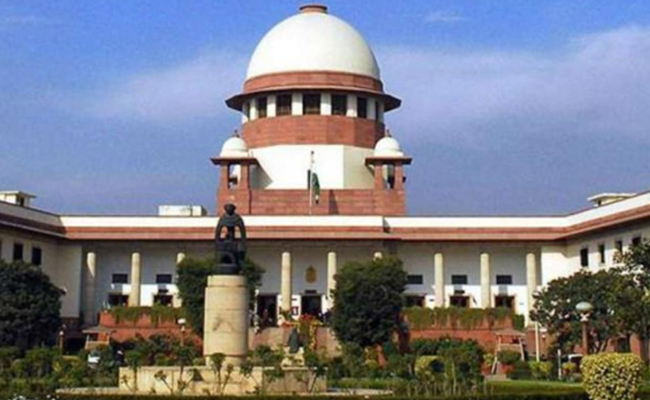
New Delhi (PTI): The government has promulgated an ordinance to increase the strength of the Supreme Court from the present 34 judges to 38, including the Chief Justice of India.
The law ministry notified the ordinance on Saturday, which amended the Supreme Court (Number of Judges) Act, 1956, to increase the sanctioned strength of the top court.
So far, the sanctioned strength of the top court was 34, including the Chief Justice of India (CJI). Now, the number of judges has been increased by four, taking the sanctioned strength to 38.
The top court will now have 37 judges, other than the CJI.
With the apex court having two vacancies at present, and the ordinance coming into force immediately, the Supreme Court Collegium will now have to recommend six names for appointment as judges in the top court.
A bill will be brought in the Monsoon Session of Parliament to convert the ordinance – an executive order – into a law passed by Parliament.
The Union Cabinet had cleared a draft bill on May 5 to increase the number of apex court judges.
The strength of the Supreme Court was last increased from 30 to 33 (excluding the CJI) in 2019.
The Supreme Court (Number of Judges) Act, as originally enacted in 1956, put the maximum number of judges (excluding the CJI) at 10.
This number was increased to 13 by the Supreme Court (Number of Judges), Amendment Act, 1960, and to 17 by another amendment to the law.
The Supreme Court (Number of Judges) Amendment Act, 1986, augmented the strength of judges from 17 to 25, excluding the CJI.
A fresh amendment in 2009 further increased the strength from 25 to 30.
Article 124(3) of the Constitution lists the qualifications required to become a Supreme Court judge.
An Indian citizen who has either served as a high court judge for at least five years, or as an advocate for 10 years, or is a distinguished jurist, can be appointed to the top court.
The strength of the Supreme Court is increased based on the recommendations of the CJI, who writes to the Union law minister. After consulting the finance ministry, the Department of Justice under the law ministry moves the Cabinet with a draft bill.