Williamson steps down as NZ's white-ball captain, declines national contract
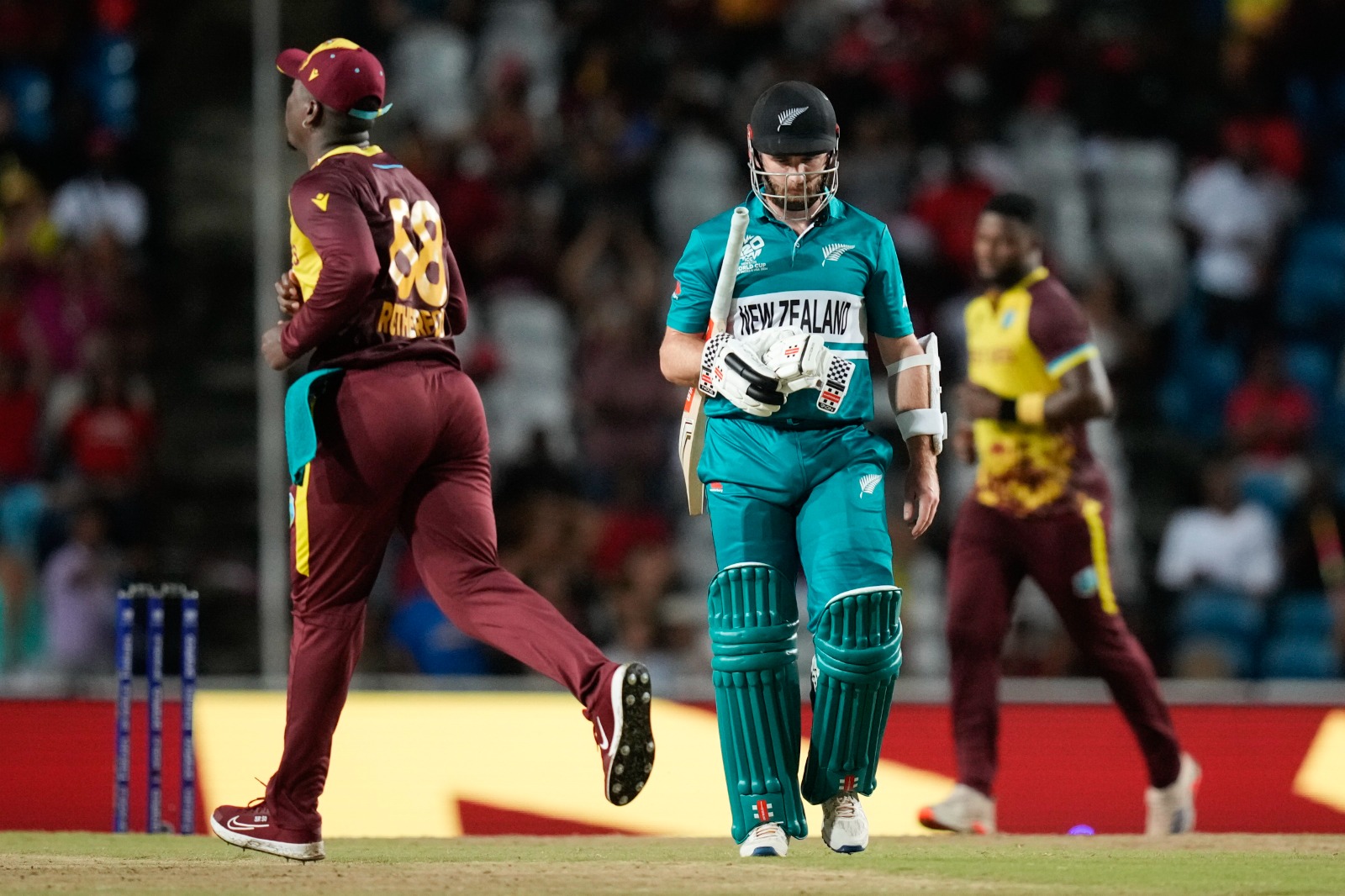
Christchurch (PTI): New Zealand skipper Kane Williamson on Wednesday decided to forego his national contract for the 2024-25 season and also stepped down from white-ball captaincy to extend his international career, following the Black Caps' shock early exit from the T20 World Cup.
"Helping push the team forward across the formats is something I'm very passionate about and something I want to keep contributing towards," the 33-year-old said in a New Zealand Cricket (NZC) release on Wednesday.
"However, pursuing an overseas opportunity during the New Zealand summer means I'm unable to accept a central contract offer."
The Black Caps have very little international cricket scheduled during the January window and Williamson, who had stepped down from Test captaincy in December 2022, will be available to play all three formats outside that month.
"Playing for New Zealand is something I treasure, and my desire to give back to the team remains undiminished," he said.
"My life outside cricket has changed, however. Spending more time with my family and enjoying experiences with them at home or abroad is something that's even more important to me."
The Black Caps are scheduled to compete in eight Tests, including a tour of India and then a three-match home series against England in November-December, before Christmas.
There are a number of T20 leagues such as UAE's ILT20, South Africa's SA20, Australia's BBL and Bangladesh's BPL which are set to clash in January. New Zealand's Super Smash could also be scheduled during the same time period.
The leagues will be followed by the ICC Champions Trophy in Pakistan in February-March.
Players accepting the NZC central contracts must be available for both international and the domestic Super Smash competition.
NZC CEO Scott Weenink said Williamson has earned the right to take some time off to pursue other goals, including family-oriented priorities.
"This is a good way to help keep Kane in the international game so that he continues to play a major role for the BLACKCAPS – both now and in the years to come," said Weenink.
"We have very little international cricket in New Zealand through January and outside that period he’s still available for the BLACKCAPS.
"NZC has a strong preference to select centrally contracted players for the BLACKCAPS, however we’re happy to make an exception for our greatest ever batter – especially as he remains so committed to the team. I know it sounds a bit counterintuitive, but I’m very encouraged by this development."
An all-format player who is considered one of the greats of modern day cricket, Williamson has been the Black Caps batting mainstay for over a decade, having played over 350 internationals.
Williamson has played 100 Tests, 165 ODI caps and 93 T20I caps. He also led New Zealand in 40 Tests, 91 ODIs and 75 T20Is.
New Zealand reached three finals with Williamson in the side -- the 2015 and 2019 ODI World Cups, the 2021 T20 World Cup and the inaugural World Test Championship final, which they won. Williamson led the Black Caps in three of those four tournaments.
Pacer Lockie Ferguson, who has played a Test, 65 ODIs and 42 T20Is, has also indicated that he won't accept a central contract offer. He had become only the second bowler and first in T20 World Cups to bowl four maidens in a men's T20I when he returned with figures of 4-4-0-3 against Papua New Guinea.
Let the Truth be known. If you read VB and like VB, please be a VB Supporter and Help us deliver the Truth to one and all.
NEET student hangs self in Rajasthan's Sikar

Jaipur (PTI): A student preparing for the NEET examination allegedly committed suicide by hanging himself in a rented room in Rajasthan's Sikar on Friday, police said.
According to the police, the student allegedly hanged himself from a ceiling fan using his sister's scarf while one sister was attending coaching classes and the other was in the bathroom.
He had appeared in the NEET UG exam 2026, which was cancelled due to paper leak, they said.
Udyog Nagar SHO Rajesh Kumar said that the deceased, identified as Pradeep Meghwal, was a resident of Kanika ki Dhani village in Jhunjhunu's Gudha Gaudji area.
He had been living in a rented room in Sikar's Jaldhari Nagar area with his two sisters while preparing for NEET over the last three years.
His elder sister later found him hanging and informed the landlord and police after bringing him down, officials said.
The SHO said the body was kept at SK Hospital mortuary, and a postmortem had not been conducted.
The student's father, Rajesh Kumar Meghwal, told police that Pradeep's NEET examination had gone well and the family was expecting him to score around 650 marks.
Former Rajasthan deputy chief minister Sachin Pilot expressed grief over the incident and linked it to anxiety among students after reports of irregularities and paper leaks in NEET 2026.
Pilot said repeated paper leak incidents and cancellation of examinations were affecting students' mental health and demanded a time-bound investigation and strict action against those responsible.