With Bangladesh out of T20 WC, ICC reworking application process for its travelling media

New Delhi (PTI): The International Cricket Council is reworking the media accreditation process for Bangladesh journalists wishing to cover the T20 World Cup in India after the withdrawal of its national team citing security concerns in the neighbouring nation.
The ICC is changing the application process even as some of the Bangladesh journalists claimed that their accreditation request was rejected by the world body.
"There is a reworking of the process since there is a change in the number of requests and the schedules. The accreditation lists are being worked out accordingly.
"Some of the Bangladesh journalists, who showed interest in covering the tournament despite their team's withdrawal, have started getting approvals," ICC sources told PTI.
Roughly 80-90 Bangladeshi journalists applied for the media accreditation and, sources said, even if their team was participating in the ICC event, not all requests could be accommodated.
"If you go by the country quota, you can't exceed the number beyond 40. The ICC goes by the recommendations of the home board and accordingly takes a call on the applications," sources added.
In Dhaka, BCB media chairman Amjad Hossain said he has taken up the matter with the ICC.
"The decision came only yesterday and we have sought to know (the details). An explanation has been requested. This is an internal and confidential matter, but to summarise -- we wanted to know why this was done," Hossain told reporters in Dhaka.
Speaking on condition of anonymity, a senior Bangladeshi journalist said it was the first time his media accreditation was not approved.
"I have covered 8 to 9 ICC World Cups. This was the first time my application was rejected. We are awaiting clarity from BCB before reapplying," he said.
As per the ICC assessment, the Bangladesh cricket team did not face a security threat in India but the country's cricket board still decided to not travel to the country.
Subsequently, the ICC replaced Bangladesh with Scotland for the tournament beginning on February 7.
Let the Truth be known. If you read VB and like VB, please be a VB Supporter and Help us deliver the Truth to one and all.
Unidentified men set fire to TVK campaign office near Srirangam
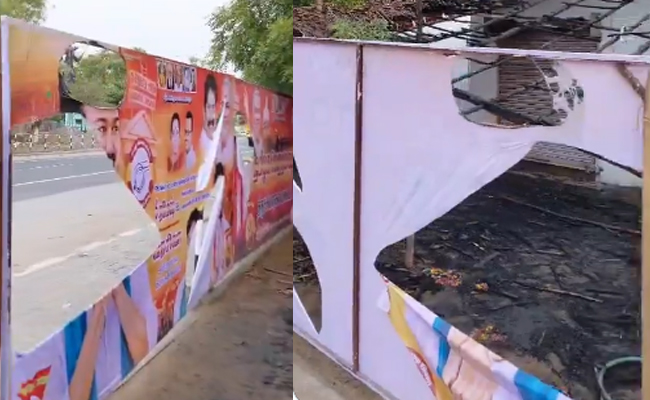
Tiruchirapalli (PTI): A campaign office of the actor Vijay-led TVK was allegedly torched by unidentified miscreants in Kamanayakkanpalayam village near Srirangam in the early hours of Friday, police said.
According to the police, the damage is minimal. Fire had engulfed the thatched roof providing shade at the entrance of the building that served as the party’s election office for the Srirangam constituency.
While on social media, a CCTV footage of two unidentified men fleeing on motorbike is being circulated as the culprits, police said the video footage is yet to be verified.
Based on a complaint lodged by TVK, the Pettaivaithalai Police have registered a case and initiated a search for the perpetrators.
திருவரங்கம் தொகுதியில் த.வெ.க வேட்பாளரின் தேர்தல் அலுவலகம் மர்ம நபர்களால் தீவைக்கப்பட்டு சேதப்படுத்தப்பட்டுள்ளது. @TNelectionsCEO @ECISVEEP#TVKVijay #தமிழகவெற்றிக்கழகம் pic.twitter.com/ImDZfTkuAq
— Thanjavur_District_Head (TVK) (@TVK_Thanjai) May 1, 2026