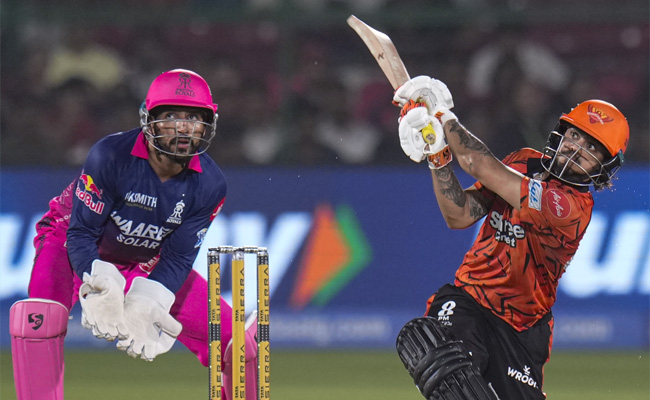
Women's T20 World Cup semi-final: Mooney, Lanning take Australia to 172/4
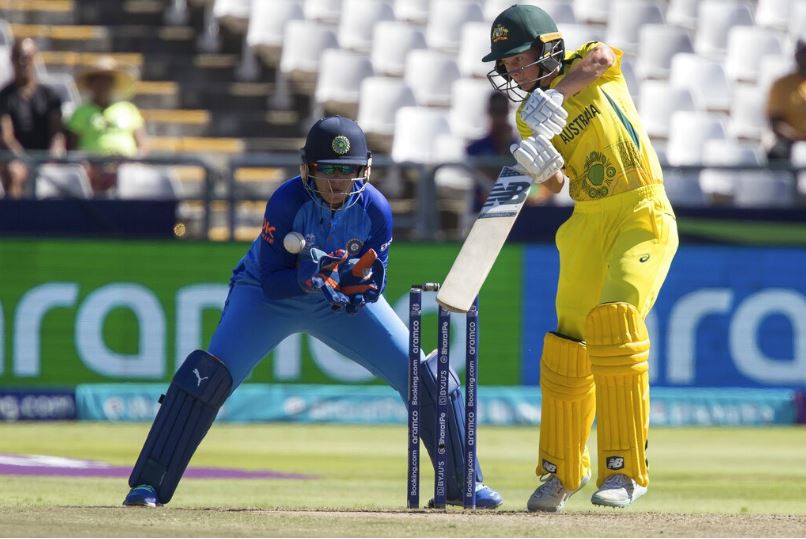
Cape Town, Feb 23: India's shoddy fielding allowed Australia to post a challenging 172 for four in the first semi-final of the Women's T20 World Cup here on Thursday.
The bowling effort also left a lot be desired as Beth Mooney extended her envious record against India with a classy 54 off 37 balls.
One of the best power hitters in the game, Ashleigh Gardner, hurt India with 31 off 18 balls while skipper Meg Lanning made 49 not out off 34 balls.
Australia opted to bat at a sunny Newlands and India skipper Harmanpreet Kaur, who chose to play the knock-out game a day after suffering from high fever, did not seem to mind Lanning's call.
There was no swing on offer, making life a lot difficult for star pacer Renuka Thakur, whose first ball of the game was a half volley to Alyssa Healy (25 off 26) and she duly put it away.
Healy is usually the aggressor in her opening partnerships with Mooney but it wasn't the case on this occasion. It was Mooney who got the boundaries more regularly in their 52-run stand as she manoeuvred the field beautifully with her nimble footwork against the spinners. Shafali Verma dropped a regulation catch off Mooney at long on when she was on 32.
Deepti Sharma, India's most consistent spinner in the tournament, bowled too short in her opening spell. Her second over went for 12 runs as Mooney stepped out for a six over wide long off.
Besides the inconsistent line and length, poor fielding and catching cost India a lot of runs.
Lanning, who was dropped early in her innings, made India pay with an unbeaten 49 off 34 balls. She collected two sixes and a four in the 20th over bowled by Renuka, who went wicketless in her four overs and conceded 41 runs.
Sneh Rana, playing in place of Pooja Vastrakar, was unfortunate not pick any wicket as she troubled the batters with her flight. She could have had Lanning caught behind in her first over but wicketkeeper Richa Ghosh dropped the chance. Richa also fluffed a stumping chance of Lanning.
The last five overs yielded 59 runs for Australia.
Let the Truth be known. If you read VB and like VB, please be a VB Supporter and Help us deliver the Truth to one and all.
Mamata alleges BJP disrupted her Bhabanipur rally, Suvendu claims 'she's nervous'
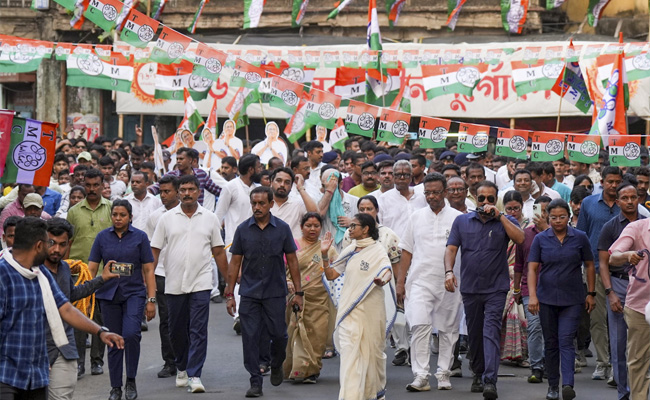
Kolkata (PTI): Chief Minister Mamata Banerjee cut short her speech at a rally in her Bhabanipur constituency, alleging that the BJP was deliberately playing loud music from a nearby public meeting.
A peeved Banerjee said despite having the required permission of the Election Commission, her rally in Chakraberia was disrupted by the BJP, "who want to capture Bengal by intimidation and threat".
"It is not possible for me to go ahead with this meeting. If they can do such a thing in my constituency, imagine how undemocratic the BJP is. If they behave like this, I have to take legal action," she said.
"This is an insult, humiliation. BJP is stepping on our toes to instigate trouble. Not possible to address the gathering in this situation. I am leaving the stage. Please vote for me in your protest," she added.
Banerjee was then seen calling someone over and venting her grievances.
Before leaving the stage, she said, "I will hold a rally tomorrow at the same spot."
TMC supporters then rushed towards the BJP rally, which was later addressed by Leader of the Opposition Suvendu Adhikari, but security personnel intervened and prevented the situation from escalating.
TMC workers later staged a demonstration outside the local police station and filed a complaint, alleging that the BJP violated the model code of conduct.
A senior TMC leader said another complaint will also be lodged with the Election Commission.
Asked about Banerjee's allegations, Adhikari told reporters after the rally he held nearby, "Her reaction shows she is nervous about the imminent loss."
"There was no violence, no obstruction in her meeting and her behaviour shows her nervousness. On May 4, people of Bhabanipur will celebrate the victory of the BJP," he claimed, alleging that the TMC also tried to disrupt his meeting by playing loud music.
South Kolkata's Bhabanipur, one of the battleground seats in the West Bengal elections, will vote in the second phase on April 29.