WPL: Ecclestone, Deepti help UPW bowl out RCB for 138
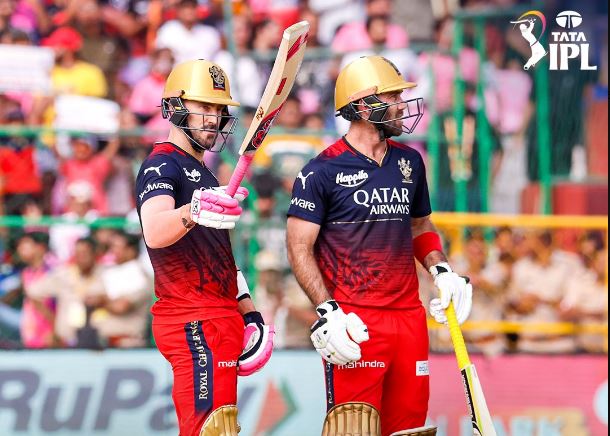
Mumbai, Mar 10: UP Warriorz spinners Sophie Ecclestone and Deepti Sharma gave away very little while striking at regular intervals to bowl out Royal Challengers Bangalore for 138 in the Women's Premier League here on Friday.
This was after Ellyse Perry top-scored for RCB with a blazing 39-ball 52.
Seasoned English left-arm spinner Ecclestone finished with incredible figures of 4/13 in her full quota of four overs, while Deepti ended with 3/26.
Sophie Devine started the RCB innings by hitting Grace Harris for a four and a six off the match's second and third deliveries, collecting 13 runs in the opening over at the Brabourne Stadium.
The maximum was a super shot as Devine, seeing the ball in the slot, positioned herself perfectly and smoked it over the deep mid wicket boundary.
Sharing the new ball with Grace, left-arm seamer Anjali Sarvani ran into an in-form Devine as the versatile New Zealander scored two fours off the India bowler.
With RCB going very well at 29 for no loss after three overs, UP Warriorz skipper Alyssa Healy effected a bowling change and brought on Rajeshwari Gayakwad into the attack, and it paid dividends straightaway as the bowler sent back RCB captain Smriti Mandhana (4) with her first ball.
It was a length delivery outside off stump, and Mandhana failed to time it and ended up giving an easy catch to Sarvani at extra cover, continuing her below-par outing in the inaugural WPL.
Given the situation, it was an excellent first over from Rajeshwari as she conceded just one run while taking the big wicket of Mandhana.
Australian star Ellyse Perry wasted little time in finding her groove, scoring two boundaries off Sarvani to maintain RCB's fine run rate. Then there was a four -- which came off a mishit -- and a six straight down the ground against Rajeshwari's bowling after beautifully getting to the pitch of the ball.
Despite losing Mandhana, RCB racked up 54 runs in the six powerplay overs.
Ecclestone bowled an economical seventh over before Perry struck two successive fours off experienced off-spinning all-rounder Deepti Sharma.
Ecclestone was rewarded for her fine bowling as she bowled Devine, who struck five fours and a six in her 24-ball 36.
Perry continued with her attacking ways before Deepti took her out, much to the UP team's relief. RCB lost the plot after that, as the duo of Deepti and Ecclestone kept taking wickets regularly.
Let the Truth be known. If you read VB and like VB, please be a VB Supporter and Help us deliver the Truth to one and all.
Choose faith or future: BJP alleges 'second-class treatment' of Hindus in K'natka CET row
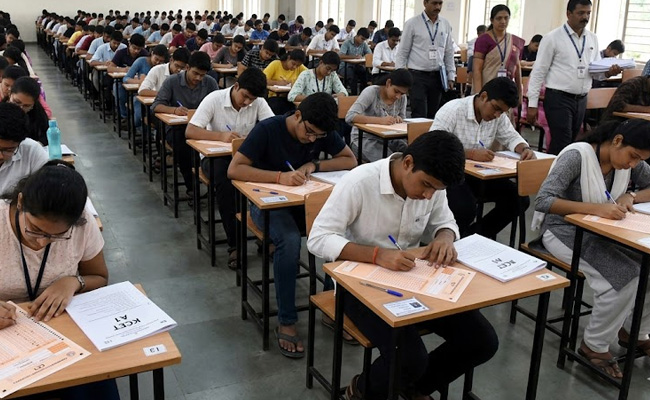
New Delhi (PTI): The BJP on Saturday accused the Karnataka Congress government of being "anti-Hindu" and following double standards after students appearing for the Common Entrance Test (CET) were allegedly asked to remove their 'janeu'.
A political row erupted after five Brahmin students were allegedly forced to remove the thread, considered sacred and worn across the torsos, at a city college in during the CET on Friday.
Students alleged that the invigilators at Madivala asked them to remove their janeu/yajnopaveetha if they wanted to write the exam.
In a video post on X, BJP national spokesperson Shehzad Poonawalla lambasted the act.
"Is it a crime to be a Hindu in Karnataka? In Karnataka, students were stopped from entering the examination hall for wearing a janeu and were given a brutal option -- choose your faith or your future. This happened last year as well," Poonawalla alleged.
ALSO READ: ECI to release exact voter turnout in TN
He accused the Karnataka government of practising double standards and engaging in appeasement politics.
"In Karnataka, we have seen the politics of appeasement. Muslim reservation, a Muslim-only budget, and quotas and contractual work for Muslims. But Hindus have to remove their sacred thread if they want to take an exam, which even the courts have, by the way, allowed," he alleged.
He accused the Congress government of adopting a similar approach in other states where it is in power, while allowing hijab and burka in classrooms.
"It has happened in various Congress-ruled states. We have seen that the Congress party advocates the right to hijab and burkha within the classroom. They say this should be allowed. Even the courts have overruled it.
"But in the case of janeu, they want it to be removed. This is not the first time this has happened. In Telangana and other states, the tilak and mangalsutra were removed. But hijab is fine. This is the kind of second-class treatment being given to Hindus," he added.
Poonawalla said the Congress should rename itself from INC to "MMC -- Muslim League Maowadi Congress" or the "Islamic National Caliphate Party".
As the controversy took a political turn, the college suspended the invigilator pending inquiry. The government also ordered a probe.
The police registered a case and detained three staff members of Krupanidhi College who were in charge of examination checking for questioning, officials said.
A similar incident took place last year in Karnataka, following which the government directed that the candidates would not be asked to remove the janeu while appearing for the CET.