AI brings deceased Arizona man 'back to life' in court to deliver victim impact statement

ARIZONA: In a first-of-its-kind courtroom moment, artificial intelligence was used to recreate a deceased man's voice and likeness so he could address his killer at sentencing, three years after his death in a road rage shooting.
Chris Pelkey, who was 37 when he was fatally shot at a red light in Arizona, was brought "back" using AI technology developed by his family. They used voice recordings, videos, and photos to construct a digital version of Pelkey that read a statement written by his sister, Stacey Wales, during the sentencing hearing of Gabriel Horcasitas, who had already been found guilty by a jury.
The AI-generated video, showing Pelkey in a grey baseball cap, delivered a message of forgiveness: “To Gabriel Horcasitas, the man who shot me, it is a shame we encountered each other that day in those circumstances. In another life, we probably could have been friends.”
Judge Todd Lang, who presided over the case, responded emotionally to the use of the technology, stating: “I loved that AI, thank you for that. As angry as you are, as justifiably angry as the family is, I heard the forgiveness.” He sentenced Horcasitas to 10 and a half years in prison on manslaughter charges.
While some legal experts, like retired federal judge and Duke Law professor Paul Grimm, acknowledged that AI’s presence in courts is growing, particularly in non-jury phases such as sentencing, others expressed caution. Derek Leben, a business ethics professor at Carnegie Mellon University, raised concerns about fidelity to a victim's true intentions when AI is used to reconstruct posthumous speech.
Stacey Wales defended the family’s use of the technology as a respectful and ethical way to give her brother the “final word.” She further added, “We approached this with ethics and morals because this is a powerful tool. Just like a hammer can be used to break a window or build a house, that’s how we used this technology.”
Let the Truth be known. If you read VB and like VB, please be a VB Supporter and Help us deliver the Truth to one and all.
Karnataka rolls out climate action plan to tackle global warming: Minister Khandre
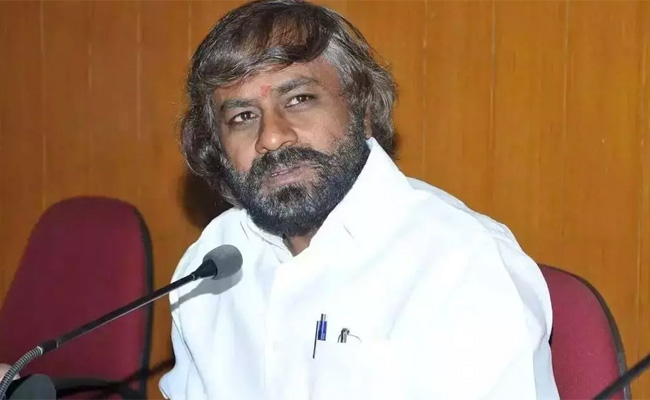
Bengaluru (PTI): Minister Eshwar Khandre on Tuesday said that a Karnataka state action plan on climate change has been formulated to mitigate the impact of global warming and climate change, and directions have been issued to ensure its proper implementation.
Speaking after presiding over a seminar on extreme heat and its impact on Bengaluru, organised by the Karnataka Media Academy, he said the Environmental Management and Policy Research Institute (EMPRI), which comes under the environment department, has taken steps to implement the action plan in coordination with various state government departments.
He said training programmes are being organised in cooperation with zilla panchayat offices for district officials and other related institutions regarding the implementation and progress of the Karnataka state action plan on climate change.
The Forest, Ecology and Environment minister said such programmes will be conducted in all 31 districts of Karnataka.
According to a statement issued by the minister’s office, in terms of climate resilience, Khandre said a dedicated radio programme, “Havamaana Mitra” (weather friend), was launched in April 2025 to share information on best practices, and 24 programmes have so far been broadcast on Akashvani.
ALSO READ: Passenger held at BLR airport with hydroponic ganja worth Rs 1.28 crore
He said these efforts aim to create public awareness.
Khandre emphasised that due to global warming and climate change, even seasons are changing today.
“Keeping this in mind, after becoming Forest Minister, I have been making every effort to increase green cover, especially in Bengaluru city,” he said.
He noted that during the last three years, about 11 crore saplings have been planted in the state, and information on their survival rate has been made available on the Forest Department website.
According to him, encroachments on about 250 acres of forest land worth around Rs 10,000 crore in several parts of Bengaluru, including Kothanur, Kadugodi, B M Kaval, and Turahalli, have been cleared.
Thousands of saplings have been planted and groves created on the cleared land, thereby preserving lung spaces essential for Bengaluru city.
The minister also recalled that more than 400 acres of forest land in Peenya plantation had earlier been allotted to the central government-owned HMT for industrial purposes.
He said HMT had sold 160 acres of this land, while 280 acres remain, and a decision has been taken to reclaim it for the department to preserve an essential lung space for Bengaluru. A legal battle is underway, and the case is currently in the Supreme Court.
In addition, he said 444 acres in the Jarakabande area had been allotted to the Indian Air Force. Under the Forest (Conservation) Act, 1980, forest land cannot be diverted without due process. Hence, in 2017, the then Deputy Commissioner cancelled the land allotment.
“Steps are now being taken to reclaim this forest land and preserve the green space,” he said.
Khandre also highlighted that the Yelahanka Air Force Station in Gantiganahalli, where the international air show is held once every two years in Bengaluru, is on forest land.
He said 159 acres in Gantiganahalli village is classified as a reserved forest area.
“If the Air Force submits a proposal for diversion and provides alternative land, this area may be considered for transfer; otherwise, steps will be taken to reclaim it for the forest department,” he said.
“The Indian Air Force is presently using this area as a runway. However, the RTC and mutation records are in the name of the Forest Department, and the land has not been legally converted. Hence, this forest land will be reclaimed,” he said.
He added that the government has resolved to construct a major biological park on 153 acres at Madappanahalli in Bengaluru North taluk, and cabinet approval has been obtained.
“The CM will lay the foundation stone next month. This will be the largest park after Lalbagh and Cubbon Park. It would not be incorrect to call this an achievement of the century,” he said.