104-year-old scientist David Goodall ends life in Switzerland
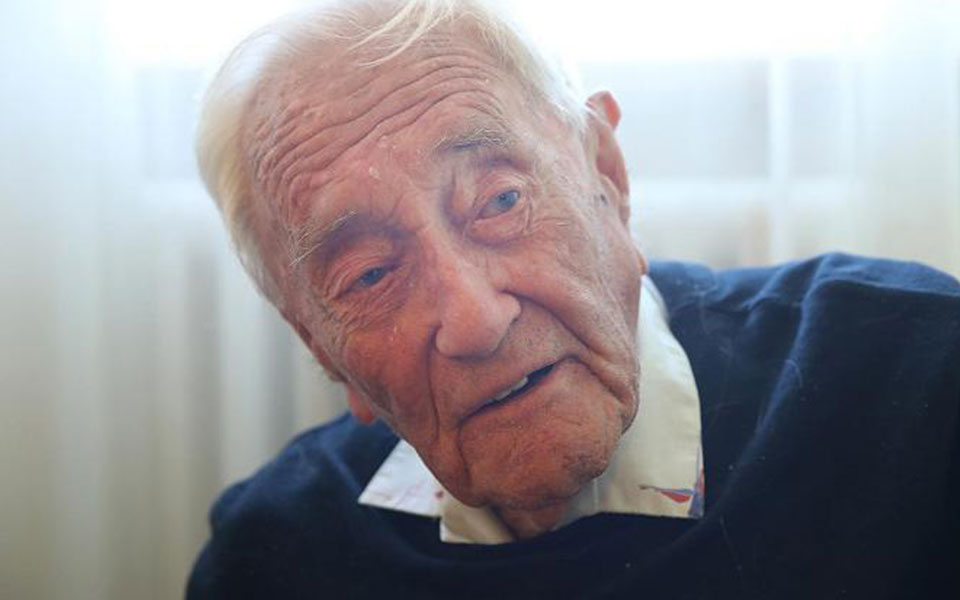
Bern, May 10: David Goodall, a 104-year-old Australian scientist who had campaigned for the legalisation of assisted dying in his home country, ended his life at a Swiss clinic on Thursday, a representative from the pro-euthanasia group Exit International said.
Goodall, a respected botanist and ecologist, died at the Life Circle clinic in Basel, Switzerland, after administering a lethal drug under the guidance of doctors, ABC News Australia reported.
Exit International, which represented the scientist, said Goodall passed away while listening to Beethoven's "Ode to Joy".
Euthanasia is illegal in Australia, thought the state of Victoria is planning to allow assisted dying from mid-2019. Goodall's home state Perth is currently debating whether to introduce the policy.
The story of the academic, who is one of the first Australians to undertake the procedure due to old age rather than a terminal illness, attracted international headlines and further inflamed a highly divisive debate.
His supporters applauded his decision to take charge of his fate after declaring his life was no longer worth living.
But critics warned his decision solely on the grounds of old age set a "dangerous precedent".
The grandfather of 12 had attracted over $20,000 in donations from the public to help fund his journey to Europe from Australia earlier this month.
Earlier this week, Goodall said he resented having to travel so far to carry out his plan, but was relieved the end was near. "Life stopped being enjoyable five or 10 years ago," he said, in part because of his failing mobility and eyesight.
"I am glad to arrive (in Basel). I'll be even more pleased when further steps of my journey are completed. I have been able to say goodbye. I was a bit sorry to say goodbye to my family in Bordeaux but that's the way it was."
Goodall said he hoped his story would lead to the legalisation of assisted dying in other countries. "I'm looking forward to it," he said of his imminent death.
"What I would like is for other countries to follow Switzerland's lead and make these facilities available to all clients, if they meet the requirements, and the requirements not just of age, but of mental capacity."
Several US states have a form of physician-assisted suicide, as do countries including Japan, Belgium and Switzerland.
Born in London in 1914, just months before the outbreak of World War I, Goodall and his family moved to Australia when he was a child. He went on to hold academic positions across the world, including in the UK, the US and Australia.
Let the Truth be known. If you read VB and like VB, please be a VB Supporter and Help us deliver the Truth to one and all.
Hospital wall collapse: CM orders suspension of executive engineer; kin of victims get solatium

Bengaluru (PTI): Karnataka Chief Minister Siddaramaiah on Thursday ordered the immediate suspension of an executive engineer for the Bowring and Lady Curzon Hospital wall collapse that claimed the lives of seven people, during a high-level review meeting at Vidhana Soudha.
A compensation of Rs 5 lakh, as announced by the CM Siddaramaiah, was distributed to the families of seven victims who lost their lives in the tragedy on Wednesday evening, which occurred due to heavy downpour with gusty winds and hailstorm.
The meeting of municipal commissioners of the five corporations, chaired by the chief minister and attended by Deputy Chief Minister D K Shivakumar, focused on fixing accountability and examining lapses that led to the tragedy.
"Why was soil dumped in a way that damaged the wall? Why did you not monitor this?" Siddaramaiah asked, pulling up hospital authorities during the meeting.
A statement from the chief minister's office said that the CM ordered the immediate suspension of the executive engineer of the Karnataka Health Systems Development Project (KHSDP).
ALSO READ: Three arrested for running fake Aadhaar racket in UP's Badaun
He also questioned the hospital authorities, asking why they failed to monitor the dumping of soil that weakened the structure.
The chief minister directed that a notice be issued to the head of the Hospital.
During the meeting, Siddaramaiah said the rains had caused extensive damage in the city, with over 250 trees uprooted.
The Chief Minister instructed officials to take necessary measures before the onset of the monsoon to avoid untoward incidents.
Commissioners of all five municipal zones in Bengaluru have been asked to take precautionary steps, including trimming dry and dangerous tree branches, the CMO said.
Siddaramaiah also directed them to get the silt cleared from stormwater drains to prevent flooding, and that immediate action be taken to remove debris and fallen branches from roads.
Further, he instructed that barricades be placed at underpasses where water stagnates and restricts public movement.
The Greater Bengaluru Authority (GBA) Chief Commissioner M Maheshwar Rao said in a statement that Shivajinagar MLA Rizwan Arshad distributed compensation cheques of Rs 5 lakh each to the families of the deceased on Thursday.
Seven people, including a six-year-old girl, were killed and seven others injured when the compound wall collapsed amid heavy rain, strong winds and a hailstorm on Wednesday evening.
Police said the victims, comprising three from Bengaluru, two from Kerala on a study tour and one each from Uttar Pradesh and Assam, had taken shelter near the wall when it suddenly gave way, trapping them under the debris.
The chief minister questioned officials over the dumping of soil near the wall despite knowing it could weaken the structure, and directed that a notice be issued to the head of Bowring Hospital.
Siddaramaiah, who had visited the spot soon after the incident along with senior officials, reviewed the situation and ordered a detailed probe into the collapse.