15 killed as Pakistani army plane crashes into residential area
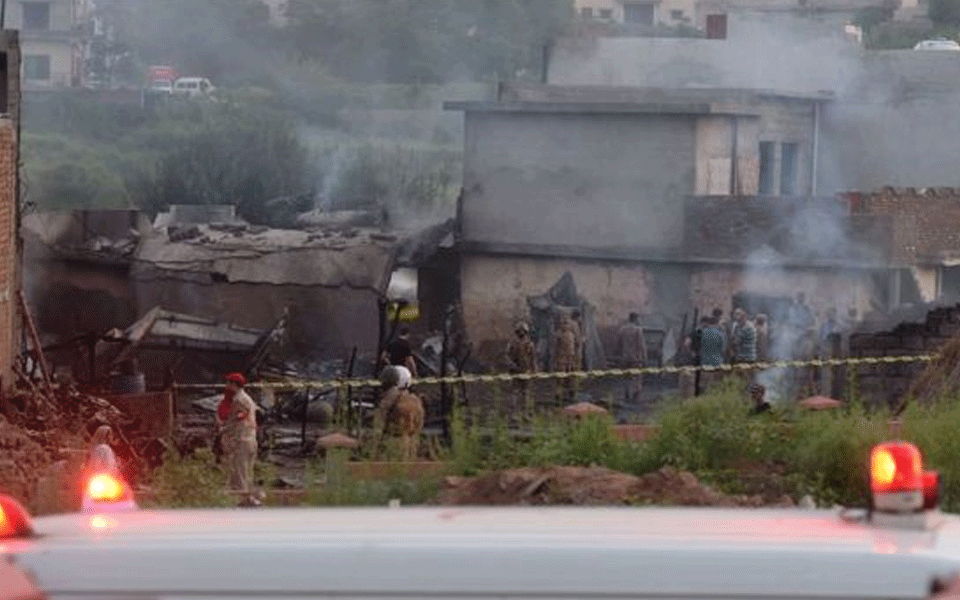
Rawalpindi: Fifteen people were killed when a small military plane crashed early Tuesday into a residential area in the Pakistani city of Rawalpindi near the capital Islamabad, a rescue official told AFP.
"A small plane crashed into a residential area. So far we have retrieved 15 dead bodies, including 10 civilians and five crew members," rescue spokesman Farooq Butt said, adding that a further 12 people had been injured.
The plane belonged to the Pakistani military and crashed near an upscale neighbourhood in the garrison city home to the army's headquarters.
An AFP reporter at the scene said smoke was still rising from the wreckage and destroyed homes, while pieces of the plane were visible on a nearby roof.
Military officials had cordoned off the scene while a crowd of local residents stood nearby, with some sobbing. Pakistan has a chequered aviation safety record, with plane and helicopter crashes frequent over the years.
In 2016, a Pakistan International Airlines plane burst into flames after one of its two turboprop engines failed while travelling from remote northern Pakistan to Islamabad, killing more than 40 people.
The deadliest air disaster on Pakistani soil was in 2010, when an Airbus 321 operated by private airline Airblue and flying from Karachi crashed into the hills outside Islamabad while coming in to land, killing all 152 on board.
Let the Truth be known. If you read VB and like VB, please be a VB Supporter and Help us deliver the Truth to one and all.
Confident we are going to win Kerala: Shashi Tharoor
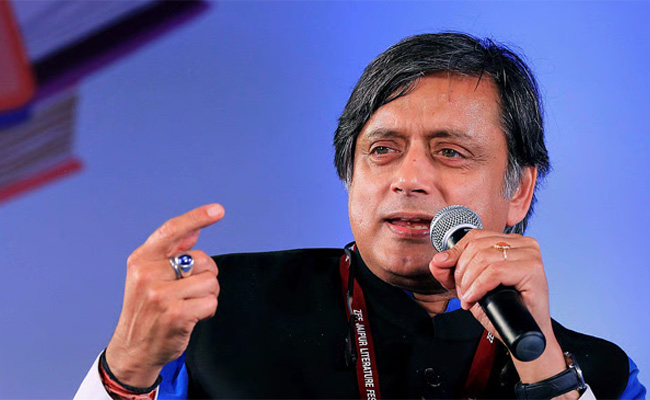
New Delhi (PTI): Congress leader Shashi Tharoor on Thursday expressed confidence in the victory of the United Democratic Front (UDF) in Kerala, saying the Congress-led alliance will win more than 75 seats out of the total 140 in the state.
Tharoor, who hails from Kerala, said he was not surprised to see the results of the exit polls, most of which predicted a victory for the UDF that has been out of power for 10 years in the state.
"We have been on the ground. I have campaigned in 59 constituencies across 12 districts out of 14. I was very confident we are going to win.
"Everything that I have picked up from not just my party colleagues and workers but also from other observers, media and others have always convinced me that we were going to score a comfortable win of above 75 seats. And all the (exit) polls have confirmed the same thing," he told reporters here.
The Thiruvananthapuram MP said he was not surprised to see the results of the exit polls but in general he was not a big fan of exit polls in India.
"Because ours is not purely a homogenous society. We have to take into account gender issue, caste issue, class issue, regional disparities. You never get a convincingly large enough sample to give an accurate poll and now there is the additional complication that we have heard about in West Bengal this year that many people are unwilling to answer the questions of the pollsters," he said.
The Congress leader said normally, it used to be below 10 per cent that people said that they would not answer.
"Even if you are a reputable exit pollster, in Bengal, one polling company has said 60 per cent of people refused to answer. So, what is the worth of a poll where 60 per cent of your respondents have not answered," he said.
Several exit polls on Wednesday predicted a comeback by the Congress-led UDF in Kerala after 10 years, dethroning the CPI(M)-led Left Democratic Front (LDF).
Polling for the 140-member Kerala assembly was held on April 9. Results of assembly elections in West Bengal, Tamil Nadu, Assam, Puducherry, besides Kerala, will be announced on May 4.