16-year-old US girl disqualified after completing 5-km race for wearing hijab
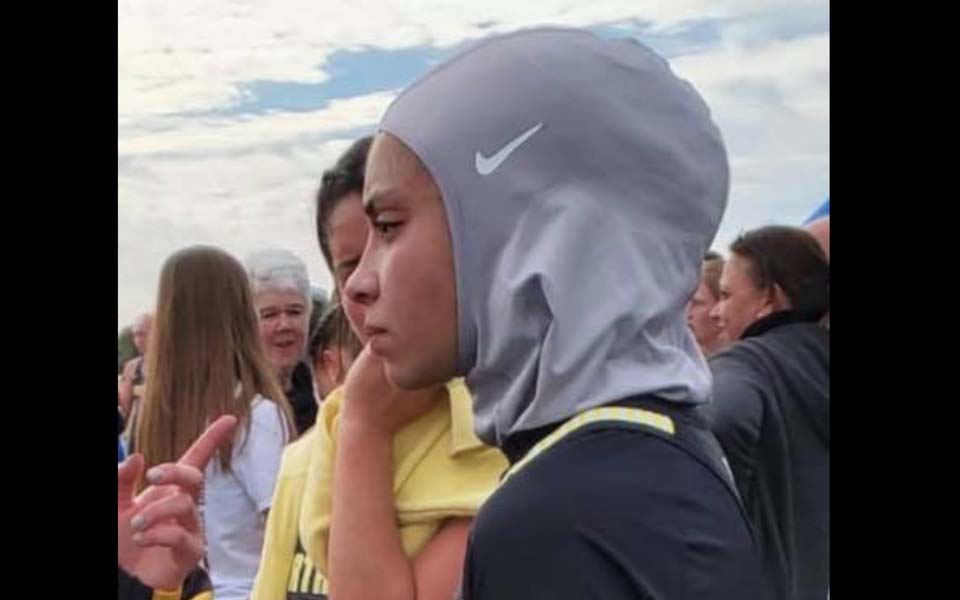
A high school cross-country runner was disqualified from a district meet despite running her fastest race of the season - because she was wearing a hijab.
Noor Abukaram, a student at The Bounty Collegium in Ohio, was signed up to participate in a race with the Sylvania Northview High School Girls Cross Country Team over the weekend, a team she has been a part of for the past three years.
However, after finishing the race, Abukaram found out she was disqualified because of her religious headwear, something she said she “always feared”.
According to the 16-year-old, who recalled the incident via her cousin’s Facebook, the team’s uniforms were being checked by Ohio High School Athletic Association (OHSAA) officials ahead of the race when a teammate was asked to change her shorts to match the rest of the runners.
“Immediately, I began to wonder if they were going to call on me next since I was wearing all black pants and hijab,” Abukaram wrote. “I have been a student athlete my entire life, and every time we compete, the thought crosses my mind during uniform checks.”
Officials did not call on Abukaram, but they did speak to her coach, Jeffery Flowers, and informed him that Abukaram would not be allowed to qualify unless she removed her Nike sports hijab - a conversation that was not relayed to the student before the race began.
On Facebook, Abukaram recalled the moment that her and her teammates went to look at their placings after the race, at which point she realised “my name wasn’t on there”.
Confused, Abukaram says she pointed out what she thought was a mistake to her teammates, who then informed her that she had been disqualified because of her hijab.
“Immediately my heart drops, I become nauseous and feel like I got punched in the gut,” Abukaram wrote. “This is something that I had always feared which has now become a reality. I just walked away and my teammates didn’t say anything else.”
According to Abukaram, the situation left her feeling “humiliated, disappointed, rejected and in denial” and she feels that her “rights as an athlete were violated” because she was not given the same opportunity as her teammate.
“I wasn’t given the chance to explain myself to them because they didn’t have the decency to tell me what the issue was,” she wrote.
Speaking to Yahoo, Flowers said he was asked by officials to provide a “written exemption letter coaches are required to have for uniform violations” for Abukaram’s hijab ahead of the race, which he did not have.
According to Flowers, he was then informed that Abukaram could either be substituted with another runner, asked to remove her hijab, or race but be disqualified at the finish.
Flowers says he felt there was no time to argue the decision and that “the official didn’t feel he had the authority to do the right thing and not disqualify her”.
Flowers timed Abukaram’s race for her, knowing it would not be officially count. She ended up finishing in 22 minutes and 22 seconds, the best race of her season.
Following the race, the varsity cross-country coach says he checked the rule book, and was unable to find “any clause that prevents or prohibits hair coverings like Noor’s”.
Abukaram reiterated this, writing on Facebook that “this rule does NOT exist in writing” and that she feels she should “not have to get a waiver signed and approved by OHSAA to allow me to race due to my religious head covering”.
In response to the post, which has been shared more than 2,000 times, Abukaram has received an outpouring of support.
“I hope this brave young woman helps clear a path and correct the situation for all of the girls that will compete after her wearing hijabs,” one person wrote.
Another commented: “From one Ohioan to another, I am so sorry to hear about this Noor! Undeniably discriminatory and incredibly unfair!”
Courtesy: www.independent.co.uk
Let the Truth be known. If you read VB and like VB, please be a VB Supporter and Help us deliver the Truth to one and all.
AIITA welcomes Karnataka’s ban on obscene songs in school events

Bhatkal: The Karnataka unit of the All India Ideal Teachers Association (AIITA) has welcomed the Karnataka government’s decision to strictly ban school children from dancing to obscene songs during educational and cultural programmes in government, aided, and private schools across the state.
AIITA Karnataka State President M. R. Manvi congratulated the government for taking what he termed an important step to preserve the sanctity of education.
“Such decisions to safeguard the dignity of school children and uphold the values of education are the need of the hour. This rule should not be limited to government schools alone but must be strictly implemented in all private educational institutions as well,” he said.
He further urged the government to address other concerns within school programmes.
“The government should not only prohibit obscene dances in the name of school anniversaries, but also ensure that plays and dialogues that incite religious hatred are avoided. Schools should be centres of harmony, not platforms for spreading hatred,” he added.
According to a recent circular issued by the Department of School Education and Literacy, obscene dances are adversely affecting the mental health and moral values of students.
In this regard, schools have been advised to use songs that promote nationalism, positive thinking, the greatness of Kannada culture, and value-based traditions instead of inappropriate content during programmes.
The circular also emphasises that students should be dressed in decent attire.
AIITA also backed the department’s warning that disciplinary action would be taken against head teachers if such guidelines are violated. The association has further demanded that district Deputy Directors of Public Instruction strictly monitor the implementation of these rules.