17 killed, 30 injured in Bangladesh bus accident
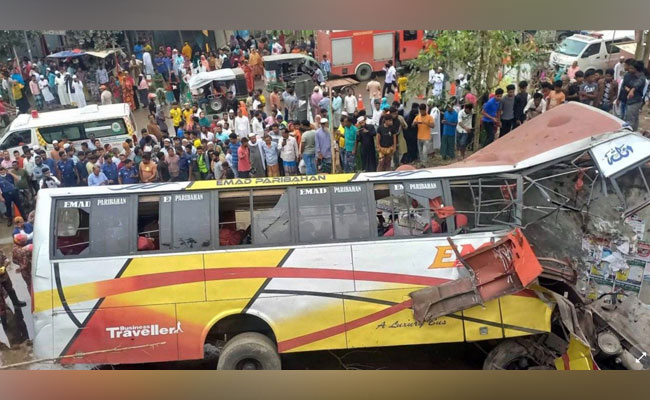
Dhaka (PTI): At least 17 people were killed and 30 injured when a speeding bus veered off the road and fell into a ditch in Bangladesh on Sunday, according to media reports.
The Dhaka-bound bus operated by Emad Paribahan veered out of control on an expressway in Madaripur around 7.30 am, the police said.
The death toll is expected to climb as many of the injured were in critical condition, the police said.
Madaripur Police Superintendent Md Masud Alam said the injured were admitted to different hospitals.
"The accident is believed to be due to reckless driving and mechanical failure of the bus," bdnews24, a news portal quoted Alam as saying.
Shiplu Ahmed, Deputy Assistant Director of Fire Service, Faridpur, said, "It is believed that the wheel of the speeding bus burst and it lost control and fell into the ditch and hit hard."
Three units of fire service are carrying out rescue work, said Lima Khanam, duty officer of the Fire Service and Civil Defence Headquarters who is carrying rescue efforts.
They said the dead and the injured were yet to be identified.
Md Sabuj Khan, the counter man of the Shonadanga bus counter told The Daily Star newspaper that the Emad Paribahan bus left for Dhaka with more than 43 passengers.
Road accidents are common in Bangladesh due to old and badly maintained vehicles and roads, as well as poorly trained drivers.
Let the Truth be known. If you read VB and like VB, please be a VB Supporter and Help us deliver the Truth to one and all.
Noida International Airport appoints Nitu Samra as interim CEO
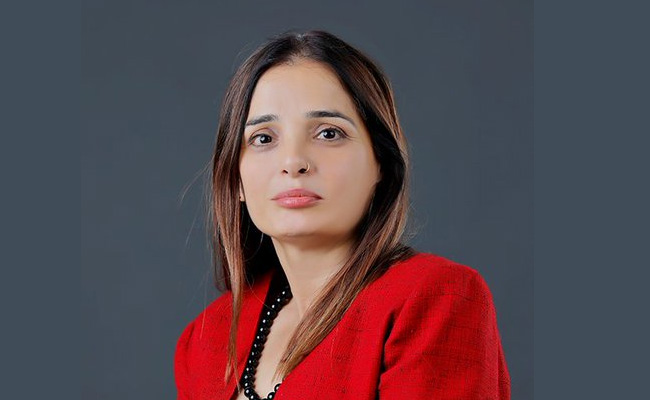
New Delhi (PTI): Noida International Airport on Friday announced the appointment of its Chief Financial Officer Nitu Samra as the interim Chief Executive Officer after authorities denied permission for foreign national Christoph Schnellmann to be at the helm.
"This change follows directions issued by the Bureau of Civil Aviation Security (BCAS) that the Chief Executive Officer of an airport in India is required to be an Indian national," NIA said in a statement.
Samra will replace Schnellmann, a Swiss national who has led Noida International Airport (NIA) as the CEO since August 2020.
The regulatory issue related to the requirement of having an Indian national as CEO has been delaying the start of commercial operations of the airport, which was inaugurated by Prime Minister Narendra Modi on March 28.
Schnellmann will join the airport's Board of Directors as Executive Vice Chairman. In this role, he will continue to support the project and its transition to operations, the statement said.
With immediate effect, NIA said Samra has been appointed as the CEO on an interim basis until the Board of Directors can conclude a formal selection process.
Samra has been serving as the CFO since October 2021 and was closely involved in the airport’s development journey, overseeing financial stewardship, governance, and strategic planning during a key phase of the project, the statement added.
NIA will be operated by Yamuna International Airport Pvt Ltd (YIAPL), a subsidiary of Zurich Airport International AG, under a public-private partnership.
Originally scheduled to commence passenger services in September 2024, NIA is being developed in four phases, along with a dedicated cargo terminal. It received an aerodrome license from the aviation regulator Directorate General of Civil Aviation (DGCA) in March.
YIAPL Chairman Daniel Bircher said that since the inauguration of the airport by the Prime Minister, the goal was to enable the start of operations as early as possible.
"This management change brings the airport into compliance with Bureau of Civil Aviation Security requirements while maintaining continuity in the airport’s leadership team. The newly structured team will support a smooth transition into operations, guided by clear and transparent governance and a strong corporate culture," he said.
On March 28, Civil Aviation Minister K Rammohan Naidu said commercial flight operations from the airport would start in the next 45 to 60 days.
Among the largest greenfield airport projects in the country, NIA will initially have a capacity to handle 12 million passengers per annum.
Once fully developed, the airport will have a total passenger handling capacity of 70 million.
The first phase of NIA has been developed at an investment of around Rs 11,200 crore. 'DXN' is the code for the airport.
The airport features a 3,900-metre runway capable of handling wide-body aircraft, along with modern navigation systems, including Instrument Landing System (ILS) and advanced airfield lighting.
The peak handling capacity in the first phase will be 30 flights per hour.
In the first phase, there will be 28 aircraft stands, and the projected cargo capacity is around 2.5 lakh tonnes.
Terminal 1 of the airport is spread across 1,37,985 square metres with 48 check-in counters. Over 40 acres of land have been earmarked for developing MRO (Maintenance, Repair and Overhaul) facilities at the airport.