2 passenger trains collide in Pakistan; 36 killed, scores injured
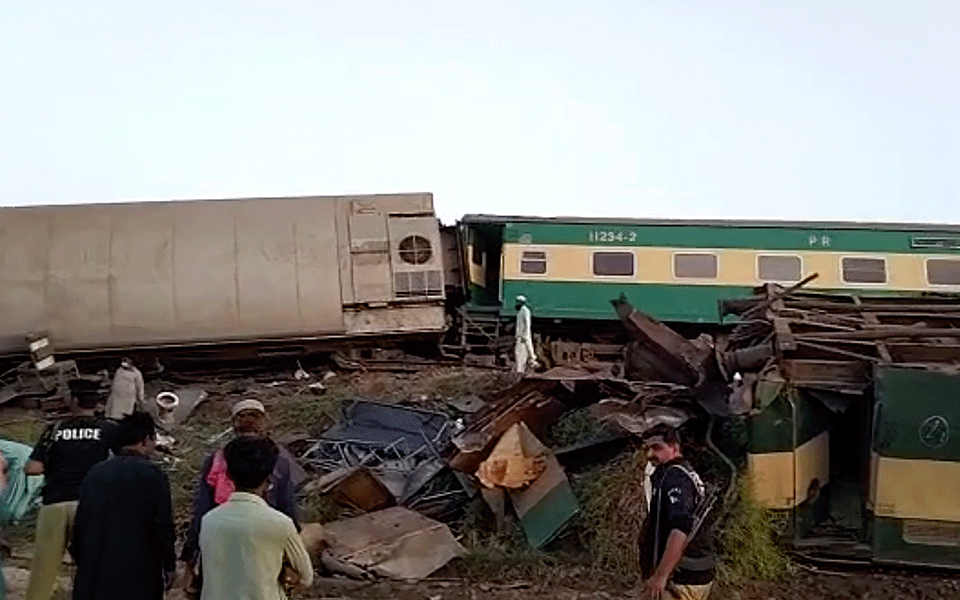
Karachi: Two passenger trains collided in Pakistan's southern Sindh Province early Monday morning, killing at least 36 people and injuring scores of others, according to officials.
The accident occurred when the Millat Express train from Karachi to Sargodha derailed and fell on the opposite track and collided with Sir Syed Express headed from Rawalpindi to Karachi, a spokesperson of Pakistan Railways said.
The collision, in which bogies of the Millat Express train overturned, took place near Dharki, a city located in the Ghotki district of upper Sindh.
An emergency has been declared at hospitals in Ghotki, Dharki, Obaro and Mirpur Mathelo where injured were rushed.
The Express Tribune reported that at least 36 people have been killed and scores of others injured in the train collision.
Reacting to the train derailment, Prime Minister Imran Khan said that he was "shocked by the horrific train accident".
Shocked by the horrific train accident at Ghotki early this morning leaving 30 passengers dead. Have asked Railway Minister to reach site & ensure medical assistance to injured & support for families of the dead. Ordering comprehensive investigation into railway safety faultlines, he said on Twitter.
Officials were facing difficulties in rescuing the people trapped inside the overturned bogies.
Speaking to Geo News, Ghotki Deputy Commissioner Usman Abdullah said that 13 to 14 bogies have derailed in the accident while six to eight were "completely destroyed".
Rescuing passengers who are still trapped is a "challenge" for the rescue officials, he said, adding that a relief train has departed from Rohri.
"This is a challenging task. It will take time to use heavy machinery to free citizens (still trapped). We are also establishing a medical camp to provide medical aid to citizens," he said.
Ghotki Senior Superintendent of Police Umar Tufail said that passengers were stuck in one of the bogies and we fear more casualties".
Some breathed their last after being pulled out from the wreckage, he said. According to officials, over 1,000 passengers were on board the two trains.
Around 20 passengers still remained trapped in the wreckage of some of the bogies which were damaged and overturned, a spokesperson for the railways department said, adding that officials were accumulating all the information of the passengers and staff on both the trains.
It will take some time for the rescue operation to be completed as heavy machinery is required to remove the damaged boogies, he said.
Authorities fear that the number of fatalities could rise even as rescue and relief officials were rushed to the spot.
Meanwhile, Sindh Chief Minister Murad Ali Shah expressed grief over the loss of lives and directed the Sukkur Commissioner to mobilise the district administration, Dawn news reported.
"Machinery should be arranged to rescue passengers that are still stuck. Arrangements should also be made at nearby hospitals to treat those that have been injured, he said, directing the official to arrange temporary accommodation and food for the passengers.
"An information system should be set up so that citizens can get accurate information," the Sindh Chief Minister said.
Pakistan Rangers troops have also reached the spot to assist the civil administration in the rescue and relief operations.
Train accidents are common in Pakistan and dozens of people lose their lives every year. The railways have seen decades of decline due to graft, mismanagement and lack of investment.
According to a senior former railways official, such accidents happen from time to time all over Pakistan as the railways network remains outdated in many places.
In some areas, they are still using the same network and tracks which were laid before the Partition, the former official added.
Let the Truth be known. If you read VB and like VB, please be a VB Supporter and Help us deliver the Truth to one and all.
Two injuries, one DNF, a DQ as India end messy World Relays campaign
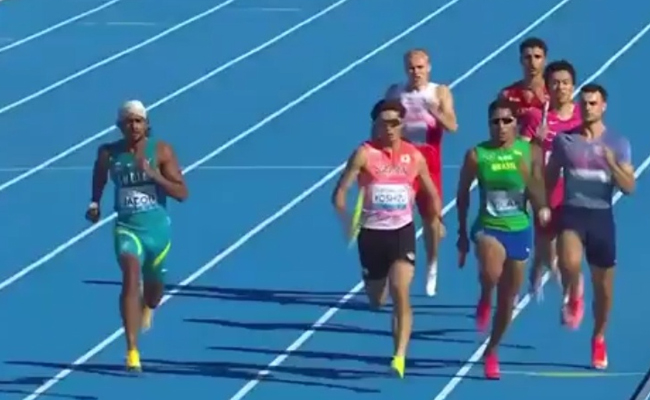
Gaborone (Botswana) (PTI): Amoj Jacob and Ragul Kumar got injured during the men's 4x400m and 4x100 races respectively as India ended their World Athletics Relays campaign in disappointment on the second day of competitions here on Sunday.
The Indian camp had high hopes of making the 2027 World Championships in the men's 4x400m relay but the team did not finish (DNF) the race as Jacob suffered cramps and pulled out of the race after taking the baton from the first leg runner Dharamveer Choudhary. Rajesh Ramesh and Vishal TK were to run in the third and fourth legs.
Those teams which could not qualify for the 2027 Beijing World Championships by reaching the final round of each of the six relay events on Saturday were given another chance in the second qualification round on Sunday.
The top two teams in each of the two heats (in all six relay events) booked the Beijing ticket on Sunday.
India will now have to try and qualify for the World Championships through the Top Lists of the World Athletics, which is a long and tedious process.
In the men's 4x100m race, third leg runner Ragul Kumar fell down the track after failing to hand over the baton inside the exchange zone to fourth leg runner Gurindervir Singh, which clearly showed the lack of coordination among the runners.
Harsh Santosh Raut and Animesh Kujur ran the first two legs.
The Indian quartet was disqualified and Kumar was seen being taken away from the Field of Play with the help of the volunteers.
It was a comedy of errors in the case of the women's 4x100m race, which saw the baton being dropped during an exchange between first leg runner Tamanna and second runner Nithya Gandhe, though the Indians finished the race in 53.09 seconds.
Gandhe started running quite a distance, but after realising that the baton was not in her hand, she turned and ran back to pick it up.
The only silver-lining for the Indian contingent was the national record time in the mixed 4x100m relay race, though the quartet of Ragul Kumar, Nithya Gandhe, Animesh Kujur and Sneha SS finished sixth in heat number two with a time of 41.35 seconds, bettering the previous national mark of 42.30 seconds set in March in Chandigarh.
The mixed 4x400m relay quartet of Theerthesh P Shetty, Kumari Saloni, Nihal William and Rashdeep Kaur ended at fifth in heat number one with a time of 3 minutes and 19.40 seconds.
On Saturday, all the five Indian relay teams had failed to make it to the respective final rounds and thus missed out on the 2027 World Championships berths.