20 Palestinians killed at Gaza distribution site, says Israeli-backed aid group
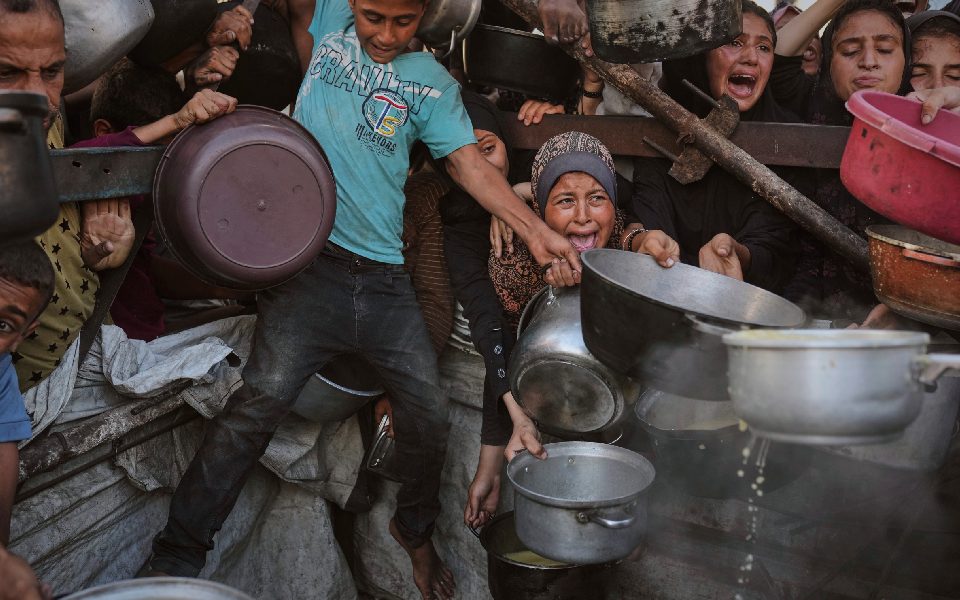
Tel Aviv, Jul 16 (AP): Twenty Palestinians were killed at a food distribution centre run by an Israeli-backed American organisation in the Gaza Strip on Wednesday, mostly from being trampled, the group said.
They were the first deaths reported at one of the group's sites, though hundreds have been killed by Israeli forces on the roads leading to them, according to witnesses and health officials.
Israeli strikes across Gaza killed at least 41 others, including 11 children, according to hospital officials.
The Gaza Humanitarian Fund accused the Hamas group of fomenting unrest at the food distribution centre, leading to a “dangerous surge,” though it provided no evidence to support the claim.
Witnesses said GHF guards threw stun grenades and used pepper spray on people pressing to get into the site before it opened, causing a panic in the narrow, fenced-in entrance.
Since the group's operations began in late May, hundreds of Palestinians have been killed in shootings by Israeli soldiers while on roads heading to the sites, according to witnesses and health officials.
GHF's four sites are all in military-controlled zones, and the Israeli military has said its troops have only fired warning shots to control crowds.
Gaza's more than 2 million Palestinians are living through a catastrophic humanitarian crisis, and the territory is teetering on the edge of famine, according to food security experts.
Stun grenades and pepper spray caused chaos, witnesses say
GHF said it believed that 19 of the dead died from trampling at its food distribution centre between the southern cities of Khan Younis and Rafah and one was killed by a stabbing in the crowd.
The Gaza Health Ministry said 17 people suffocated at the site and three others were shot. It was not clear if the shootings took place during the crush or earlier on the road to the center. The witnesses did not report shots fired at the center but said Israeli troops fired toward the crowds as they headed to it.
Witnesses said that thousands of Palestinians arrived at the site early in the morning, and the American contractors guarding it did not open the gates. It was not clear if it was before the site's opening time or if it was not operating at all, since schedules often change.
The crowd surged forward at the turnstiles in the fenced-in entranceway, said one survivor, Ahmed Abu Amra.
“The Americans were calling out on the loudspeakers, Go back, go back.' But no one could turn around because it was so crowded,” he said. “Everyone was on top of each other. We tried to pull out the people who were underneath, but we couldn't. The Americans were throwing stun grenades at us.”
Other witnesses said the contractors used pepper spray as well. The Health Ministry said tear gas was used, but GHF denied that and said its contractors deployed “limited use of pepper spray.” It said they fired no shots at the crowd.
“Everyone suffocated from people crushing on top of each other,” said Omar al-Najjar, a Rafah resident, as he and other men carried a wounded man on a stretcher. He said the chaos at the sites is forcing Palestinians to “march towards death.”
GHF said it believed elements in the crowd “armed and affiliated with Hamas” fomented the unrest. It said that its contractors identified men with firearms in the crowd and confiscated one.
Distribution has often been chaotic
Distribution at the GHF sites has often been chaotic. Boxes of food are left stacked on the ground inside the center and, once opened, crowds charge in to grab whatever they can, according to witnesses and videos released by GHF itself.
In videos obtained recently by The Associated Press from an American contractor working with GHF, contractors are seen using tear gas and stun grenades to keep crowds back behind metal fences or to force them to disperse. Gunshots can also be heard.
The United Nations human rights office said Tuesday that 875 Palestinians were killed while seeking food since May. Of those, 674 were killed while en route to GHF food sites. The rest were reportedly killed while waiting for aid trucks entering Gaza.
Strikes kill dozens as Israel opens a new military corridor
Israeli strikes killed 22 people in Gaza City, including 11 children and three women, and 19 others in Khan Younis. The Israeli military said it has struck more than 120 targets in the past 24 hours across the Gaza Strip, including Hamas military infrastructure of tunnels and weapons storage facilities.
Gaza's Health Ministry said Wednesday that hospitals have received a total of 94 bodies over the past 24 hours, with another 252 wounded.
Israel blames Hamas for the civilian deaths because the group often operates in residential areas.
Also on Wednesday, the Israeli military announced the opening of a new corridor — the fourth — that bisects Khan Younis, where Israeli troops have seized land in what they say is a pressure tactic against Hamas. In the past, these narrow strips of land have been a serious hurdle during ceasefire negotiations, as Israel has said it wants to maintain control over them.
Indirect negotiations in Qatar between Israel and Hamas are at a standstill, after 21 months of war, which began with the Hamas' cross-border attack on Oct. 7, 2023. That day, fighters killed some 1,200 people, mostly civilians, and abducted 251 people, most of whom have since been released in ceasefire agreements or other deals.
Fifty hostages are still being held, less than half of them believed to be alive.
Israel's retaliatory offensive has killed over 58,000 Palestinians, according to Gaza's Health Ministry, which has said women and children make up more than half of the dead. It does not distinguish between civilians and fighters in its tally.
The ministry is part of the Hamas-run government but is led by medical professionals. The United Nations and other international organisations consider its figures to be the most reliable count of war casualties.
Let the Truth be known. If you read VB and like VB, please be a VB Supporter and Help us deliver the Truth to one and all.
Fire at mass marriage event attended by Dy CM Shivakumar, nobody affected

Raichur (Karnataka) (PTI): Fire broke out near the stage of the mass marriage event that was attended by Deputy Chief Minister D K Shivakumar here, police said on Sunday.
Nobody was affected, and the fire was immediately put out, they said.
The fire was noticed shortly after Shivakumar and other dignitaries left the stage, and Forest Minister Eshwaran Khandre was speaking to the media at the venue in Sindhanur, officials said.
According to officials, wires, speakers, and cloth materials near the stage caught fire, allegedly due to a short circuit.
Police personnel present at the spot quickly swung into action and extinguished the fire.
The programme was halted for some time and resumed later, they said.
Several ministers, legislators and political leaders from the region, and actor Sudeep had attended the event.