2020 White House hopeful Kamala Harris surges back into limelight
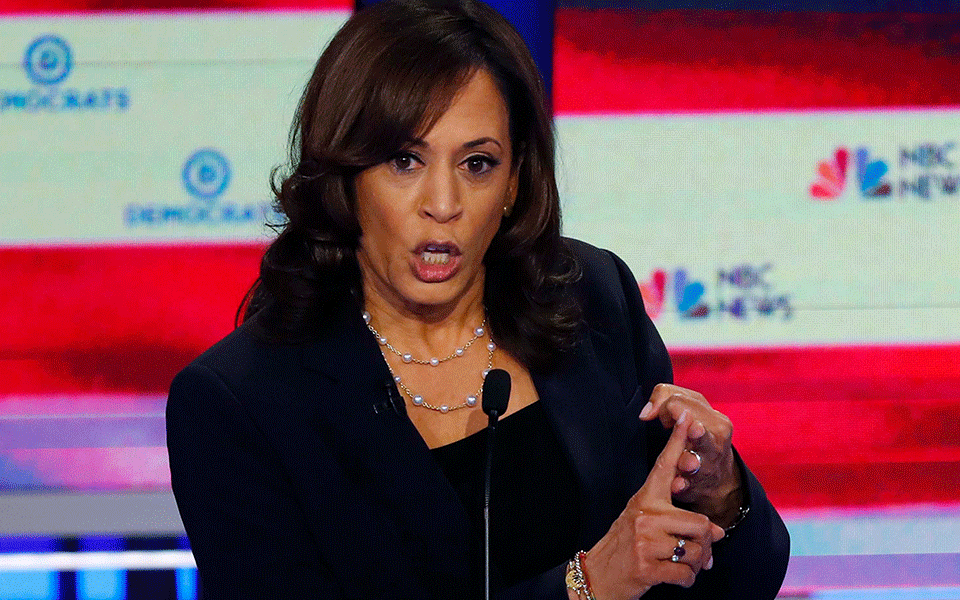
Washington: Kamala Harris made a splash with her well-received presidential campaign rollout in January, only to see her candidate-of-the-month status deflate as she struggled for a breakout moment on the trail.
Thanks to a rock-solid performance Thursday in the first Democratic debate of the 2020 cycle, the US senator from California has now catapulted back into the top tier.
Her suddenly viable candidacy is noteworthy in the era of Donald Trump: as a black American daughter of immigrants, Harris may well be the American dream incarnate, mounting a challenge to a president whom many Democrats denounce as the nation's divider in chief.
Harris is 54, a former prosecutor and one time attorney general for California whose sometimes steely demeanor can give way to a million-watt smile.
Both countenances were on display in the debate -- the most watched Democratic debate ever -- where she was the best storyteller on stage, mixing policy proficiency with a knack for personal connection.
"We need to think about this situation in terms of real people," Harris said when discussing the migrant border crisis.
Harris owned the evening's most powerful moment, when she boldly confronted frontrunner Joe Biden on race and identity and called out his "hurtful" comments in praise of segregationist senators with whom he worked but disagreed.
She also chided Biden on his past opposition to 1970s busing programs that forced integration of segregated schools -- eloquently invoking her own childhood.
"There was a little girl in California who was part of the second class to integrate her public school, and she was bused to school every day," she said.
Harris, if elected, would become the first female -- and first black female -- president of the United States.
As someone who seems to personify America's melting-pot ideal, she is no novice at breaking through glass ceilings.
After two terms as district attorney of San Francisco (2004-2011), she was twice elected as California attorney general (2011-2017), becoming the first woman and the first black person to serve as chief law enforcement officer of the nation's most populous state.
Then in January 2017, she took the oath of office as US senator, making her the first woman of South Asian descent (her mother is a Tamil Indian) and only the second black woman senator in US history, after Carol Moseley Braun.
Her focused and often tough-sounding lines of questioning during closely watched Senate hearings -- including that of controversial Supreme Court future justice Brett Kavanaugh -- raised her profile last year ahead of her presidential bid.
Harris often proudly recalls her past as a prosecutor when she fought big banks in the midst of the financial crisis in order to benefit Californians.
She casts herself as a defender of middle class families "living paycheck to paycheck" and denounces police brutality and the killing of unarmed black men.
The daughter of immigrants -- her father is from Jamaica -- Harris grew up in the 1960s in the progressive hotbed of Oakland, California, proud of the struggle her parents waged for civil rights.
"My mother was the strongest person I have ever known," she has written on Twitter.
Mother Shyamala was only 19 when she arrived in California in 1960 to pursue her studies, eventually becoming a renowned cancer researcher.
After her parents separated when she was about five years old, it was Kamala's mother who raised her and her younger sister, Maya. Hers was a happy childhood, Harris says, but she has also experienced discrimination.
"I have too many memories of my brilliant mother being treated as though she were dumb because of her accent," she wrote in her memoir, "The Truths We Hold." She often has tough words about the Republican president Trump, whom she branded "the greatest national security threat to the United States" during the debate.
Let the Truth be known. If you read VB and like VB, please be a VB Supporter and Help us deliver the Truth to one and all.
Karnataka Lokayukta to register case, probe Bowring wall collapse
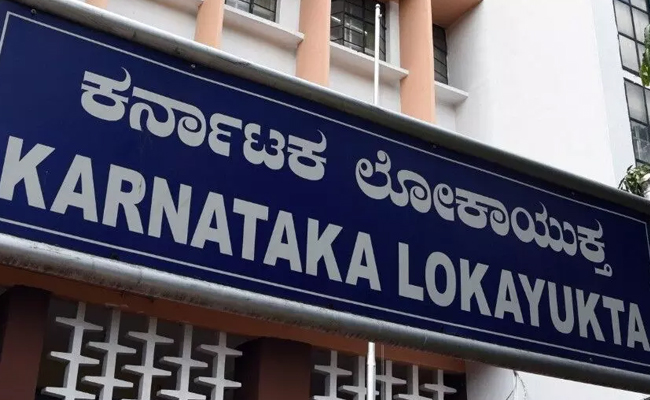
Bengaluru (PTI): Karnataka Lokayukta Justice B S Patil on Thursday took serious note of the compound wall collapse at Bowring and Lady Curzon Hospital in the city that killed seven people, and announced registration of a case on its own while warning of action against officials found responsible.
The Lokayukta, who visited the site and conducted an inspection, expressed strong displeasure over the incident and questioned the inaction of authorities, even as police and emergency teams had earlier rushed to the spot to rescue victims trapped under the debris following heavy rain, strong winds and a hailstorm on Wednesday evening.
“I will now register a suo motu case. This is not just about this one incident — such incidents must not occur anywhere in the state or the city in the future,” Justice Patil told reporters.
Seven people, including a six-year-old girl, were killed and seven others injured when the compound wall collapsed as rain-battered victims had taken shelter near it, according to police. The victims included people from Kerala who were in the city on a study tour.
Calling for systemic accountability, the Lokayukta said, “Dilapidated buildings and weakened compound walls, especially in areas with public access, must first be identified. They must either be repaired, demolished, or rebuilt.”
He added that responsibility would be fixed on officials of the BBMP and the concerned departments.
Justice Patil said that hearings would be conducted and preventive action initiated, while also probing those responsible for it, how the incident could have been prevented, and why it was not prevented.
A Scene of Crime Officers (SOCO) team and a Forensic Science Laboratory (FSL) team also inspected the site, while police cordoned off Kovil Street to facilitate the probe.
Deputy Chief Minister D K Shivakumar said the government had initiated measures following the rain-related incidents and stressed preparedness.
“Since last night we have initiated measures regarding the rains. When it rains heavily, we must be prepared, and we are working towards that,” he told reporters here.
On the wall collapse, Shivakumar said, “I will not directly blame any officials. It was an old wall, and trees had grown alongside it. Due to that pressure, it collapsed.”
The Deputy CM said instructions had been issued to identify such vulnerable structures and clear areas around them, including relocating street vendors.
Karnataka Medical Education Minister Sharan Prakash Patil said a technical assessment had been ordered.
“This is a very serious matter. Innocent people have been affected. We are issuing directions to the engineers to find out why this compound wall collapsed and to assess its structural strength,” he told reporters after inspecting the spot.
The Minister noted that the wall was ‘very old’ and required thorough examination to prevent recurrence.
Speaking to reporters, Congress president Mallikarjun Kharge asked the Karnataka government to take precautions to ensure that incidents like the collapse of the Bengaluru government hospital compound wall, which caused loss of life, should not repeat.
Meanwhile, addressing a press conference, Shivajinagar MLA Rizwan Arshad said the collapse raised questions about construction and maintenance practices.
“If a wall collapses within 25 years of its construction, it needs to be examined -- whether there was any technical issue, or if anything was altered inside, weakening it. All this can only come out through a technical investigation,” he said.
The Congress MLA also called for wider structural audits across the city, stating that all such structures, whether private or government, must be audited.
He urged citizens to support victims, saying it was a collective responsibility in times of crisis.