3 men sentenced for attempted murder of Indian-origin NZ radio host who was vocal against Khalistan
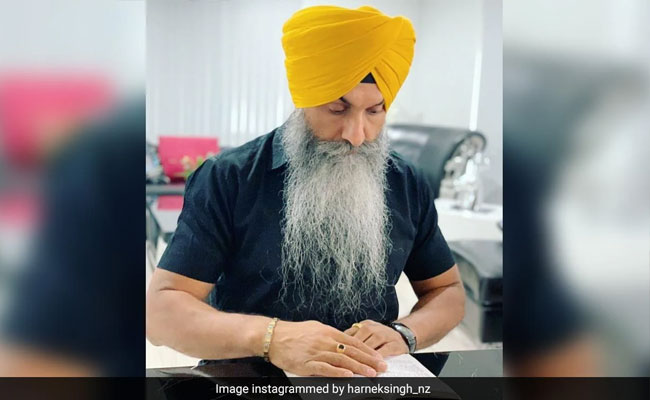
Melbourne (PTI): In a case of religious fanaticism, three Indian-origin men in New Zealand have been sentenced for the attempted murder of a popular Auckland-based Sikh radio host who was vocal against the ideology of Khalistan.
The attack occurred on December 23, 2020, when Harnek Singh was ambushed by a group of religious extremists in his driveway. He suffered over 40 stab wounds and required more than 350 stitches and multiple surgeries to recover, the Australia Today website reported.
Sukhpreet Singh, 44-year-old, was found guilty of being an accessory, and Sarvjeet Sidhu, 27-year-old, pleaded guilty to attempted murder.
The third man, a 48-year-old Auckland resident, has been given one of the longest possible prison sentences for the crime, the New Zealand Herald newspaper reported.
During a hearing on November 28, a judge noted that community protection and a strong message of deterrence were both necessary for the highly unusual case, it reported.
The third defendant, who continues to have interim name suppression, was not present when the attack occurred. The court was told that he harboured a years-long resentment against Harnek as he was vocal against Khalistan, Australia Today reported.
He planned the "hit" and used his charismatic influence over others to recruit henchmen to do his bidding, the judge said.
"It bears all the hallmarks of religious fanaticism," Woolford said of the motivation for the attack. "Violence of this kind is committed to what is perceived as the furtherance of the greater good..."
"Sentencing in this context requires a different approach. The emphasis must be placed on protecting the community from further violence and it is essential to send a strong message of deterrence to others."
A sentence of 13-and-a-half years was imposed, with a minimum period of imprisonment of nine years before he can begin applying for parole, the Herald reported.
The maximum sentence for attempted murder is 14 years. The only reason the defendant did not receive the full maximum sentence was that he deserved a six-month credit for the time he spent on electronically monitored bail while awaiting his lengthy trial in September and October, the judge said.
Harnek did not attend the hearing but wrote a victim impact statement that was read aloud by prosecutors.
"My family faces fear each day when the sun goes down," he said.
Addressing the defendants directly, he said: "You came to kill me. ...You tried to silence me. You wanted to send a chilling message to all those who express their disagreement with your unorthodox religious views. But you failed. ...I will continue to express my opinions and beliefs as I always have."
Let the Truth be known. If you read VB and like VB, please be a VB Supporter and Help us deliver the Truth to one and all.
Caste census will form basis for future policy decision, says CM Siddaramaiah
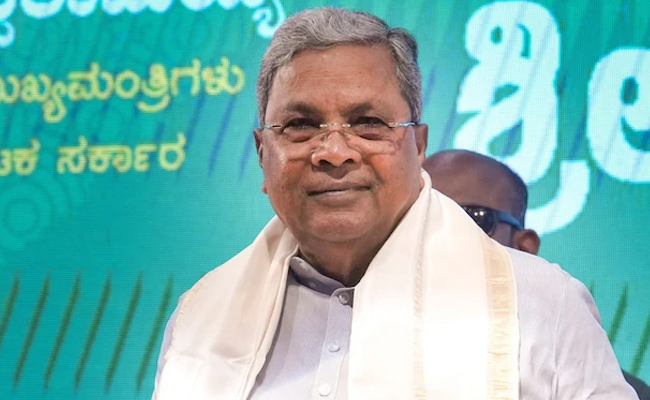
Mysuru (Karnataka) (PTI): Karnataka Chief Minister Siddaramaiah on Wednesday said that the ongoing caste census would form the basis for future policy decisions, asserting that the exercise was crucial to advancing social justice in the state.
Addressing a gathering at the Siddarameshwara Jayanti celebrations here, he said caste enumeration was being carried out for the first time since 1931 and would be followed by deliberations once the report is submitted.
"At present, a caste census (Jaati Sameekshe) is underway. After the report comes, we will discuss it and take necessary decisions," Siddaramaiah said.
He underlined the government’s commitment to equality, stating, "We are committed to social justice. No one should face injustice. Even if not 100 per cent, we will strive to ensure 99 per cent justice."
Referring to measures aimed at addressing intra-caste disparities, the chief minister said the government had already implemented internal reservation based on revised classifications.
"We have gone beyond the Nagamohan Das report and implemented internal reservation… now it has been revised to 5.25 per cent, 5.25 per cent, and 4.5 per cent. This has been approved by the Cabinet," he said.
Siddaramaiah said the broader objective was to ensure equitable distribution of resources and opportunities, while reiterating that policy interventions would be guided by constitutional principles.
"Our objective is equal share and equal life for all," he said.
He also emphasised the role of education in eliminating inequalities, particularly among marginalised communities, and said empowerment was essential to dismantle entrenched caste hierarchies.
"Only when people gain such empowerment can caste divisions be eradicated. Education is essential for this," he added.
The CM said the government would examine demands raised by various communities and take decisions based on feasibility, while ensuring that benefits reached all sections without discrimination.