40 killed in Kabul suicide attack
Kabul: At least 40 people were killed and over 30 injured on Thursday in a suicide attack inside a cultural centre here, the Interior Ministry has confirmed.
The explosion took place around 10.30 a.m. in the Qala-e-Nazar area, Nasrat Rahimi, the ministry spokesman told Efe news, adding that the victims included women and children.
Rahimi said the building where the attack took place also houses the office of the Sada-E-Afghanistan (Afghan Voice) news agency and a mosque.
A ministry official told the BBC that the suicide blast was followed by two other explosions in the area.
The attack has not yet been claimed by any insurgent group.
The Taliban have issued a statement saying that they were not involved.
According to one survivor, social activists had gathered at the centre for a meeting when the blast occurred, reports Tolo News.
The police have said that there were at least three suicide bombers who also used grenades in the attack.
The toll was likely to increase as many of the injured were in critical condition.
On Monday, eight people were killed and two injured in a suicide bomb attack near an office of the National Directorate of Security (NDS) in the capital city's Shashdarken neighbourhood.
The Islamic State had claimed responsibility for the attack.
Let the Truth be known. If you read VB and like VB, please be a VB Supporter and Help us deliver the Truth to one and all.
Allahabad HC orders probe into 'reinstatement' of teacher in UP's Barabanki
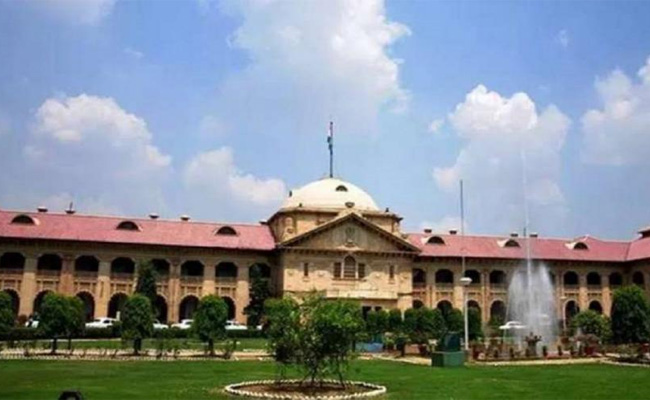
Lucknow (PTI): The Lucknow Bench of the Allahabad High Court on Friday ordered a probe by the special task force (STF) into alleged irregularities in the rejoining of a teacher at City Intermediate College in Barabanki, observing that the reinstatement appeared to be prima facie illegal.
The court also directed the recovery of the salary paid to the teacher during the disputed period.
A bench of Justice Rajeev Singh passed the order on a petition filed by the college management committee. The court expressed doubts over the roles of the District Inspector of Schools (DIOS), Barabanki, the college principal and the teacher concerned and hence, directed a detailed inquiry into the matter.
Taking note of alleged manipulation of records and misleading submissions, the court ordered the immediate transfer of the Barabanki DIOS to ensure a fair probe. It also directed the initiation of disciplinary proceedings against the then joint director of education of the Ayodhya division.
In its order, the court found that the teacher, Abhay Kumar, was initially appointed as an assistant teacher in 2018 but joined an Eklavya Model Residential School in Chhattisgarh as a lecturer in June 2024 without obtaining permission from the management. His subsequent request to retain the lien was rejected.
Despite this, he was allowed to rejoin the Barabanki College in September 2025 on the directions of the joint director of education and the DIOS, and was even paid the salary for October 2025. The court termed the rejoining "wholly illegal" and lacking any legal basis.
The bench also expressed concern over lapses in communication within the education department and directed the Uttar Pradesh chief secretary to ensure that official orders are communicated through email and WhatsApp as well, to prevent disputes.
The matter is next listed for hearing on May 28 when a compliance report is sought.