5 dead, 42 injured as youths clash with police over social media ban in Nepal; army deployed
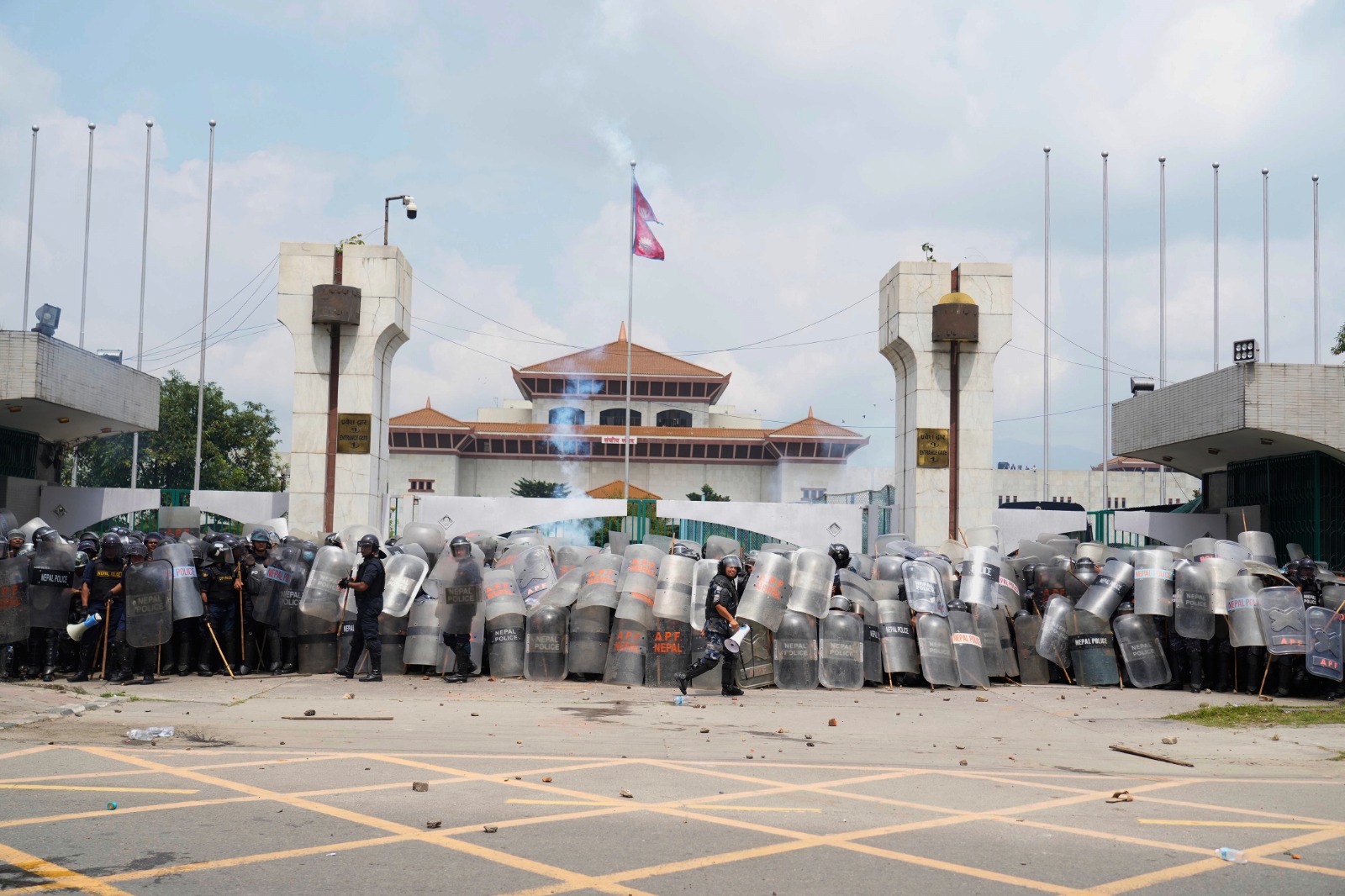
Kathmandu (PTI): Five people were killed and 42 others injured on Monday as violent demonstrations led by youths against a Nepal government ban on social media sites intensified in Kathmandu, prompting authorities to deploy the army to control the situation, officials said.
Thousands of youths, including school students, under the banner of Gen Z, clashed with the riot police in front of the Parliament building in Kathmandu.
The protests turned violent when some agitators entered the Parliament complex, prompting police to resort to baton charges, tear gas shells and rubber bullets to disperse the crowd, eyewitnesses said.
Forty-two people, including security personnel, were injured and are currently undergoing treatment in the Civil Hospital of Kathmandu, a Nepal Police spokesperson said.
Five people were killed in the violence, hospital sources said.
However, there is no police confirmation on the death toll.
The Army has been deployed to control the situation, military officials said.
The Kathmandu District Administration issued a prohibitory order from 12:30 pm to 10:00 pm in areas surrounding the Parliament building to curb the unrest.
“No movement of people, demonstration, meeting, gathering or sit-in will be allowed in the restricted zone,” Chief District Officer Chhabi Lal Rijal said in a notice.
The local administration later extended the restrictive order to various areas surrounding Rastrapati Bhawan, the Vice-President’s residence and the Prime Minister's Office.
The Nepal government on September 4 banned 26 social media sites, including Facebook, WhatsApp and X, that do not comply with the mandated registration process.
Although the government has clarified its stance that the social media sites were banned to bring them under regulation. But the general perception among the masses is that this will lead to an attack on free speech, and it may lead to censorship.
Let the Truth be known. If you read VB and like VB, please be a VB Supporter and Help us deliver the Truth to one and all.
Austrian police detain suspect in case of rat poison found in baby food jars on supermarket shelves

Vienna (AP): Police in eastern Austria say a 39-year-old suspect has been arrested after rat poison turned up in some HiPP baby food jars on supermarket shelves in central Europe.
HiPP, which recalled some of its baby food jars in Austria, Slovakia and the Czech Republic after the case came to light last month, said in a statement Saturday it was “greatly relieved” by the arrest, and would provide further updates as verified details come in.
The Burgenland State Criminal Police Office, under the direction of prosecutors, said a probe was launched after poison turned up in a baby food jar purchased at a supermarket in the city of Eisenstadt on April 18.
It said the suspect was being questioned, and that no further details would be immediately provided. The Burgenland public prosecutor's office has announced an investigation into suspected “intentional endangerment of the public.”
The Austrian Press Agency reported that an expert report on the toxicity of the poison was pending. A total of five tampered baby food jars were seized before they could be consumed, APA reported.
Authorities said previously they believe the tampering occurred in 190-gram (6.7-ounce) jars of baby food made with carrots and potatoes for 5-month-olds that were sold from SPAR supermarkets in Austria.
HiPP responded by recalling all of its baby food jars sold at SPAR supermarkets — which include SPAR, EUROSPAR, INTERSPAR and Maximarkt stores — in Austria as a precaution. Vendors in Slovakia and the Czech Republic also removed all of the brand's baby jars from sale.
The company said the recall was not due to any product or quality defect on its part, and said the jars left its facility in “perfect condition.”
Police said a customer at the time of the discovery had reported that a jar appeared to have been tampered with, but no one had consumed the baby food.