58 immigrant children reunited, says US officials

Washington, July 13 : Fifty-eight immigrant children under the age of five have been reunited with their parents after being separated at the US border, officials said in a filing.
The filing on Thursday night comes as part of a class action lawsuit the American Civil Liberties Union (ACLU) filed against President Donald Trump's administration's "zero tolerance policy", reports CNN.
Though the deadline for reuniting children under five has passed, in two weeks the government will need to reunite thousands more children aged five to 17 to meet the judge's next deadline.
Despite working extensively together, government and ACLU lawyers sharply disagreed on how to proceed in the case, according to the joint filing.
The ACLU asked for the government to provide a daily report of reunified families to the court starting next week and for additional details to prevent the government from missing future deadlines.
The organisation also asked the judge to set additional specific deadlines going forward. However, both parties appeared to disagree about appropriate time frames.
Although the new filing details the latest reunification numbers of children younger than five, it did not provide a total of how many kids older than five the government believes to be in custody.
It also does not offer any details on the process the government plans to use to reunite those families, or how it will work to reunite children whose parents have been deported, CNN reported.
The "zero-tolerance" policy to prosecute all adults crossing the border illegally resulted in the separation of thousands of children from their parents after entering the US, though this case was filed long before that policy and affects almost all families separated at the border still in government custody.
After an initial backlash, Trump signed an executive order aimed at keeping families together at the border.
Let the Truth be known. If you read VB and like VB, please be a VB Supporter and Help us deliver the Truth to one and all.
India-bound LPG tanker clears Hormuz
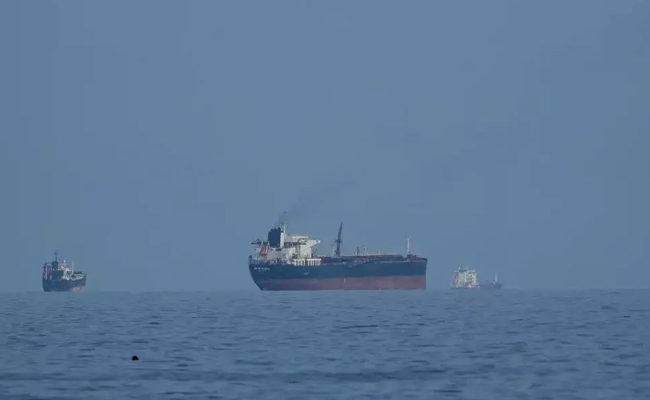
New Delhi (PTI): A tanker carrying liquefied petroleum gas (LPG) for India has sailed out of the Strait of Hormuz and is now headed towards the country, an official statement said on Sunday.
The Marshall Islands-flagged LPG carrier MT Sarv Shakti, loaded with 46,313 tonnes of LPG and staffed by 20 crew, including 18 Indians, cleared the key shipping chokepoint on May 2 and is expected to reach Visakhapatnam on May 13, it said.
The cargo -- enough to meet half a days requirement of the country -- will partly tide over supply constraints being faced since the start of the West Asia conflict more than two months back.
Ship-tracking data showed its position in Oman Gulf on Sunday evening.
The very large gas carrier has previously made runs between the Persian Gulf and Indian ports, has been chartered by state-owned Indian Oil Corporation (IOC).
Sarv Shakti is the first India-linked tanker to cross the war zone since a weeks-old US blockade of ships tied to Iran began, pushing transits through Hormuz back down to almost zero.
There are as many as 14 Indian flagged or India-owned vessels still stranded on the west side of the Strait of Hormuz.
The statement said no incident involving Indian-flagged vessels has been reported in the past 24 hours. The Ministry of Ports, Shipping and Waterways is working closely with the Ministry of External Affairs, Indian missions and maritime stakeholders to ensure crew welfare and uninterrupted operations.
The Directorate General of Shipping (DG Shipping) control room has handled 8,373 calls and more than 17,965 emails since activation, including 38 calls and 127 emails in the last 24 hours.
India has also facilitated the repatriation of more than 2,953 seafarers so far, including 31 in the past day from across the Gulf region.
Port operations across the country remain normal with no congestion reported, the statement added.