6 Gulf Arab countries back extending UN arms embargo on Iran
Dubai: A six-nation bloc of Gulf Arab nations torn apart by internal strife endorsed an extension of a United Nations arms embargo on Iran, just two months before it is set to expire.
The Gulf Cooperation Council on Sunday sent a letter to the UN Security Council backing an extension of an arms embargo that's kept Iran from purchasing foreign-made weapons like fighter jets, tanks and warships.
The GCC comprised of Bahrain, Kuwait, Oman, Qatar, Saudi Arabia and the United Arab Emirates alleged Iran had "not ceased or desisted from armed interventions in neighboring countries, directly and through organisations and movements armed and trained by Iran".
A Saudi-led coalition continues to battle Yemen's Houthi rebels, whom the UN, the US and armament experts have accused of receiving arms from Iran. Tehran denies arming the Houthis, even as Iranian armaments and components have repeatedly turned up in Yemen.
The letter also said Iran arms Hezbollah fighters in Lebanon and Syria and allegedly provides weapons to Shiite militias in Iraq and terrorist groups in Bahrain, Kuwait and Saudi Arabia.
UN restrictions establish a consensus understanding of the threat to peace and stability Iranian proliferation represents, the GCC said in the letter signed by General-Secretary Nayef al-Hajraf on behalf of the bloc.
Iran's Foreign Ministry spokesman Abbas Mousavi condemned the GCC letter and called it an irresponsible statement that serves US interests, Iranian state TV reported.
Mousavi also criticised the Gulf Arab countries for being among the largest arms buyers in the region and the world," even amid the economic downturn caused by the coronavirus pandemic.
The UN banned Iran from buying major foreign weapon systems in 2010 amid tensions over its nuclear program. That blocked Iran from replacing its aging equipment, much of which had been purchased by the shah before the 1979 Islamic Revolution. An earlier embargo targeted Iranian arms exports.
Iran's 2015 nuclear deal saw the UN agree to sunset the arms embargo this October. President Donald Trump unilaterally withdrew America from the deal in 2018, part of a maximum pressure campaign that's hurt Iran's already-ailing economy and led to a series of escalating incidents in the Mideast.
The GCC letter also mentioned Iran's shootdown of a Ukrainian passenger plane in January and its navy accidentally killing 19 sailors in a missile strike during an exercise. Iran also is suspected of launching a September attack on the heart of Saudi Arabia's oil industry, though Tehran denies that.
That the GCC offered a unified statement on Iran comes as it remains torn by the ongoing Qatar crisis, which saw Bahrain, Egypt, Saudi Arabia and the Emirates cut diplomatic ties and launch a boycott of the nation beginning in 2017.
Kuwait has sought to mediate the crisis, though its 91-year-old emir now is hospitalised in the US suffering from an undisclosed ailment.
Amid the crisis, Qatar has had warmer ties with Iran and used its airspace while sharing a vast offshore oil and gas field with Tehran.
The small nation is home to the massive Al-Udeid Air Base, home to the forward headquarters of the US military's Central Command. Oman, which saw its long-serving sultan die earlier this year, long has had close ties to Iran and has served as an interlocutor between Tehran and the West.
Bahrain, Saudi Arabia and the Emirates long have viewed Iran far more suspiciously, accusing it of stirring up dissent among Shiite populations in the region.
The unified GCC statement comes after recent visits by outgoing US special representative for Iran Brian Hook amid the pandemic. US Secretary of State Mike Pompeo praised the letter early Monday.
The US will introduce a resolution this week to extend the embargo after years of diplomacy, Pompeo wrote on Twitter. The Security Council "must choose between arming terrorists or standing by the" GCC.
Let the Truth be known. If you read VB and like VB, please be a VB Supporter and Help us deliver the Truth to one and all.
Representative of Iran's Supreme Leader in India calls current situation 'no war, no peace'
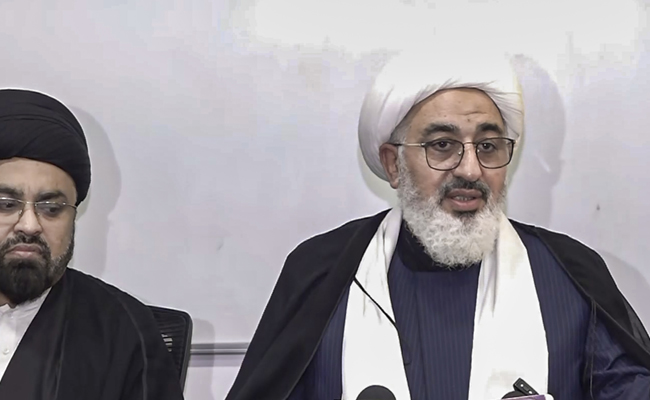
Bengaluru (PTI): Representative of Iran's Supreme Leader in India, Abdul Majeed Hakeem Ilahi on Saturday characterised the ongoing tensions between his country and the Israel-US alliance as a state of “no war, no peace”.
Calling for an immediate halt to the conflict, he said the global stability hinges on those who initiated the war.
He questioned why countries affected by the war and suffering from the energy crisis are not pressuring the US and Israel to stop the aggression.
Addressing a press conference here, Ilahi said Iran did not want the conflict, but was compelled to respond amid continued attacks, even as negotiations were expected to continue.
"Iran didn't want this war, but Iran was forced by the war and several times Iran tried to avoid this war... I don't know what is the condition of these people and these countries (US-Israel)... they want to impose on other countries what they want, and who gave them this authority?" he questioned.
Recalling the negotiations Iran held in Oman, he said talks later moved to Geneva and made progress before being disrupted by sudden attacks.
Ilahi claimed that airstrikes and missile attacks led to the deaths of Iran’s supreme leader Ayatollah Ali Khamenei, ministers, commanders and civilians.
"They killed a lot of civilians… They attacked a primary school, and they killed 175 innocent girls," he said, claiming over 4,000 deaths, more than 40,000 injuries, and widespread damage to houses, hospitals, universities and public infrastructure.
Despite these losses, he said Iran resisted calls for “unconditional surrender” and stood firm and defended itself.
"They wanted unconditional surrender. Which no one—no one can accept it. Iran said, 'Okay, we are ready to be sacrificed,' but we are not ready to submit ourselves," he added.
He argued that they (US-Israel) proposed the current ceasefire only after realising that they could not achieve any of their objectives after 40 days of conflict.
The envoy further claimed that the ceasefire is not an actual ceasefire, but a “no war, no peace” situation.
Explaining the current situation in Iran, he said conditions remain stable and people are going about their daily lives.
"They are working ....(leading) their ordinary life. They are working—they're going farming and they do everything....and they aren't scared of anything. And they are ready to defend themselves," he added.
Addressing the crisis in the Strait of Hormuz, he said the situation was stable before February 28 and all countries benefited from it.
"(For) 10,000 years, the Strait of Hormuz was open...and Iran daily yearly spent a lot for providing security in the Strait of Hormuz... so no one even complained anything about the Strait of Hormuz. Everyone was free...and even our enemies their warship was passing through the Strait of Hormuz," he said.
However, he linked the current maritime instability to the actions of the US and Israel.
"So Iran cannot do anything. Those people who initiated, created and started this war, they have to stop it. And everything will go back to normal," he said.
Criticising the mentality of the "great powerful country", Ilahi said, "they think they have the right to do whatever they want. It should change."
He sought to know why the countries affected by the conflict are not exerting pressure on the US and the "Zionist" regime to halt the war.
"Why are they not asking them? This crisis and problem by which a lot of countries are affected was created by them. A lot of factories are closed and even working days in some countries reduced... A lot of restaurants are closed," he said.
Seeking fairness and justice, Ilahi said instead of asking Iran, all those nations should ask those who initiated this war to stop it, by telling them, "we are suffering."
To a query on international mediation, Ilahi, referring to the US, asked, "Is it acceptable and reasonable that one country orders all countries -- you should not deal with this country, You should not purchase from this country. You should not have business with this country. You should not buy from this country."
Ilahi also highlighted Iran's long-standing ties with India and said, "It is a great country and we respect India and Indians."
"We have 5,000 years relationship and friendship. We are connected to India by education, by philosophy, by culture, by civilisation and by the economy," he said.
According to him, the bilateral cooperation remains strong, citing diplomatic engagement.
"At the moment also, our relationship, collaboration, cooperation with India is very good," he said, adding Iran allowing Indian ships to pass through Strait of Hormuz reflects the ties.
"Iran allowed Indian ships to pass through the Strait of Hormuz. Why? A lot of countries couldn't get this permission?... The relationship between Iran and India is very good," he added.
He expressed confidence that in future too, the ties between Iran and India will be strong.